
 E-Paper



Iran may extend war to Indian Ocean if US attacks again: Khamenei's adviser
The Indian Ocean is the third-largest of the world's five oceanic divisions, covering approximately 70.5 million square kilometres.

 Prefer HTon Google


Iran could expand the geographical scope of its war to the Indian Ocean if the United States launches another attack, a senior adviser to Iran's Supreme Leader has warned, as tensions between Tehran and Washington remain high.
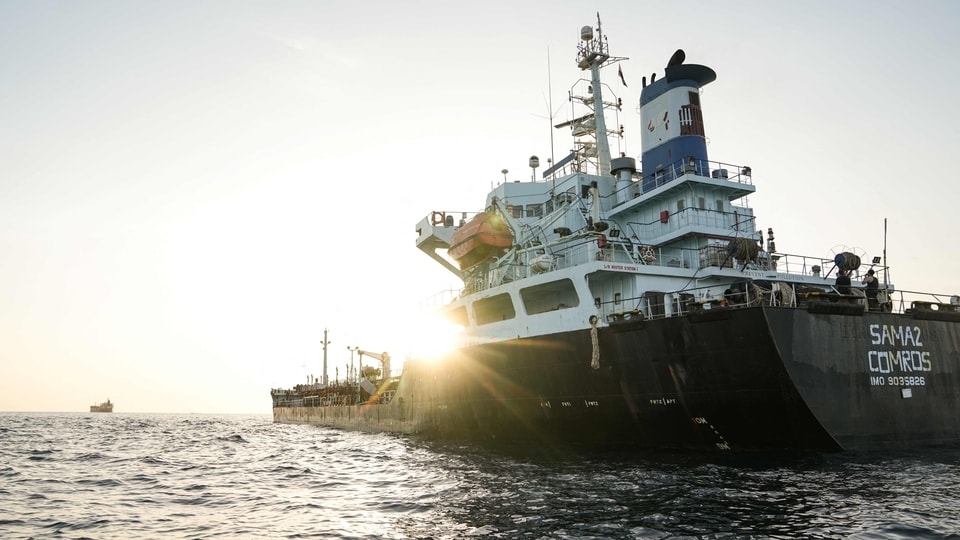
"Since the conflict has spread from the Persian Gulf and Strait of Hormuz to the Red Sea, it is possible that, in response to more war, the front will expand even further, reaching the Indian Ocean and perhaps beyond," said Yahya Rahim Safavi in a video released by Iran's Fars news agency.
The comments come as tensions remain high between Iran and the US, particularly around the Persian Gulf, Gulf of Oman and key maritime trade routes. Iranian officials have repeatedly warned that any renewed US military action could result in retaliation against American interests and assets across the region.
On Monday, Iran’s Revolutionary Guard also said that it could alter its military strategies and targets if further provoked, according to the Associated Press.
ALSO READ | Trump’s ‘annihilate Iran’ threat gets a Balakrishna-style response from Tehran
Why the Indian Ocean matters
The Indian Ocean is the third-largest of the world's five oceanic divisions, covering approximately 70.5 million square kilometres (27.2 million square miles), or about 20% of Earth's water surface. To its north, it is bounded by Asia, including India, Iran, Pakistan and Bangladesh.
One of the key links is the Bab el-Mandeb Strait, which connects the Red Sea with the Gulf of Aden and, ultimately, the Indian Ocean. Shipping through the waterway has already been affected by attacks and heightened security concerns.
The situation has also put pressure on the Strait of Hormuz, the narrow passage linking the Persian Gulf with the Gulf of Oman.
On Monday, only 17 commodity vessels crossed Hormuz over the weekend, compared with 37 the previous week and a pre-war average of about 125 vessels a day. Traffic through Bab el-Mandeb also declined, Reuters reported.
What it could mean for India
Any further disruption extending towards the Indian Ocean would have implications beyond the Gulf because the region is a major route for energy and commercial shipping to and from Asia.
India lies at the northern end of the Indian Ocean and has extensive maritime trade links with the Gulf region, Africa and Southeast Asia. A ful-blown war could therefore increase risks for shipping, insurance, energy supplies and regional trade.
The US-Iran war has already had a visible impact on India, mainly through higher oil, LPG and shipping costs. With tensions around the Strait of Hormuz disrupting energy supplies, crude oil prices have risen, increasing India’s import bill and putting pressure on the rupee. India imports more than 88% of its crude oil, leaving it exposed to disruptions around the Strait of Hormuz.
Brent crude crossed $100 a barrel in September, while India’s crude basket averaged about $102.11 a barrel, up from $90.19 in August and $82.04 in July.


