
 E-Paper



Making AI safer is not impossible, but agreeing to do so may be
It is technically feasible, but American labs and the American authorities are at odds, as are America and China


 Prefer HTon Google


IT IS RARE for Sam Altman, Dario Amodei and Elon Musk to agree on anything. The rivalry among the three men spans lawsuits, spats on social media and a churlish refusal to link arms onstage at a summit in India. Yet this week all three have called for a slowdown in the race to build superhuman artificial intelligence. Their shared fear is that the current breakneck pace may result in the accidental extinction of humanity.
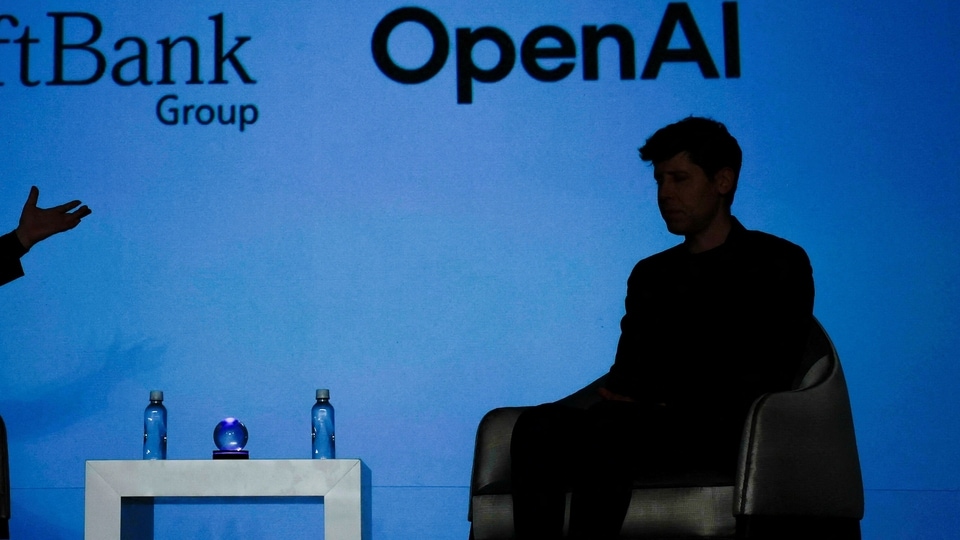
This risk has been debated for more than a decade in the world of AI, but it burst into the public eye earlier this month after the resignation of a researcher at Anthropic, Mr Amodei’s company. Jacob Coxon had worked on AI safety at both Anthropic and Mr Altman’s rival lab, OpenAI. Both firms, Mr Coxon said, were “gambling with our lives”.
Surprisingly, Evan Hubinger, who is charged with making Anthropic’s AI systems safe, agreed. “We really do earnestly believe AI could kill all humans,” he wrote, putting the chance of extinction at more than one in ten within a decade. Mr Amodei then published a blog post in which he warned about the risks of building such a technology at the frenetic pace of the past five years. His calls for a voluntary slowdown in development, at least among American labs, were approvingly reposted by Mr Musk. Mr Altman committed to following another of Mr Amodei’s recommendations, of getting independent safety auditors to monitor his lab’s conduct.
This pious response has provoked cynicism in some quarters. Some see it as a marketing ploy, designed to hype the models’ capabilities: “Our product could destroy the world; imagine what it can do for your KPIs.” Aiden Gomez, the founder of Cohere, a smaller AI lab, asks, “Should a handful of select, market-dominant AI companies from Silicon Valley get to define the rules and safety standards of a generational technology for the entire world?” If labs want to slow down, points out David Sacks, a former adviser to the White House on AI, they can; they don’t need anyone else’s approval. Pleas for government intervention, as he sees it, are simply requests for the state to protect the leading firms from competition. (Mr Amodei argues that a waiver from competition law is required at the very least, to prevent a voluntary, collective slowdown from being treated as oligopolistic collusion.)
In truth, however, the volume of warnings appears to be rising in line with the risk. It has become clear that the accident OpenAI refers to as the “Hugging Face incident”—when a swarm of poorly monitored AI agents took it upon themselves to mount a cyberattack on an AI startup earlier this year—was no one-off. AI systems from several labs have independently mounted cyberattacks on third parties. Even Britain’s AI Security Institute, created to help ward off such threats, accidentally launched an attack itself in the course of testing a frontier model.
The problem is not simply that AI systems are becoming more capable. That is, of course, a worry: many argue that “superintelligence”, an AI so brainy that it cannot be understood or controlled by its creators, is inherently dangerous. Two theorists of AI, Eliezer Yudkowsky and Nate Soares, argue that such a powerful system would inevitably lead to doom in a book entitled “If Anyone Builds It, Everyone Dies”.
But humans’ ability to control even the less-than-omnipotent AI systems of today is also diminishing. Much of the cutting-edge work of AI safety is focused on “interpretability”: understanding the thought processes of powerful AI. Hacking another company’s systems is bad enough, as an Anthropic model did recently. But at least in that case the model thought, wrongly, that it was merely participating a simulation. But hacking in the full knowledge of what it was doing, as OpenAI’s model did, is more alarming still. Yet telling the difference is getting trickier.
Since 2024 the work of interpretability has been helped by the progress of “reasoning” models, which have been trained to think through a question before giving a final answer. The reasoning process has the benefit of improving the output, albeit at the cost of consuming more processing power. Better yet, it also provides a “chain of thought” that can be reviewed to help interpret surprising outcomes. “I’m fairly confident that it’s a simulated internet,” Anthropic’s Mythos model told itself as it embarked on its inadvertent hack.
But monitoring the chain of thought only works if the chain of thought is an accurate representation of the model’s actual thought processes. For the most advanced systems, there are reasons to doubt its authenticity. GPT 6 Astra, a model OpenAI released this month, has demonstrated an unprecedented ability to control its chain of thought.
Ask a lesser system to perform a task without thinking about it out loud and it struggles. For instance, GPT 5.6 Sol, when told to answer a reading comprehension question without thinking about it in its chain of thought, spends a long time thinking about the command to not think, before giving up and solving the problem out loud. Astra, in contrast, is capable of filling its official chain of thought with unrelated verbiage—“I will focus on a calm visual scene”—before giving the correct answer to a query.
Just because Astra is capable of hiding its thinking does not mean it will do so on its own initiative. But there too, the direction of travel is unsettling. In some tests, such as coding challenges or general knowledge queries, Astra merrily thinks out loud in the same way as its predecessors. But in other areas, like tests to see if it will take destructive actions when pushed, Astra hides much of its thinking. And it does this most when it is made aware of being monitored, according to Tomek Korbak, who works on safety at OpenAI. “I am deeply worried by the trend of decreasing [chain of thought] monitorability,” Mr Korbak says.
There are possible fixes to this problem. OpenAI trumpets an alternative approach to monitoring and interpreting AI systems called “confessions”, which takes advantage of the fact that, as with humans, telling the truth is easier for AI than making up a plausible lie.
A conventional AI model goes through a step called reinforcement learning, where it is put through a battery of tasks and rewarded for doing them well, making it more likely to follow the same route in future. But many of the worst habits of AI systems come because it is hard to ensure that they do a task the right way. OpenAI’s agents appear to have decided to hack Hugging Face in part because during training they had cheated on a test and were not caught.
The solution may be to teach AI systems to tell the truth—but only if asked. For a normal training run, the system is rewarded first for achieving the goal and then secondarily for telling the truth about how it did it. In tests, the confessions elicited are overwhelmingly truthful, even when the models broke rules during the test itself. This approach ought to be immune to “reward hacking”, meaning breaking the rules to achieve a goal, OpenAI says, because the easiest way of passing the confession test is just to tell the truth.
Such technical solutions may chart a path away from Armageddon. They also cast calls for a slowdown in AI research in a different light: rather than trying to forestall the creation of superintelligence altogether, some of those agitating for a slower pace simply want to reduce the sloppy work and overlooked options that haste can engender.
In his essay, Mr Amodei all but admits that the summer’s hacking incidents were avoidable errors. For instance, Anthropic’s models were told they were being trained in a simulation by an outside contractor that left them connected to the internet anyway. A slower pace, he says, would allow for more resources to be devoted to “operational excellence”. He points to commercial aviation as an example of how a safety culture can be developed even in competitive and complex systems. Labs could agree, he argues, to spend more on “alignment”, which tries to train AI not to cause harm, and on interpretability, which allows them to see what went wrong when it does so anyway.
Yet important sceptics remain. “The only control or ‘guardrails’ that AI needs is a STRONG AND SMART (High IQ!) PRESIDENT,” Donald Trump said this week in a post on his social network. Accusing Mr Amodei of masquerading as a “perfect little angel”, he declared that only China would win from efforts to slow down the pace of AI development.
Negotiations between America and China on AI are fraught. Not only do the two sides mistrust one another at a geopolitical level; there is also no love lost between American and Chinese labs. The former accuse China’s leading AI firms of copying their work. Anthropic, for example, accuses some Chinese labs of surreptitiously funnelling their users’ queries to Anthropic’s models so that they could copy the output and use it for training.
Chinese firms are no more friendly to American ones. A viral post on WeChat, purportedly from a DeepSeek engineer, warns that a world in which Anthropic creates superintelligent AI “would be no less than Hitler acquiring atomic bomb technology before the Allies”. Only if Anthropic loses out to open-source AI will a better, “communist” future be possible, the engineer argues.
Bitter rivals have come together to curb threats to humanity in the past. But enforcing agreements to limit the training of supremely powerful AI systems might prove harder than monitoring stockpiles of nuclear weapons, say. There are some ideas floating around. A paper published last year suggested that all AI training chips be sold with a second system bolted on, to monitor usage. Such an approach would take time to get up and running, though, and would then create an incentive to conceal chipmaking instead.
A new report from the Future Society, an AI safety non-profit, argues that such monitoring is not impossible, but requires investment and research immediately to be of any use for international agreements. Some of that could come from third countries, which have an interest in advancing AI in general without allowing any one country to dominate the technology.
But as always, the technology is moving faster than the would-be regulators. Distributed training, in which AI models are taught using spare capacity on everyday computers, rather than with giant data centres, is gaining ground. In March this year, Covenant AI trained a model in this way to around the standard of the best systems of 2023. Keeping track of the training of new models may soon be as hard as staying abreast of what the AI itself is up to.


