
 E-Paper


What drove Michigan AQI to 616? Scientists issue major climate warning, 'There really isn't any…'
In Michigan, the Air Quality Index, as per Live Science, reached an extraordinary 616, significantly exceeding the EPA's hazardous classification.

 Prefer HTon Google


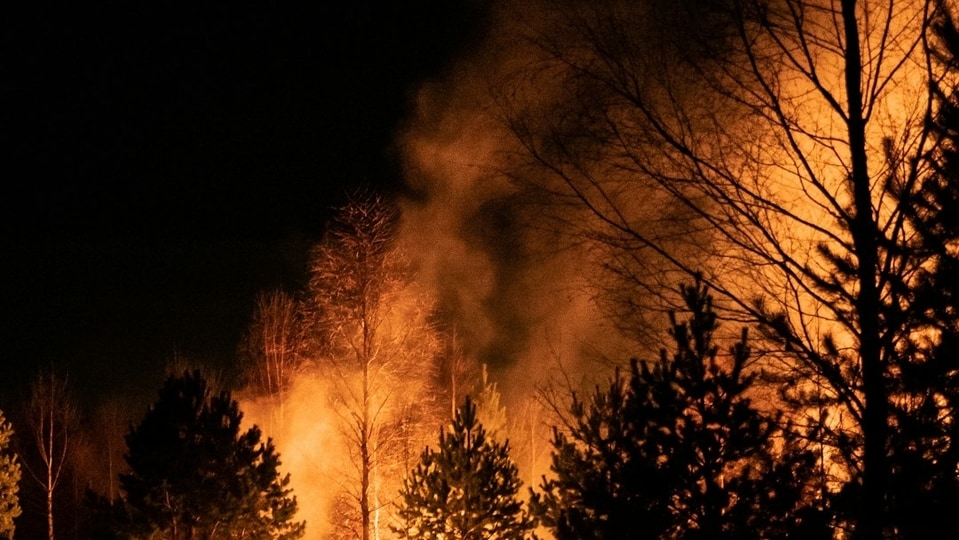
Smoke originating from Canadian wildfires has the potential to travel hundreds or even thousands of kilometers, transforming a remote fire into a significant air-quality crisis. This threat was vividly demonstrated when wildfire smoke from Ontario entered the United States, leading to exceptionally poor air quality in various regions of the Midwest. In Michigan, the Air Quality Index reportedly soared to an astonishing 616, a figure that far exceeds the EPA’s hazardous classification.
Michigan AQI timeline
In mid-July, smoke from wildfires in Ontario caused the skies over parts of the Midwest and East Coast to take on a murky yellow hue. Unfortunately, scientists predict that such occurrences will become more frequent in the coming years.
On July 16, Grand Rapids, Michigan, recorded an AQI of 616, surpassing the city's previous record of 350.
Any AQI level exceeding 301 is deemed hazardous. The 616 reading underscored the severity of these smoke events. Researchers warned that these episodes are likely to increase in frequency, persist for longer durations, and pose greater health risks.
Also Read: What caused Outlook outage? Microsoft reacts amid email failures, authentication issues
Michigan AQI surged to 616: Here's what studies are saying
Several studies suggest that wildfire smoke is swiftly emerging as one of the most significant environmental health risks in the US, as per Live Science.
A study conducted in 2025 estimated that the smoke exposure resulting from Canada's unprecedented wildfire season in 2023 may have reduced life expectancy for 87,000 individuals globally.
Marshall Burke, a professor of global environmental policy at Stanford University and the senior author of the study, noted that this change is occurring at an astonishing pace.
"Wildfire smoke is the fastest-growing environmental threat [to health] in the U.S.," he stated. "It's just changing so rapidly."
The detrimental effects are not confined to days when the air quality appears visibly hazardous: Smoke pollution can provoke asthma attacks, exacerbate COPD and heart disease, and elevate the risk of heart attacks, strokes, and premature births.
Researchers stated that the escalating threat arises from increasingly hotter and drier conditions, which make vegetation more susceptible to ignition.
Wildfires are expected to grow
Mary M. Johnson, a leading research scientist in environmental health at the Harvard T.H. Chan School of Public Health, informed Live Science that wildfires are expected to "grow in size, intensity, and frequency."
Drought conditions are extending the fire season in certain regions of the U.S. West and Southwest, while a study published in February 2026 in Geophysical Research Letters revealed that Alaska and Canada are experiencing earlier fire seasons due to the earlier melting of snow and the drying of spring vegetation.
Hongliang Zhang, an air quality researcher at Fudan University in China and the senior author of the aforementioned study, stated that the core issue is quite clear: "It revolves around dryness."
Being distant from a wildfire does not negate the associated risks. Fine particulate matter, referred to as PM2.5, can travel vast distances, exposing individuals far from an active fire to pollutants that can penetrate deep into the lungs and potentially enter the bloodstream.
What measures can be taken?
Experts indicate that there is no straightforward solution, as the warming already present in the atmosphere will continue to influence fire conditions for years to come.
However, strategies such as controlled burns and the reduction of fuel loads can assist in mitigating the extensive, smoke-laden wildfires that cause the most destruction.
Burke's research team discovered that controlled burns generate less pollution compared to uncontrolled wildfires and also leave behind reduced fuel for future burning. This suggests that forest management can also function as a public health strategy.
What was once regarded as a seasonal inconvenience impacting a limited number of Western states is increasingly evolving into a widespread health hazard for millions throughout North America.
“There really isn't any place in the world now where you can say, 'I'm not going to be exposed to smoke',” Johnson said.


