
 E-Paper



Interview: Georgi Gospodinov - “I write so as to set the world in order”
The first Bulgarian author to win the International Booker Prize talks about Time Shelter, how he makes sense of the chaos through reading and writing, and how finding meaning is the true purpose of literature

 Prefer HTon Google


In Time Shelter, Georgi Gospodinov, who won the International Booker Prize this year, explores the relationship between past, present, and future and unravels the collision of temporal dimensions that shape our lives. In this interview, translated from the Bulgarian by Angela Rodel, the writer-poet-playwright discusses the challenges of navigating time, and the novel’s broader reflections on the human condition. He reflects on the moral and ethical dilemmas that arise from manipulating time, the interconnectedness of nostalgia and our perception of time, and the fragility of memory as a construct that shapes our identity and self. “Nostalgia is actually like glasses with the wrong prescription, which blur the image and prevent us from seeing the real picture… We are who we remember that we are,” he says, adding that love, loss, and the passage of time all flow from one into another and turn into the past.

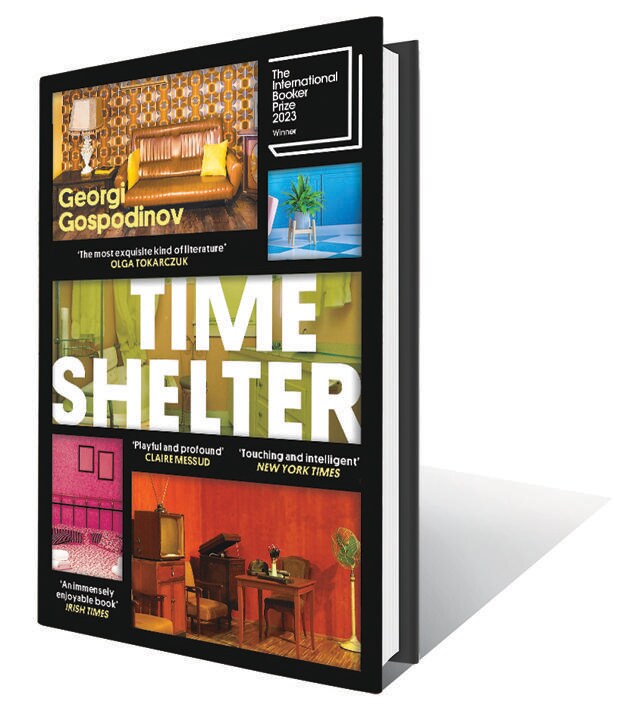
You are the first Bulgarian to have won the International Booker Prize. What do you think this moment signifies for the Bulgarian language and literature? How has your life changed after the win?
This is the most prestigious award in the world for a translated book. And this book was first written in Bulgarian. Experts say this is perhaps the greatest international recognition for a Bulgarian book in the history of our literature. I hope this award will open the doors to Bulgarian literature and especially give courage to young Bulgarian writers by showing that anything can be achieved with the 30 letters of our alphabet. For me, the award is an honour and recognition. Perhaps it will diminish the underestimation that exists among publishers towards voices from my part of the world. Yet, I am also aware that it will be harder for me to find a refuge where I can hide and write. And that’s the most important thing for a writer: to find their places of solitude, the places to write. That’s what I’m looking for now.
How did you navigate the past, present, and future in Time Shelter, and what message were you hoping to convey through the interconnectedness of these temporal dimensions?
In life, different times are intertwined and difficult to navigate, especially in today’s times. This is what I tried to show in the novel: the lack of harmony between these three dimensions of time, with no natural flow from one to another. Instead, they appear to collide at every moment. One aspect that stands out is the deficit of the future, particularly evident in our present times. We are made of the past, we are constantly producing the past, but it is the future, and more precisely the sense of the future, that pulls us forward. The future can be likened to Dylan Thomas’ poem, “The force that through the green fuse drives the flower.” It is a force, a pull that we cannot do without. How do I cope with this? Through writing. When I write, the world falls into place. To put it another way, I write so as to set the world in order.
In the novel, you delve into the concept of time as a refuge. How did you approach the portrayal of time as both a sanctuary and a daunting force? What broader reflections on the human condition did you intend to evoke through this exploration?
Thank you for this observation and the question. That’s precisely the challenge of the novel: to explore time and the past as both a refuge and a very dangerous place. Given the situation of an alarming present and a deficit of future, such as we are experiencing today, the past becomes a natural refuge. The past tense is always more comfortable, more familiar, we can curl up in its cave while we wait for the storm to pass and a better future to come. But is it really that simple? Can you go back to the past and truly live there again? What demons of the past are lurking there? How can this fear of the future be used politically? How much past can a person bear? When does the past become propaganda? The novel poses all these questions and tries to think them through with the readers. There are no ready answers; reading is a process of thinking the world. Of making sense of the chaos in the world, just as writing is.
The novel reflects on the nature of destiny and free will. How did you tackle the complexities of these philosophical concepts within the narrative, and what conclusions, if any, did you hope readers would draw?
I’m actually more interested in inevitability, if that’s how we think about fate, as the inevitable. The inevitability of aging and death, the inevitable law of entropy. Everything in nature flows in one clear direction. We are all slowly becoming the past. Yet, at the same time, I try to look for some redemptive or at least comforting cracks. Let’s take an example from that tribe in the Andes I mention in the novel. For them, the past is in front of your eyes because it’s already known. While the future is always behind you, catching up with you, you can’t see it. When they talk about the past, they point forward, and about the future, they point backward. That’s something different from and challenging to our way of thinking. Or take storytelling or literature: doesn’t it change the course of history? Doesn’t it bring the past back to us? As Gaustin says in the novel: “the past never flows in one direction.”
The notion of parallel timelines and alternate realities is a recurring theme in Time Shelter. How did you craft this intricate multiverse concept, and what deeper insights about reality did you intend to explore through it?
The novel attempts to explore this theme on two levels: a metaphysical one, but also a real, satirical one. Is it possible to imitate the past, to reproduce it artificially, to create a total simulation and reconstruction of it? What if we break Heraclitus’ rule and try to step into the waters of the same river twice? The answer is catastrophic.
Throughout Time Shelter, the characters grapple with the consequences of their actions and the ripple effect they have on the fabric of time. How did you approach the moral and ethical dilemmas that arise from manipulating?
Let me clarify that this is not a novel about a character returning to the past. On the contrary, it’s a novel about trying to bring the past here, into the present, reconstructing it and having everyone collectively live in it. This is a dystopia, or not even a dystopia, but rather a dyschrony. The great dystopias so far have shown us what life would be like in a near or distant future. My novel asks: what would life be like in a near or distant past disguised as a future? And here, of course, lie all the moral dilemmas of the retrieved past. Take the story about the man persecuted under communism who loses his memory. The only person who knows everything about him, who is, so to speak, his “external memory,” is his own persecutor, the secret service agent. A dilemma also arises for people who lose their memory and are therefore left only with the memories of their youth, but that youth was experienced in concentration camps in the 1940s. What do we do with the nightmare of their past? Must this nightmare be experienced a second time as a memory?
The setting of Time Shelter spans different historical periods, each with its own unique challenges and societal dynamics. How did you use these historical backdrops to shed light on contemporary issues?
In the novel, I recreate historical periods of the twentieth century that are part of people’s memory today. So, it’s personally experienced history in most cases. I argue that the past is a very personal matter. For me, the personal past is more important than the historical past. Thus, it inevitably is related to the present of those same people. They were young in the 1960s, for example. So when they try to reconstruct 1968, people are actually reconstructing not just a historical year, but the year of their own youth. This interweaving of history and biography is very important to me and to the novel.
The concept of nostalgia plays a significant role in Time Shelter as characters yearn for different eras and long for the past. What insights did you hope to offer about the human relationship with nostalgia and its influence on our perceptions of time?
It is well known that nostalgia as a concept and as a term was first used in the 17th century by a Swiss doctor. He used it as a diagnosis, as a disease typical of the Swiss Guards when they were away from their homes. Nostalgia is a completely human feeling, and I’m a pretty nostalgic person, too. But in Time Shelter I also wanted to explore the other, darker side of nostalgia. What happens when someone tries to manipulate entire societies through people’s personal and collective nostalgias? Nostalgia is actually like glasses with the wrong prescription, which blur the image and prevent us from seeing the real picture.
You also delve into the fragility of memory and the subjective nature of our recollections. How did you approach the portrayal of memory as a malleable construct, and what larger questions about identity and self did you seek to examine?
Memory is firmly linked to our identity, of course. Memory gives us that sense of wholeness, of the childhood we come from, of the present, and to some extent, by remembering our dreams and desires, we also remember the options for our future. In short, we are who we remember that we are. But we can take this even further. We are who and how we are remembered. But if no one remembers us, do we even exist at all? This is what the protagonist in the novel asks himself. What happens to me and my childhood when the last person who remembered me as a child is gone?
The novel explores the interplay between love, loss, and the passage of time. How did you capture the nuances of these interconnected themes?
Love, loss, and the passage of time — they all flow from one into another and turn into the past. We live in a mode of continuous loss, and this is precisely what gives meaning and value to the things we lose. Love is precious because it is fragile and fleeting; life is precious for the same reason. Writing is a desperate attempt to preserve and prolong the existence of these fragile things.
The concept of Time Shelter implies a longing for escape and refuge from the relentless march of time. What commentary on the human pursuit of solace and the search for meaning did you aim to convey through this notion of temporal shelter?
I continue to believe in storytelling. Since ancient times, storytelling has preserved and handed down memory. Our memory-producing stories are our refuge and comfort. Through them, we are in constant connection with those before us and after us. This, it seems to me, is the true refuge. I believe that finding solace and meaning is one of the true purposes of literature.
In your novels and stories, you challenge the conventional order and form, offering us a different perspective on the structure of narratives. How do you believe this unconventional approach to storytelling enhances the reader’s engagement in Time Shelter?
I try to have an ongoing dialogue with my readers through my novels and short stories. That’s why their structure is open, full of the “side corridors” and digressions that any conversation is usually full of. We think about and tell our stories with them. Because my texts are often about memory, I actually want them to unlock memories in the other person. I say something that reminds the reader of something else and so the conversation takes off.
What have you been working on lately?
The same thing as always: thinking over myself and the world. But what exactly will come out of this — a poem, a short story or a novel, that remains to be seen.
Shireen Quadri is the editor of The Punch Magazine Anthology of New Writing: Select Short Stories by Women Writers.


