E-Paper



Prepaid voice-only plans, reworked Flex by Google Pay, & analysing Kärcher AF30
Beyond the regular noise, a closer look at personal technology. 05 November 2026.

 Prefer HTon Google


Opening thoughts. A couple of weeks ago, Bharti Airtel became the first telecom company to follow through on the Telecom Regulatory Authority of India (TRAI) guidelines that every telecom service provider must offer voice-only recharge packs for prepaid users. The troika is now complete, with Vi and Jio also announcing similar plans in recent days. In fact, all three operators also offer these in longer duration validity packs, a need for convenience that we had pointed out at the time.

Two key reasons necessitate the voice-only prepaid recharge plans. First, many consumers including senior citizens or those who keep a second SIM card as a backup, end up paying for data they may not necessarily need. This happens either because they use a feature phone or because their data consumption is mostly over the home Wi-Fi connection. Secondly, the need to make prepaid recharge packs more affordable for this demographic is urgent, considering price hikes over recent months have systematically made things more expensive, particularly for users who only really use voice and SMS.
India has approximately 220 million feature phone users. In August, CyberMedia Research noted that India’s 2G-based feature phone user base grew 5% year-on-year. Itel led the 2G segment with a 38% share, followed by Lava (30%) and HMD (20%). Rising component costs have made new phones pricier, prompting users to hold on to their existing devices for longer. By removing the data bundle from these packs, telecom service providers are expected to reduce prices for the voice-only plans.
Airtel had initially put together three recharge packs— ₹185 with a validity of 28 days, ₹203 with a validity of 30 days and ₹206 with a calendar month validity. They have since added two new packs as well. The ₹469 pack that offers unlimited voice calls and 900 SMS with a validity of 84 days, and a ₹1,849 pack that goes the entire year with unlimited voice for local and national calls, along with 3600 SMS.
Vi has matched Airtel’s price points with the three lower-priced plans— ₹185 with a validity of 28 days, ₹203 with a validity of 30 days and ₹206 with a calendar month validity. The two longer-duration plans are priced at ₹470 for 84 days while the 365-day validity plan is priced at ₹1,849. To be fair, these would be good value for anyone using the network on a feature phone, or only needing occasional data, in which case, separate data top-ups will deliver value over time. India’s telecom space needed this pricing flexibility.
Jio also has voice-only plans now, adding one more option compared to Airtel and Vi’s recharge offerings. The choice is now between ₹147 (22 days), ₹177 (28 days), ₹196 (30 days), ₹197 (1 month), ₹448 (84 days) and ₹1748 (336 days). Jio has reduced the entry price point, but that pack also has a shorter validity duration. While Airtel and Vi both offer 365-day validity for their highest tier in this category, Jio’s is shorter at 336 days.
Is it a big enough price reduction by removing the 4G/5G data element from the picture? For instance, Jio has a ₹189 plan offering 2GB total data over a 28-day validity. A similar pack for Airtel costs ₹199 for 28 days.
And staying on India’s cellular landscape, the latest TRAI telecom subscription data for the end of September suggests that India’s wireless mobile subscriber base has now crossed 1.31 billion, with an addition of 6.57 million new subscriptions during the month. As many as 16.77 million subscribers submitted porting requests in the month.
Previously, on Wired Wisdom: Smart toys, curious minds and a case for delaying the first phone
EDITOR’S MARGIN: A REWORKED FLEX BY GOOGLE PAY
Just a few days ahead of Diwali, and as inevitable as it is, the festive shopping tends to be delayed till the very last possible weekend. If you use the payment methods right, and that often is a combination of the correct credit cards, there is a chance to earn some nice rewards points or cashback in return. A few days ago, Google announced a changed reward structure for their Flex co-branded credit cards issued in partnership with Axis Bank and SBI Card. A key change comes into effect from November 15, one that determines the base and accelerated rewards.
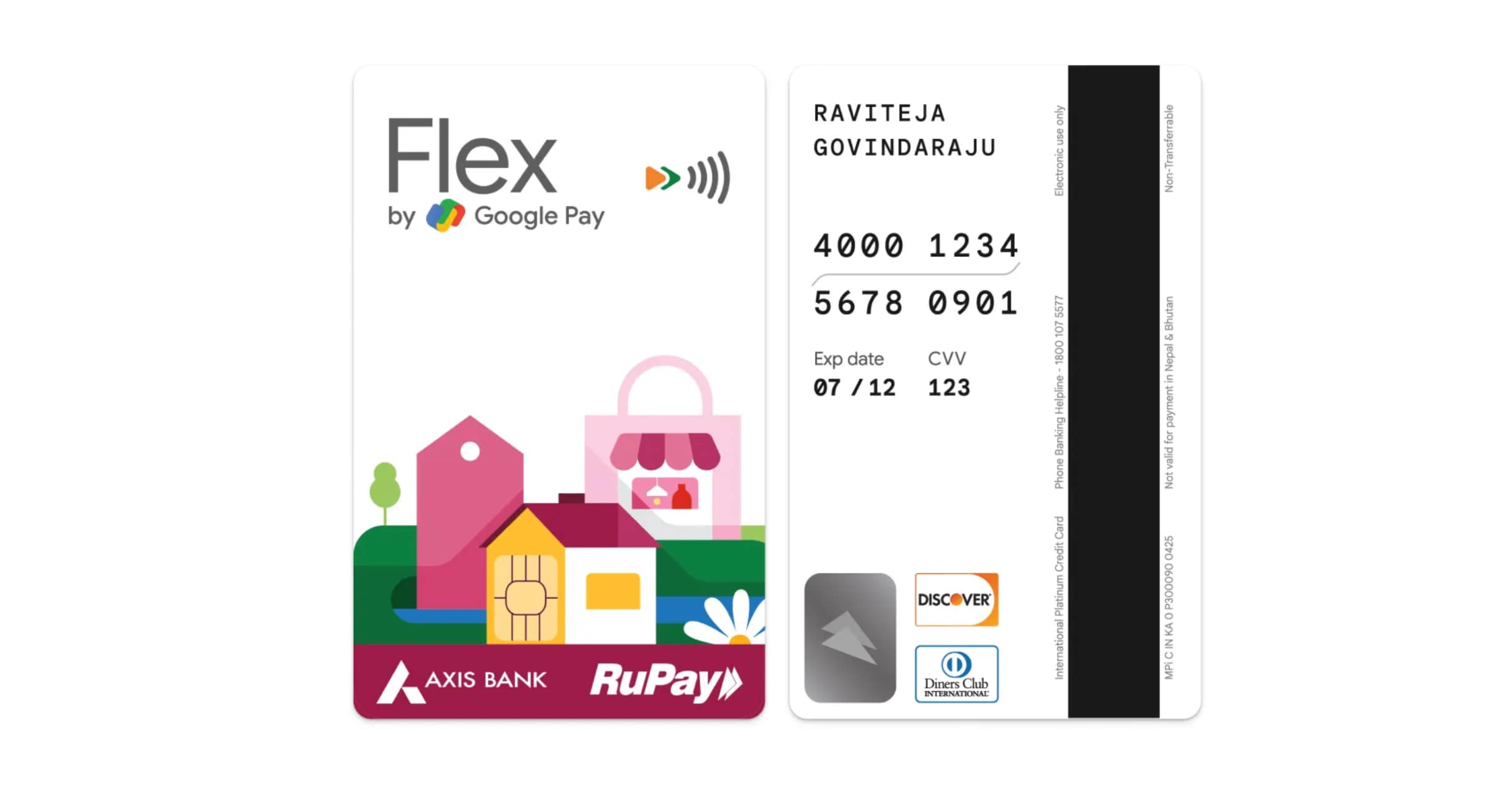
The Flex by Google Pay credit card structure depends on whether you are a Google One subscriber or not (that makes the Axis Bank version with no annual fee a better deal than the SBI Card variant which charges a fee). Google One plans with just cloud storage start at ₹59 per month (for 30GB storage) while you can go higher in the tiers to the Google AI Plus (plans start ₹399 per month) or Google AI Pro ( ₹3,250 per month) depending on what you need from shared cloud storage space and Gemini artificial intelligence (AI).
Here’s what it offers now, if you are a Google One subscriber. If the billing cycle spends are less than ₹15,000 in total, the return is as stars valued at 1.6% of those spends. If the spends in a month cross the ₹15,000 threshold, that return rate doubles to 3.2% stars on all spends (and not just the spends above ₹15,000). Each star is valued at ₹1 and can be redeemed for subsequent purchases or bill payments. The base rewards are themselves a big uptick from the maximum 0.8% returns in the previous rewards methodology.
Two new additions to the structure. First, up to ₹3,000 a month in bill payments on Google Pay unlocks an additional 15% return in stars worth ₹450. This makes it quite rewarding for many households as it stacks up against the PhonePe co-branded credit cards issued by the likes of HDFC Bank and SBI Card (depending on variant, cashback is up to 10% but with higher monthly capping of ₹1,000 per cycle), and the HSBC Live+ credit card (that also returns 10% but also with a higher capping of ₹1,200 per cycle).
Similarly for food and grocery app payments via Google Pay UPI (on merchants including Swiggy, Zomato, Blinkit, BigBasket, Milkbasket, DMart, Flipkart Minutes, Amazon Now, and District) unlock a further 5% return worth ₹250 on spends up to ₹5,000 per month.
Google says that from November 15, Google AI Plus plan subscriptions will get as much as a 50% discount when paid for using the Flex by Google Pay credit card. Alongside, the Flex by Google Pay credit card by Axis Bank is also eligible for discounts up to ₹10,000 on the purchase of certain Google Pixel smartphones and Fitbit devices from some offline stores. While this benefit is not available on the SBI Card version at this time, that should change soon.
Would you like a more detailed analysis of the best options to save some money as cashback or rewards, for regular bill payments or specific spend categories such as tech purchases? Would love to hear your thoughts.
The latest, on Neural Dispatch: A stylish Google Pay discovery, Haiku from space, and Canva’s Brush model
TECH SPOTLIGHT: KÄRCHER AF30
We are now very much in the midst of an unavoidable pollution season, particularly in North India, though conditions elsewhere aren’t much better. An indoor home air purifier is as essential as a broadband connection, a water purifier and electricity. German technology company Kärcher, which has roots in Winnenden and was founded in 1935, is a global name when it comes to cleaning tech for indoor spaces and more. Which is exactly why the company’s latest air purifier portfolio, which includes the Air Purifier AF30, caught my attention. As did the price tags— ₹65,999 as the official price that Kärcher lists, though you will find it at a market price of around ₹18,999 on various online stores (that context is important for potential buyers).
Do check out the HT Pollution Dashboard which is contextualising air quality data for the National Capital Region.

A comparable Philips AC4221 Series purifier, as good as that is I’ll readily admit, costs more at around ₹23,500 (market price, may vary) at the time of writing this. There is also the impressive Qubo Smart Air Purifier R700 that is priced around ₹19,990 which completes the competition landscape.
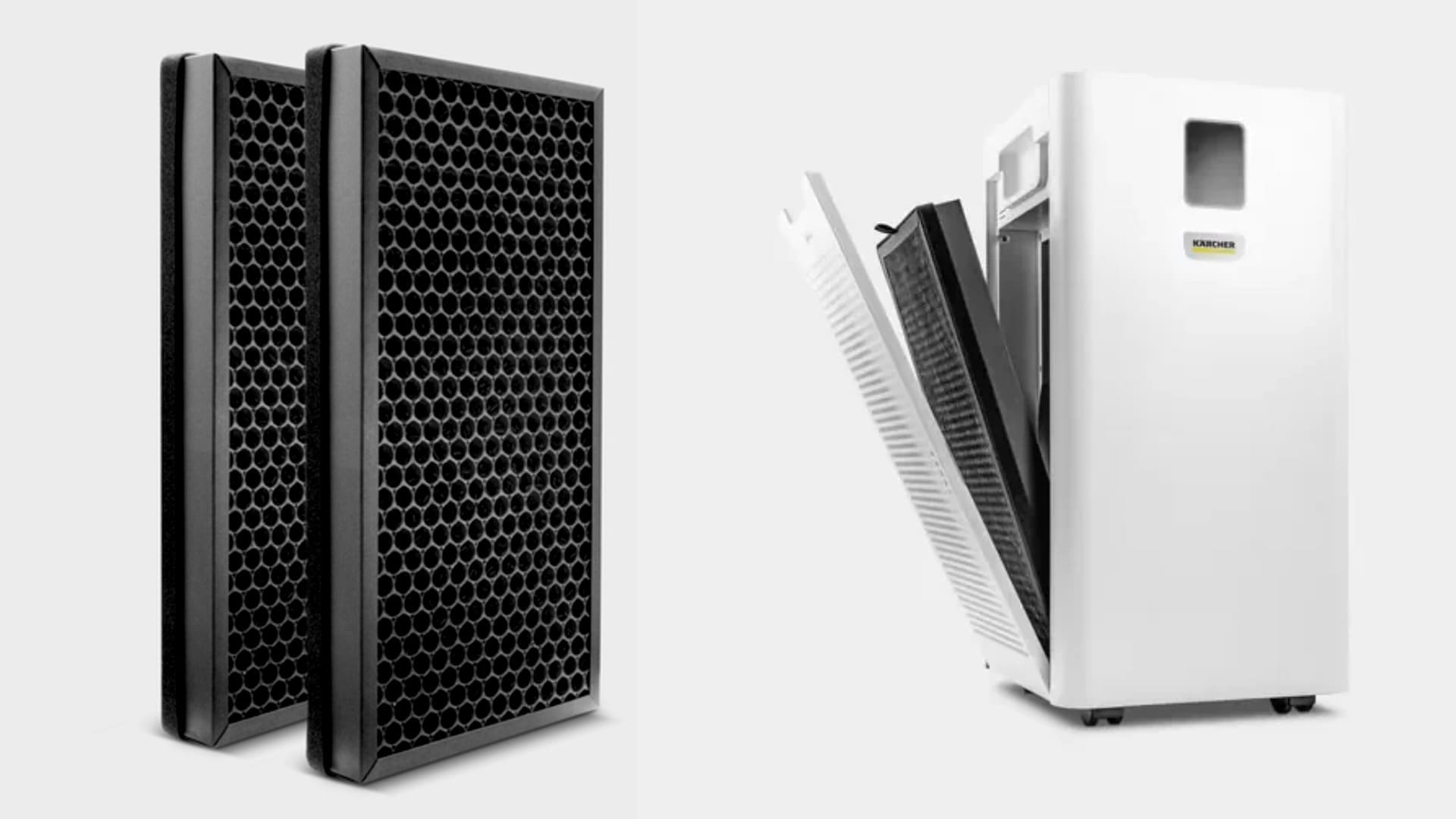
The Kärcher AF30 is meant for medium-sized rooms, around 650 square feet, and these would cover the living room or a large hall space in most modern apartments. Dual side inlets with the air getting sucked through thick and dense H13 filters on each side—the key is to place this with enough space on either side for best air intake. The foundation of the Kärcher AF30 is strong, and that as we discover, is exactly why it is able to hold up and deliver consistent clean air even as the outdoor AQI fell into severe even before the Diwali festival. These H13 filters eliminate pathogens and aerosols that are common in indoor air.
Containing AQI spikes in a fairly open living and dining hall isn’t easy for most single purifiers. The Kärcher AF30 does so with ease, keeping the indoor air around 70 AQI (noted using a third-party AQI meter that collates PM2.5, total volatile organic compounds or TVOCs and 0.3 micron particulate), while the outdoor AQI hovered around 379. This is indeed very impressive, particularly in an active indoor space.
I particularly appreciate that this isn’t a ‘smart’ air purifier, which means no complications of a smartphone app and Wi-Fi connectivity—this is a good old piece of tech where you use the intuitive buttons on the purifier itself. You would too, if simplicity in operation is what you’re going for. And the fact that it simply works very well in large spaces, is its biggest party trick.