
 E-Paper



Sensex falls 460 points, Nifty declines 123 points as Saudi attacks fuel oil price concerns
From rising crude oil prices to caution ahead of the US Federal Reserve’s policy decision, here are the key factors behind the stock market decline.

 Prefer HTon Google


Equity benchmark indices Sensex and Nifty declined in intraday trade on Thursday, dragged down by selling in power and metal stocks, a surge in crude oil prices amid escalating tensions in West Asia and caution ahead of the US Federal Reserve’s upcoming policy decision.
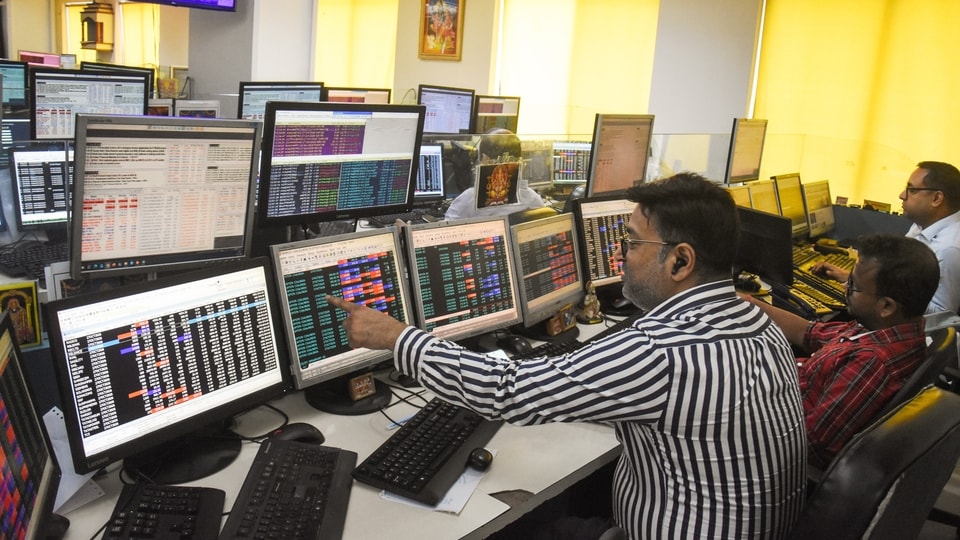
The 30-share BSE Sensex fell 460.30 points to settle at 73,249.39. The NSE Nifty 50 dropped 123.70 points to close at 22,687.65.
ALSO READ: Indian national among 2 killed in attack on Saudi Arabia’s King Fahd airport
Earlier in the session, Sensex fell 523.54 points, or 0.71%, to 73,186.15, while the NSE Nifty 50 declined 181.50 points, or 0.80%, to 22,629.85 around 2 pm. In the morning trade, the Sensex had plunged 678.90 points, or 0.92%, to 73,030.79, while the Nifty dropped 250.90 points, or 1.10%, to 22,568.10.
Here are the key factors weighing on the stock markets:
1. Crude oil prices surge amid West Asia tensions
Rising crude oil prices remained a major concern for investors, with Brent crude trading above $112 per barrel amid escalating hostilities in West Asia and renewed attacks involving Yemen’s Iran-aligned Houthi rebels and Saudi Arabia.
The latest escalation has heightened concerns over the security of energy infrastructure and potential disruptions to oil supplies. The Houthis have claimed multiple attacks targeting Saudi Arabia’s energy and aviation infrastructure, including an Aramco facility in Yanbu, the Shaybah oilfield and airports in Riyadh and Dammam.
ALSO READ: Apple iPhone Duo review: Boldest iPhone since the iPhone X, with a dash of fun
The conflict has also disrupted air travel and prompted security advisories for foreign nationals. Earlier attacks on Riyadh’s King Khalid International Airport led to flight disruptions, while the US tightened travel restrictions for its government employees in parts of Saudi Arabia amid heightened security concerns.
The developments have added to concerns over the wider regional conflict and the risks to energy supplies. For India, which depends heavily on imported crude oil, a sustained rise in prices could increase the import bill, put pressure on the rupee and complicate efforts to contain inflation.
2. Mid- and small-cap stocks face a valuation reset
The sell-off extended beyond heavyweight stocks, with mid- and small-cap indices declining more sharply than the benchmark indices, indicating broader weakness across the market.
The Nifty 100 declined 1.01%, while the Nifty 200 fell 1.09% and the Nifty 500 dropped 1.12%. Selling pressure was more pronounced in the mid- and small-cap segments, with the Nifty Midcap 50 slipping 1.36%, the Nifty Midcap 100 falling 1.39% and the Nifty Smallcap 100 declining 1.45%.
The broader market’s underperformance reflected investors’ cautious stance amid geopolitical uncertainty, elevated oil prices and concerns over valuations.
3. Investors cautious ahead of US Fed meeting
Investors remained cautious ahead of the US Federal Reserve’s interest rate decision following its October 27-28 policy meeting. The decision could influence foreign investment flows into Indian markets.
If the US Fed keeps interest rates high, investors may prefer to put their money in the US, where they can earn better returns on relatively safer investments. This could lead to more foreign investors selling Indian shares, putting further pressure on the stock market.
High US interest rates can also strengthen the dollar against the rupee, making imports such as crude oil more expensive for India. This could add to inflationary pressures.
On the other hand, signals of a possible rate cut could encourage investors to put more money into markets such as India.
Foreign capital outflows have already crossed ₹3 lakh crore this year, adding to the pressure on domestic equities.
4. Rupee weakens against US dollar
The Indian rupee snapped an eight-session-long winning streak and fell 44 paise to close at 94.82 per dollar, reversing some of the optimism generated in the previous session by hopes of a potential India-US trade agreement.
Elevated crude oil prices remain a key risk for the domestic currency, as higher oil import bills increase demand for dollars and put pressure on India's external balances.
Measures by the Reserve Bank of India to regulate dollar purchases, including dedicated banking arrangements for oil-marketing companies, have offered some support. However, sustained geopolitical tensions and expensive crude could continue to weigh on the rupee and investor sentiment.


