E-Paper



Calibrating pollution meters vital in Delhi, NCR: Experts
Experts also suggested that local wind speed and the accumulation of pollutants over Delhi may be reducing the impact in Gurugram.

 Prefer HTon Google


The 24-hour average air quality index (AQI) on Friday was 494 (severe) in Greater Noida, 468 (severe) in Delhi, 440 (severe) in Noida and 410 in Ghaziabad. However, the AQI in Gurugram was 367 (very poor), nearly 100 points lower than Delhi, Central Pollution Control Board’s national bulletin at 4pm showed, a variation that prompted experts to call for a review of local readings. The variation in AQI data could be due to poor calibration of station or local factors, said experts.
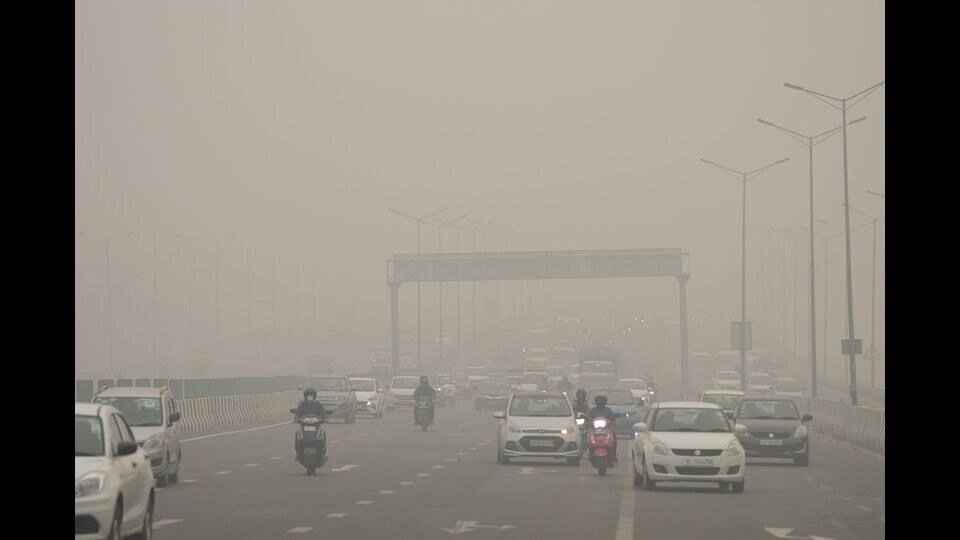
Faridabad for instance, which is not too far from Gurugram, was the third most polluted NCR town, with an average AQI of 460 (severe). Experts said even though meteorological factors at the local level can play a role, large variations in the NCR on a day like this require attention.
IIT Delhi’s Mukesh Khare, an air pollution expert, said though the wind direction was northwesterly on Friday, Gurugram did not feel the brunt of pollution, despite being downwind of Delhi.
“Delhi’s AQI has deteriorated sharply and even though Gurugram has seen an increase, it too should have felt the impact of these northwesterly winds and stubble burning. Local wind speed needs to be studied, particularly around ambient air quality monitoring stations and their calibration can also be checked again, to ensure the data being provided is accurate,” Khare said, stating accumulation of pollutants over Delhi may also be reducing the impact in Gurugram.

Sunil Dahiya, analyst at the Centre for Research on Energy and Clean Air (CREA) said a variation of 20-30 AQI points was a fairly common occurrence, but larger differences may require state pollution control boards to look at the local sources in particular. “Largely we saw similar conditions in NCR. So, if a location is considerably more polluted than others, as was the case with Greater Noida, there is a need to identify local sources. There are large open areas, where dust or some combustion source could be leading to such levels,” he said, stating videos have also surfaced online, claiming water was being sprinkled near the air quality monitoring station in Loni. “Such techniques may also show a lower reading,” he said.
A similar trend was also seen on Thursday, when Greater Noida was the worst-hit, recording a reading of 402 (severe) at 4 pm. This was followed by Delhi (492), Faridabad (368) and Noida (351) — all in the “very poor” category. Interestingly, both Gurugram and Ghaziabad were around 100 points lower than Delhi and in the “poor” category. Gurugram’s average AQI was 297 and Ghaziabad’s was 286.
CPCB data shows Delhi has the densest air pollution network in NCR with 40 ambient air quality monitoring stations set up across its length and breadth. This is followed by four stations each in Ghaziabad, Greater Noida, Noida and Faridabad and only two in Greater Noida. While Delhi’s average AQI was taken from 35 stations, all stations in the remaining NCR towns were functional on Friday.
Professor SN Tripathi from IIT-Kanpur, who is also part of the Steering Committee of the National Clean Air Programme, said the spread of these stations could also be playing a role in determining the average AQI. “If they are in relatively cleaner areas and a few in number, the average AQI for the entire city will also be lower, but may not be representative of the pollution there. Delhi has stations in different landscape types, including near roads, in industrial area, residential areas and green areas too, which gives a complete picture of the city,” he said.
Read Here: Delhi AQI deteriorates to 468; toxic air engulfs national capital
Meanwhile, Gurugram deputy commissioner Nishant Kumar Yadav said that they have taken several precautionary measures to keep a check on the rising pollution levels. “We get timely services done of air quality monitors for accurate data. The green belt, ban on construction and enforcement has played an important role. Our teams are regularly checking residential as well as commercial areas. MCG teams have also been sprinkling water on roads and in green belts too,” he said, stating that the lower readings could be due to the efforts on the ground as a whole.
Greater Noida officials said that road dust, construction activities and vehicular pollution added to the AQI value. Officials said that the location of the city’s two ambient air quality monitoring stations are also close to traffic hot spots.
“We have now stopped all kinds of construction activities in the city and have also asked the Greater Noida Authority to ensure that the road dust is mechanically swept, collected and disposed of properly, instead of just sprinkling water over it. Additionally, one of our monitoring stations is close to an auto and taxi stand near Sharda University where the traffic volume is very high. We have discussed with the authority that the monitoring station should be shifted from this location to an area that is more representative of the city’s pollution levels, as per CPCB norms,” said D Gupta, regional officer, Uttar Pradesh Pollution Control Board.
He added that the second monitoring station in Knowledge Park 5 is also located along an educational institution that sees heavy traffic. Officials added that when both monitoring stations were installed about seven years ago, the city had very low population and traffic. However, with the city’s development , both are now situated along the roads that are among the busiest arterial stretches now.