E-Paper



Delhi to turn back clock on Najafgarh drain, rename it Sahibi River
The Sahibi River originates in Rajasthan and flows through Haryana before entering Delhi and merging with the Yamuna. In Delhi, the channelled course of the Sahibi River is presently called the Najafgarh drain

 Prefer HTon Google


Delhi’s Irrigation and flood control (I&FC) department has initiated the process to rename the Najafgarh drain the Sahibi River in Delhi, officials said, after a proposal was submitted to the state names authority (SNA) under the urban development department, in a move to help authorities create awareness about the lost river.
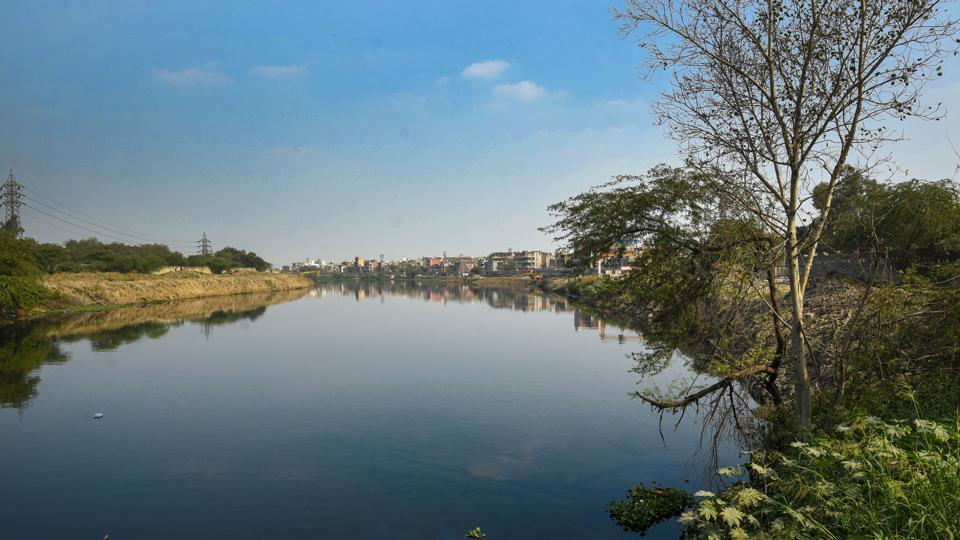
The Sahibi River originates in Rajasthan and flows through Haryana before entering Delhi and merging with the Yamuna. In Delhi, the channelled course of the Sahibi River is presently called the Najafgarh drain.
In a report submitted to the National Green Tribunal (NGT), which had asked the Delhi government on February 7 “whether Najafgarh drain was at any point of time known as Sahibi River and whether the same could be renamed as Sahibi River for generating people’s support to its rejuvenation”, it said historical records dating to 1807 from the ”Environs of Delhi” showed the present Najafgarh drain as the “Sabee Nullah”.
In the report, submitted on May 11, the I&FC department said: “A proposal has already been initiated for obtaining approval from ‘state names authority’ for officially naming or renaming Najafgarh drain as Sahibi River.”
The I&FC quoted records from 1885, 1907 and 2012 to support its move of renaming the drain. “Whereas map of 1885 depicts it as ‘canal of Najafgarh’, another map titled ‘Environs of Delhi’ in 1907 also termed it as Najafgarh canal. In the ‘River Basin Atlas of India’ published by central water commission in 2012, for the Ganga basin, Sahibi is shown as one of the tributaries of Yamuna. However, according to I&FC records, the portion of this tributary from Dhansa regulator to its outfall into Yamuna in Delhi is known as Najafgarh drain,” the submission said.
Delhi’s SNA has 29 members, including four MLAs and officers of multiple state departments, at present and is headed by the Delhi chief minister, and the Delhi chief secretary is the vice-chair. A proposal has to first be scrutinised by a subcommittee of the principal secretary (urban development), after which it is placed before SNA.
NGT put forth its order on a plea filed by a resident of Kharkhara village in Haryana, Prakash Yadav, who alleged the Sahibi River is neglected and is being filled with sewage. The petition, saying that the mix of sewage water and river was overflowing onto farmland in the area, sought restoration of the river and protection of the village.
Manu Bhatnagar, principal director of the natural heritage division at INTACH (Indian National Trust for Art and Cultural Heritage) said the Sahibi River, which originates close to Alwar in Rajasthan, has been a rain-fed body, which, over the past two centuries, has gradually been encroached upon, causing a drop in the water table.
“Earlier, the groundwater table used to be high and the river would sustain itself throughout the year. As agriculture became more prominent, the river became narrower and a large chunk of it has also been captured by farmers near Dharuhera in Haryana, after a portion dried up there. The river merges with outfall drain number 8 in Haryana and moves towards Dhansa Barrage and the Najafgarh lake. So in a way, Najafgarh Jheel is part of the Sahibi River and upstream of the lake, feeds it. Meanwhile, downstream of Najafgarh Jheel is what used to be called the Sahibi nallah, which, in present day, exists as Najafgarh drain.
Bhatnagar said that around the 1860s, the Sahibi nallah was chalked out by creating a canal downstream of Najafgarh lake, which is when it became popular as Najafgarh drain. “If you look at man-made canals, they are generally straight, but the Najafgarh drain meanders along the city. This is because it was built along the original channel of the Sahibi River, which eventually flows into the Yamuna,” he said.