
 E-Paper



Unprecedented move: ED arrests CBI approver Dinesh Arora in excise policy ‘scam’
Dinesh Arora was taken into custody under Prevention of Money Laundering Act (PMLA) based on sufficient evidence that he played a key role in the alleged scam.

 Prefer HTon Google


In an unprecedented development, the Enforcement Directorate (ED) on Thursday arrested businessman Dinesh Arora, a close aide of former deputy chief minister of Delhi Manish Sisodia, and who happens to be an “approver” for the Central Bureau of Investigation (CBI) in Delhi excise police 2021-22 related irregularities.
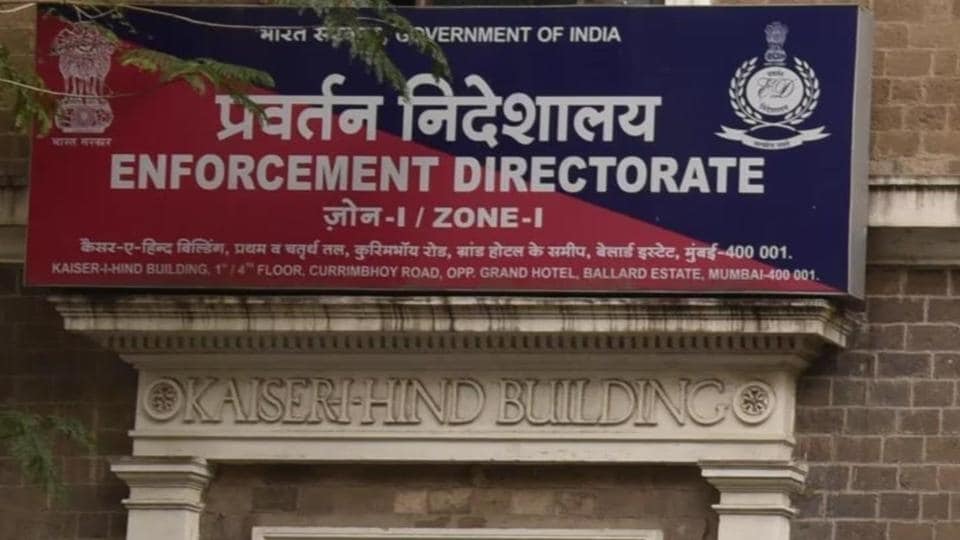
People familiar with the development said Dinesh Arora was taken into custody under Prevention of Money Laundering Act (PMLA) based on sufficient evidence that he played a key role in the alleged Delhi excise policy scam.
The CBI had, in November last year, given a plea in a Delhi court to make Arora an approver in the case. In fact, citing Dinesh Arora’s statement recorded under section 164 of the Criminal Procedure Code (CrPC) before a magistrate, CBI claimed in its charge sheet filed in April against Manish Sisodia and others that ₹90-100 crore were paid by the alleged South Group to Aam Aadmi Party’s former communications in-charge Vijay Nair, out of which ₹30 crore were sent by another accused Abhishek Boinpally through hawala.
Also Read: Delhi HC denies bail to Manish Sisodia in ED case related to excise policy scam
It is yet to be seen how the CBI will react to the arrest but an officer in anti-corruption probe agency, who didn’t want to be named said “I have never seen such an arrest of an approver of any agency by the another”.
The ED claimed in its charge sheet against Sisodia, filed on May 4, that former deputy CM received “kickbacks” worth ₹ ₹2.2 crore through Dinesh Arora from businessman Amit Arora for favouring latter in the now scrapped excise policy 2021-22.
“The investigation has revealed that Dinesh Arora (a close aide of Sisodia) and Amit Arora (owner of Buddy Retail Pvt Ltd, arrested on November 30 last year) were involved in various illegal activities pertaining to the Delhi excise Policy 2021-22 and its implementation in conspiracy with other players of this scam. Further, in the policy under investigation, Manish Sisodia has participated in conspiracies with other persons other than the South Group. Sisodia has received kickbacks of Rs. 2.2 crore from Amit Arora through Dinesh Arora for doing favours in the excise policy 2021-22,” states the ED charge sheet, reviewed by HT.
The financial crimes probe agency cited Amit Arora’s statements to back its allegation.
On Sisodia’s closeness with Dinesh Arora, ED, said before the commencement of the business under the new excise policy all the retailers were facing a lot of issues in opening the stores or vends, be it from excise or Municipal Corporation of Delhi, Dinesh Arora arranged a meeting with Sisodia in September 2021.
“In this meeting, Dinesh Arora arrived 15 minutes late, after the (former) Deputy chief minister had already arrived. The meeting was started only after the arrival of Dinesh Arora and Sisodia gestured Dinesh Arora to join and sit right next to him in the meeting. (This fact has been corroborated by other persons also who were present in the meeting). This sent a message across the industry that Dinesh Arora was the person acting on behalf of AAP for the excise matters. Dinesh Arora also used to mention that he was collecting 6% kickbacks on behalf of Sisodia. In addition, he had been boasting about his closeness with Arvind Kejriwal (the CM of Delhi). As per his experience and understanding, Dinesh Arora was hand in gloves with Vijay Nair and was handling cash on his instructions for AAP,” ED charge sheet states.
HT has seen both CBI and ED charge sheets.
ED has so far filed five charge sheets in the alleged excise policy scam while CBI has filed two.
The South Group which comprises YSR Congress MP Magunta Srinivasulu Reddy, his son Raghav Magunta, Sarath Reddy (promoter of Aurobindo Group), and K Kavitha (daughter of Telangana chief minister K Chandrasekhar Rao) and Delhi businessman Sameer Mahendru. It was represented by Abhishek Boinpally, Arun Pillai and Butchibabu in meetings with Nair and other liquor businessmen.
The Delhi government’s 2021-22 excise policy aimed to revitalize the city’s flagging liquor business. It aimed to replace a sales-volume based regime with a license fee one for traders, and promised swankier stores, free of the infamous metal grilles, ultimately giving customers a better buying experience. The policy also introduced discounts and offers on the purchase of liquor, a first for Delhi.
The plan, however, came to an abrupt end, with Delhi’s lieutenant governor Vinai Kumar Saxena recommending a probe into alleged irregularities in the regime. This ultimately resulted in the policy being scrapped prematurely and being replaced by the 2020-21 regime, with the Aam Aadmi Party (AAP) alleging that Saxena’s predecessor sabotaged the move with a few last-minute changes that resulted in lower-than-expected revenues.


