
 E-Paper



Qutub prayer row: Delhi court reserves order over land ownership plea
A Delhi court on Tuesday reserved its order on an intervention application by a man who claims that the land on which the Qutub Minar complex stands is his ancestral property

 Prefer HTon Google


A Delhi court on Tuesday reserved its order on an intervention application by a man who claims that the land on which the Qutub Minar complex stands is his ancestral property.
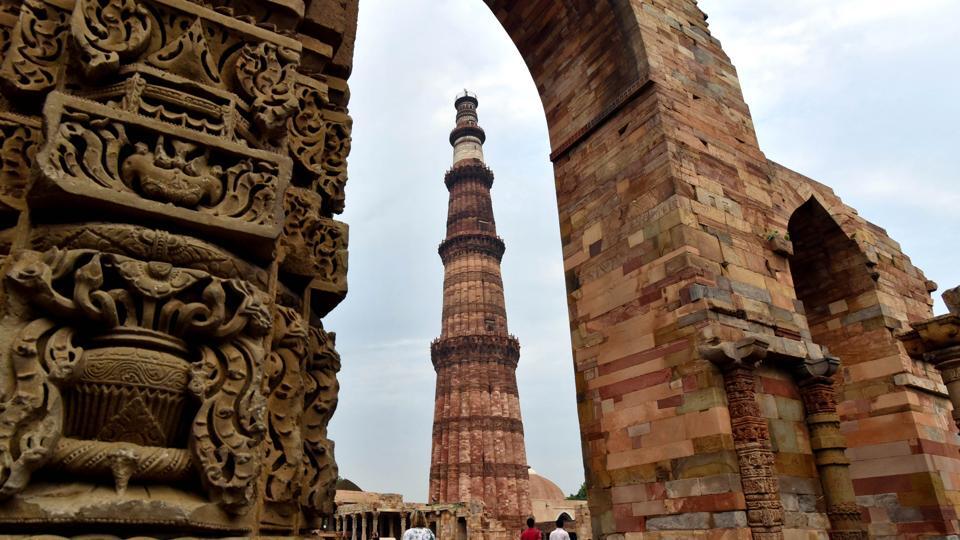
The application was moved by one Kunwar Mahendra Dhawaj Prasad Singh, who claims to be the heir to the ruler of the erstwhile United Province of Agra, and claimed a right over the property where the mosque stands.
The application was filed in appeals by advocate Hari Shankar Jain and Ranjana Agnihotri on behalf of Jain Tirthankar Rishabh Dev and Hindu god Vishnu, seeking right to worship at Qutub Minar. Earlier in June, the court had said that without hearing the application it cannot decide the right to worship at the Quwwat-Ul-Islam mosque.
On Tuesday, additional district judge Dinesh Kumar heard the application and said that he would pronounce the order on September 17.
During the hearing, advocate Subhash C Gupta, appearing for the Archeological Survey of India (ASI) asked the court to impose costs on the plea, arguing it was a publicity stunt and that Singh had wasted its time. ASI said that the intervener had no locus standi in the case and the claim of ownership had lapsed by the principle of delay and laches.
ML Sharma, counsel for the intervener, said his client was heir to the ruler of the United Province of Agra from the 16th century onwards -- the territory between the rivers Ganga and Yamuna. He further said that the Union government had encroached upon the entire area and even as three petitions regarding the matter were pending in the High Court of Allahabad, the intervener had made representation to the Prime Minister, President and authorities concerned to settle his “constitutional dispute”.
Without signing any merger, treaty or instrument of accession or paying compensation the government had taken the intervener’s land, and crores of people had encroached on his land on behalf of the government, the counsel said.
Singh, who was present in the court, said he has filed a suit against the Union government for acquiring his property, which has been pending. He also told the court he was not seeking any relief apart from being heard in this case.
“I am 78 now. For 60 years I have been fighting with the government. I have not lost the authority of being a sovereign king… At least give my land to me. There are 1,700 illegal colonies (in Delhi). Where did these colonies come from? It is all encroachment. They (government) have kept quiet,” Singh told the court.
Noting that at the present stage of the trial, the court could not decide on the veracity of the claims made in the petition, the judge asked that even if the claims were held to be true, how was the intervener a necessary party in the case.
“The law is settled (on this aspect). You have to show yourself as a lawful or necessary party… The government might be the encroacher, but you have to get your right settled through (a separate) court,” the judge said. “This court cannot decide the question of ownership of land.”
In his application, Singh has stated that he is the heir of Raja Rohini Raman Dhawaj Prasad Singh who died in 1950. According to him, the Besean family descended from Raja Nand Ram who had died in 1695. He claimed that the Beswan Avibajya Rajya Beswan Estate Hathras Estate, Musran Estate and Brindaban Estate from Mahabharata Period, which included areas from Meerut, Agra, Bulandshahr, Aligarh and Gurugram between the Ganga and the Yamuna rivers continued to be inherited for generation from 1873 to 1950.
The petition claimed that the Government of India did not sign an instrument of accession with the owners of the state after Independence, and thus the Beswan Avibhajya Rajya of Beswan family is as on date a princely state, which is independent and holds all the territories of United Province of Agra.
Singh’s case bears similarities to a recent case at the Delhi high court, in which a woman named Sultana Begum had claimed right over the Red Fort, and claimed that she is the widow of Mirza Mohammed Bedar Bakht, the great-grandson and legal heir of Bahadur Shah Zafar II, the last Mughal emperor.
However, the court dismissed her plea even without going into the merits of the case, noting that the claim is clearly barred by gross delay and laches, and the writ petition would not be maintainable after an inordinate delay of over 164 years.


