E-Paper



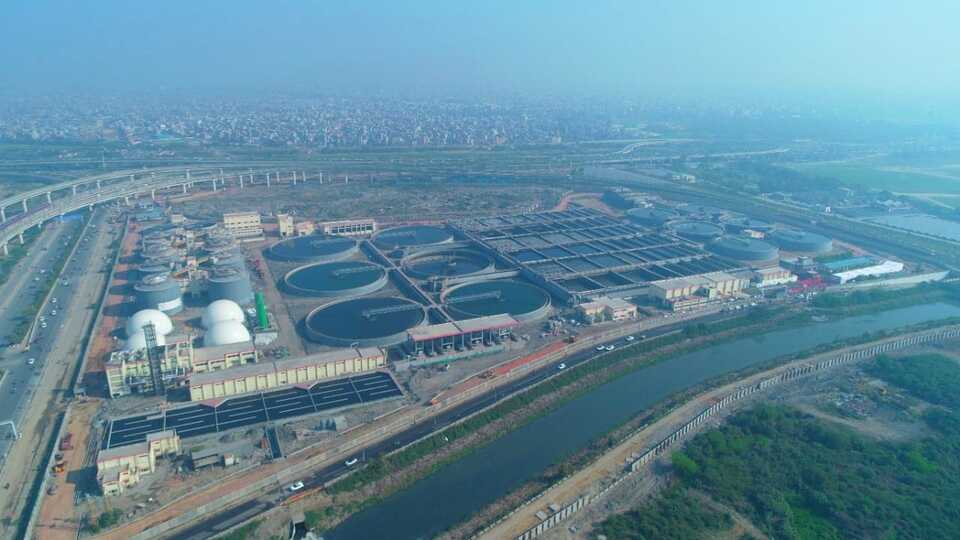
With new STP in Burari, Jain says Delhi a step closer to a cleaner Yamuna
Delhi water minister Satyendar Jain, who inaugurated the new STP on Saturday, also laid the foundation stone of a 71.51km-long sewer line in Sangam Vihar and Deoli areas.

 Prefer HTon Google


The Delhi Jan Board (DJB) has operationalised a new sewage treatment plant, Coronation Pillar STP, with a capacity of 70MGD (million gallons per day), in Burari with officials saying that the new facility is another step towards the government’s efforts to clean Yamuna.
Also Read | DJB okays plans to lay 575km sewage lines in unauthorised colonies
Delhi water minister Satyendar Jain, who inaugurated the new STP on Saturday, also laid the foundation stone of a 71.51km-long sewer line in Sangam Vihar and Deoli areas.
A senior DJB official said that the newly built Coronation Pillar STP will treat sewage water from the coronation pillar drainage zone. “Wastewater generated from the areas of Shakti Nagar, Kamla Nagar, Roop Nagar, Delhi University campus and Nehru Vihar will be treated at this plant. It will also cater to sewage generated from unauthorised colonies such as Saroop Nagar, Bhalswa, Sant Nagar and Wazirabad area,” the official said.
Jain said, “Presently, the sewage which directly falls into the supplementary drain will now get trapped and treated at the Coronation Pillar through the pumping station in Burari. The treated wastewater will then fall in the supplementary drain before reaching Yamuna.”
Jain said it is expected to benefit the 2.3 million people in the area.
According to estimates, Delhi generates around 744MGD of sewage even as it has a capacity to treat only around 607MGD through its 37 sewage treatment units across the city. Officials said the new STP at Coronation Pillar will add another 70MGD to the Capital’s sewage treatment capacity.
Delhi plans to treat around 95% (707 MGD) of its waste water generation by December 2022. The water utility plans to increase its sewage treatment capacity by 130MGD by year-end through Kondli STP, Rithala STP, Okhla STP and Coronation Pillar STP.
As per government reports, the DJB is expected to increase its treatment capacity to 903 MGD by June 2023, to accommodate future demands, with the construction of 48 new treatment facilities and new STPs at Delhi Gate and Sonia Vihar. According to Sewage Treatment Augmentation Action Plan 2041, Delhi needs to ramp up sewage treatment capacity to 1,200MGD by 2041.
Jain also initiated the work of laying 71.51km of sewer lines in 20 unauthorised colonies in Sangam Vihar and Deoli areas on Saturday. “Due to the non-availability of sewerage systems in the area, the generated sewerage from this area is currently being discharged into the local ponds, septic tanks and stormwater drains. The drain discharge goes into the Yamuna through Najafgarh drain causing pollution in river,” Jain said. This work is expected to be completed in 15 months at a total cost of ₹42.36 crore.
Officials said that in future, the Coronation Pillar facility is also expected to play a key role in the ambitious ‘Singapore Newater project’ to use highly treated wastewater to augment raw water supply by pushing it upstream to Palla after further treatment.
“The plant includes nutrient (nitrogen and phosphorus) removal components. It also has provision of power generation, thereby making the facility self-sustainable,” the official added.
The Delhi government has announced its goal to clean Yamuna by 2025. The 22 km stretch of Yamuna in Delhi, from Wazirabad barrage to Okhla Barrage, is less than 2% cent of Yamuna’s total length but it accounts for nearly 76% of the total pollution in the river, a Yamuna monitoring committee report notes.