
 E-Paper



Families brace for costliest Bakra Eid in decades as goat shortage hits Deonar markets
Deonar Abattoir faces a goat shortage ahead of Bakra Eid, causing prices to soar and leaving buyers anxious as many can no longer afford livestock.

 Prefer HTon Google


MUMBAI: With just days left for Bakra Eid, Deonar Abattoir, among Asia’s largest slaughterhouses and livestock markets, is witnessing an unusual and worrying sight: empty lanes, anxious buyers and soaring prices.
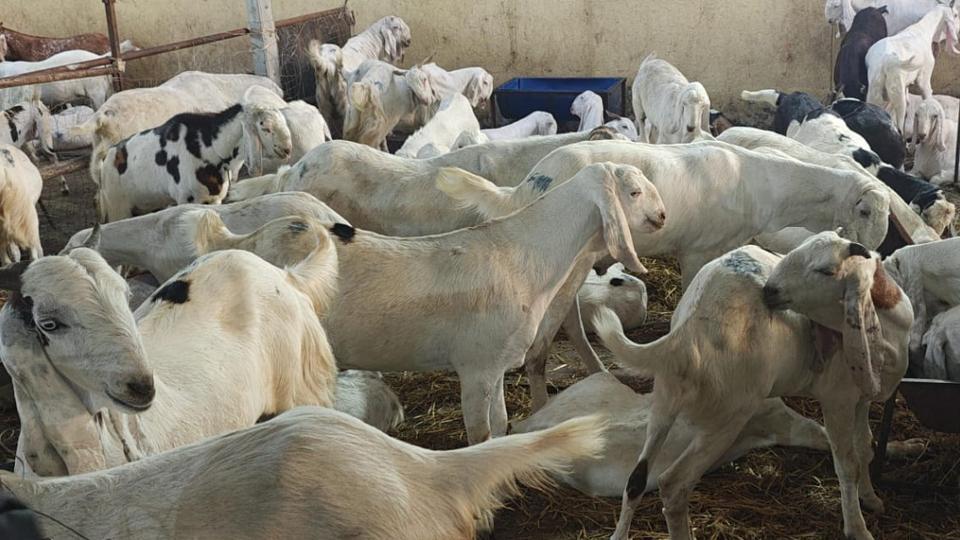
Every year during the eight-day Bakra Eid rush, the Deonar market witnesses business estimated at nearly ₹700 crore, with thousands of goats arriving from across western and northern India and premium animals fetching anywhere from ₹20,000 to well above ₹1 lakh. But this year, traders say the market has slowed dramatically due to a severe shortage of livestock and unprecedented price escalation.
On Sunday, large sections of the market wore a deserted look as buyers walked away after being quoted steep prices for goats, many of which have doubled compared to previous years.
According to Gulrez Sharif Qureshi, national secretary of the All India Jamiatul Quresh (AIJQ), which represents the Qureshi community, traditionally associated with the meat industry, around 127,000 goats had arrived at the Deonar abattoir till Sunday, compared to nearly 188,000 goats during the same period last year.
“This time the cost of goats is much higher. The goats coming from Gujarat have stopped for some reason and many goats are dying due to the heatwave while being transported. There is no goat available below ₹30,000 for this Eid. Earlier they were sold at ₹15,000 to ₹18,000,” he said.
Mumbai traditionally receives large numbers of livestock from Gujarat, Rajasthan, Punjab and Haryana ahead of Bakra Eid. Premium breeds such as Beetal goats from Punjab and Haryana, known for their meat quality and size, are especially favoured by affluent buyers. Sirohi goats from Rajasthan also remain in high demand because of their sturdy build and rapid weight gain. Among the most sought-after animals in Mumbai are the Ajmera and Gujri breeds from Gujarat, prized for their size, appearance and suitability for sacrifice.
However, traders said supplies from several states have sharply reduced this year. “We are falling short of nearly 70,000 goats. These are the most expensive rates seen in the last 25 to 30 years. Inflation, heatwaves and rumours surrounding a possible lockdown have all affected the market,” Qureshi added.
Lower-income families feel the pinch
For many lower-income Muslim families in Mumbai, Bakra Eid is often the only occasion in the year when the household consumes premium-quality mutton. Many families begin saving small amounts almost a year in advance to buy an animal for qurbani. This year, however, soaring prices have placed the festival beyond the reach of many households.
“Middle-class families are under pressure this year. Many people who earlier planned a budget of ₹25,000 are now forced to spend ₹40,000 or settle for much smaller animals,” said Nadeem Qureshi, a buyer.
Bakra Eid is expected to be observed on May 28 (Thursday), with traders hoping for more arrivals over the next two days. However, transporters and livestock traders alleged that movement of animals into Mumbai has become increasingly difficult.
Qureshi alleged that vehicles transporting goats have faced obstruction on routes leading into the city. “The transport vehicles are being caught in Vasai and Marol markets by so-called gaurakshaks. Earlier one vehicle used to carry around 100 goats, but they were being stopped midway. Due to the heat, many animals died of heat stroke near Vasai Naka. Because of this, other transporters are refusing to take the risk,” he said.
Amid concerns over supply shortages and rising tensions, the Maharashtra government has stepped in with a series of directions aimed at easing transport and trade ahead of the festival.
State chief secretary Rajesh Agrawal directed police authorities to take legal action against local miscreants who stop vehicles transporting animals. He also clarified that taking action against animal traders solely for carrying animals in numbers exceeding prescribed limits was illegal.
MLA Rais Shaikh, who attended a high-level meeting chaired by Agrawal at Mantralaya last Tuesday, said the meeting included legislators from various political parties representing Mumbai’s minority community, representatives of the State Khatik Federation, and senior officials from the administration and police department.
“On the occasion of Bakra Eid, the slaughter fee at the Deonar slaughterhouse has been reduced from ₹200 to ₹20. Additionally, the number of designated places for qurbani in Mumbai has been increased from 70 to 109. Some housing societies had already been granted permission for qurbani earlier, and shopkeepers have now also been granted permission for the same,” Shaikh said.
He added that the state has also temporarily relaxed rules regarding animal tagging during the festival period.
“Considering Bakra Eid, relaxation has been granted in this rule. Animals without tagging will also be allowed to be bought and sold. The Chief Secretary issued these instructions to the BMC and the state Animal Husbandry Department during the meeting,” he said.
The meeting was attended by the Additional Director General of Police (Law and Order), principal secretaries from the departments of Animal Husbandry and Dairy Development, Rural Development, Cooperation and Marketing, while commissioners of municipal corporations across Maharashtra joined through video conferencing.
Pune prices spike
The impact of the shortage is being felt beyond Mumbai. Across Pune’s seasonal Bakra Eid markets, traders said goat prices have risen by nearly 20% to 40% compared to last year.
Traders said small goats that sold for ₹10,000 to ₹12,000 last year are now priced from ₹15,000 onwards. Medium-sized animals that previously cost ₹18,000 to ₹25,000 are now selling between ₹30,000 and ₹50,000, while premium breeds that earlier fetched ₹70,000 to ₹1.5 lakh are now commanding anywhere between ₹1 lakh and ₹3 lakh.
Javed Shaikh, a trader at Pune’s Bhavani Peth market, said buyers were struggling to cope with the sudden jump in rates. “Last year customers could comfortably buy a decent goat within ₹20,000 to ₹25,000. This year even average animals are crossing ₹30,000. Supply has reduced while expenses have increased sharply,” he said.
Transporters linked to Pune markets also blamed rising operational costs and increased scrutiny during animal movement. “Diesel rates, toll charges and fodder costs have all gone up. In several places transporters are also hesitant because of checking and fear during animal movement. This has affected supply into major cities,” said livestock transporter Arif Patel.
Market observers added that livestock arrivals from Rajasthan, Uttar Pradesh and Madhya Pradesh into Pune’s seasonal mandis were comparatively lower this year, further fuelling the sharp rise in prices ahead of the festival.
(With inputs from Nadeem Inamdar)


Stay updated with all the Breaking News and Latest News from Mumbai. Click here for comprehensive coverage of top Cities including Bengaluru, Delhi, Hyderabad, and more across India along with Stay informed on the latest happenings in World News.


