
 E-Paper





Leena Raghunath Baliga (byline: Linah Baliga) is Associate Editor with nearly two decades of experience in journalism,and has earlier worked with TOI, DNA and Mumbai Mirror specialising in civic affairs, urban governance and political reporting. Based in Mumbai, she has looked into the functioning of civic administration, public policy and governance, with a particular focus on the Brihanmumbai Municipal Corporation (BMC), urban infrastructure, housing, redevelopment and city planning. Over the years, she has consistently reported on issues that directly impact citizens, including municipal administration, public health, BEST, environmental concerns, major infrastructure projects and state government policies affecting urban development. Her reporting combines on-ground reporting, making complex civic and governance issues accessible to readers while ensuring accountability in civic administration. She has extensively covered political developments that shape urban policy. Her work has also focused on redevelopment policies, affordable housing and the implementation of major infrastructure projects across Mumbai.She continues to chronicle the evolving and changing landscape of Asia's richest municipal corporation. When she isn't chasing stories or poring over civic documents, she enjoys dabbling in art and unwinding with music. An avid rock 'n' roll enthusiast, she has an anachronistic taste in music, with a playlist that happily skips across decades, filled with timeless classics.
Mahalaxmi Racecourse makeover: Architects moot urban wetland park
MAC cites two international examples for wetland park; also urges BMC to bar underground parking and construction beneath all public open spaces in Mumbai


MUMBAI: Just days after municipal commissioner Ashwini Bhide agreed to drop the proposed underground sports complex and multi-level parking facility from the Mahalaxmi Racecourse makeover and restrict its development to a “simple, green park”, an architects’ collective has urged the BMC to turn it into an urban wetland park.
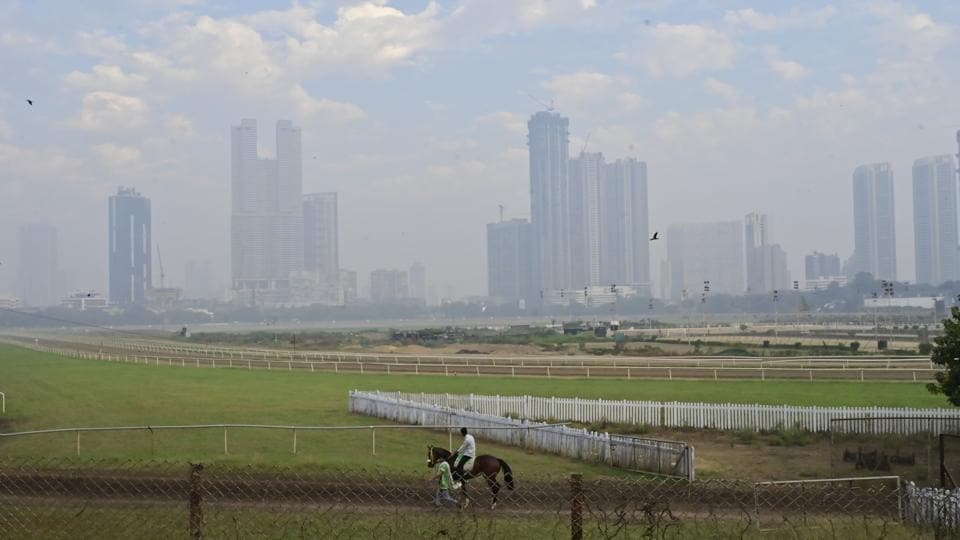
In a letter dated November 27 to chief minister Devendra Fadnavis and Bhide, the Mumbai Architects’ Collective said the racecourse serves as a natural rainwater-holding area during the monsoon and could be developed as an urban wetland park that could support biodiversity while retaining its existing recreational uses. In its letter, the collective said the Benjakitti Forest Park in Bangkok and Harbin Qunli Stormwater Park in Heilongjang province, in China could serve as models for such a plan.
The collective, representing 138 architects, urban designers, planners and allied professionals, has also urged the Maharashtra government and the Brihanmumbai Municipal Corporation (BMC) to formulate a permanent city-wide policy to protect Mumbai’s public open spaces and make them publicly accessible.
MAC pointed out that the racecourse was the third instance after the Pushpa Narsee Park and Patwardhan Park, where the city had recognised that natural public land should not be excavated for parking or construction. It urged the government to issue an interim Government Resolution (GR), pending a comprehensive Open Space Policy, prohibiting underground parking and construction beneath playgrounds and open spaces designated in the Development Plan.
The collective has also said all public open spaces should remain under civic control, with the BMC responsible for their maintenance and management instead of handing them over to private entities. This should apply to all public spaces, including the Coastal Road gardens, it said.
Questioning the proposed private management of the Coastal Road gardens, MAC said their development was estimated to cost around ₹400 crore, less than half a per cent of the BMC’s current annual budget. Despite this public investment, 173 acres of reclaimed land, developed using public funds, were proposed to be privately managed for up to 60 years, with ticketed attractions occupying 15% of the area.
While welcoming corporate social responsibility (CSR) initiatives, MAC said these should not come at the cost of public control over open spaces.
MAC said the Mahalaxmi Racecourse and Coastal Road gardens together account for nearly 300 acres. It called for an integrated plan connecting the two spaces, allowing people to move seamlessly between them while retaining their distinct identities and remaining under direct BMC management.
At a meeting on November 25, the collective agreed on five priorities for the racecourse and other public open spaces. These include guaranteeing free and universal access without entry fees or memberships; protecting existing recreational uses and improving facilities for walkers and children; preserving seasonal wetlands, increasing green cover and enhancing biodiversity; keeping public parks free of commercial and ticketed activities; and prioritising simple, sustainable designs centred on shade, pathways, drainage and basic amenities rather than expensive structures with high maintenance costs.
MAC also reiterated two principles from its August 7, 2026, statement: public land must be held in trust for Mumbai’s residents, and every increase in urban density must be accompanied by a corresponding increase in public open spaces and civic infrastructure.
Stressing the importance of professional participation in urban planning, MAC has sought a meeting with the government and BMC to contribute its expertise as the civic body prepares the policy and consults citizens and specialists in ecology, hydrology, transport, public health, economics and law.
The collective said its objective is to secure international standards in everyday civic life rather than create expensive attractions, adding that Mumbai’s public spaces must be planned and protected for future generations
ABOUT THE AUTHOR

Stay updated with all the Breaking News and Latest News from Mumbai. Click here for comprehensive coverage of top Cities including Bengaluru, Delhi, Hyderabad, and more across India along with Stay informed on the latest happenings in World News.


