
 E-Paper



How the city’s largest civic hospital revamped its kitchen
KEM Hospital’s cooks churn out 50 kilos of rice, 28 kilos of dal, 50 kilos of vegetables and close to 1,200 chapatis daily. While the hospital wanted to have an air-conditioned kitchen like that of ISKCON, the idea was dropped since KEM is a heritage structure. However, other civil work was done, and the previous storage system was replaced

 Prefer HTon Google


Mumbai: Inspired by religious organisation ISKCON, the BMC’s largest tertiary care hospital, KEM at Parel, has overhauled its culinary practices. Six months ago, the hospital sent its team of dieticians and kitchen staff to ISKCON’s Byculla kitchen to study its kitchen policy—after which it replaced its outdated kitchen equipment, implements and containers with those more conducive to the health of patients.
“I personally visited ISKCON’s Byculla kitchen earlier this year,” said KEM dean Dr Sangeeta Ravat. “Since they serve relatives of our patients from their Byculla kitchen, I was keen to see how they function. One thing they had was good equipment, because of which their work pace was faster. We decided to adopt the same.”
After her interaction, Dr Ravat took a team from KEM Hospital, which included dieticians, kitchen staff and engineers, to the kitchen. “We took down details of every machine they were using like the rice-cooking and vegetable-washing machines, cutters and coconut-crushers,” she said. “We also installed new chimneys in our hospital kitchen for proper ventilation.”
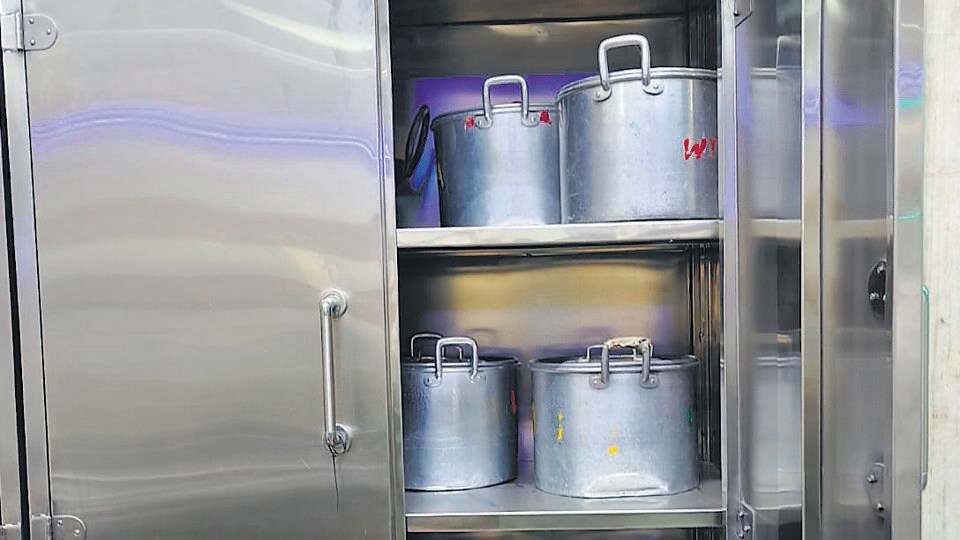
One of the biggest changes was doing away with the aluminum vessels in which food used to be taken from the kitchen to the patients. “One of the most common kitchen-related complaints that we used to get from patients was that the food was cold,” said Dr Ravat. “We decided to invest in thermal containers, and have bought four containers per ward for our 50 wards.”
KEM Hospital’s cooks churn out 50 kilos of rice, 28 kilos of dal, 50 kilos of vegetables and close to 1,200 chapatis daily. While the hospital wanted to have an air-conditioned kitchen like that of ISKCON, the idea was dropped since KEM is a heritage structure. However, other civil work was done, and the previous storage system was replaced. “We gave them steel cupboards for masalas and plastic racks for non-perishable items. We also got steel freezers to store milk and curd,” said Dr Ravat.
Earlier, the kitchen staff would begin the cooking process as early as 3 am, yet the food was often cold by the time it reached the patients. Hospital reps said that the new equipment had cut short their working hours and ensured the patients got their meals on time.
Zamurrud Patel, president of the Indian Dietetic Association (Mumbai Chapter) remarked that all public hospital kitchens needed to have a better design and kitchen policy. “Nutrition is of utmost importance in any clinical set-up and plays a key role in the recovery of the patient,” she said. “Thus the kitchen has to be good. We have a significant number of people getting treated in public hospitals, and it is very important that we embrace modern amenities and a better design in public hospital kitchens so that more nutritious food can be provided to the patients.”


