
 E-Paper



Rare works from JJ School of Art, DAG’s collections on display in city
The exhibition forms part of the DAG’s annual art and heritage festival called The City as a Museum, which will also include a tour to the Elephanta Caves with art historian Giles Tillotson. There will also be a discussion in the painting studio in Alfred Talkies on the early years of modernists Tyeb Mehta and M F Husain between members of the former’s family and city historians

 Prefer HTon Google


MUMBAI: Starting today, rare paintings from the collection of the Sir JJ School of Art and Architecture, including an early Kattingeri Krishna Hebbar and portraits by Mahadev Vishwanath Dhurandhar—a student and later director of the 169-year-old institution—will be displayed in the premises of the deemed university alongside paintings, antiquarian photographs and other objects dating back to the turn of the 20th century from the DAG (formerly Delhi Art Gallery) collection. In all, over 170 works of art as well as rare books, examiners’ reports and other archival material will be on view till March 23.
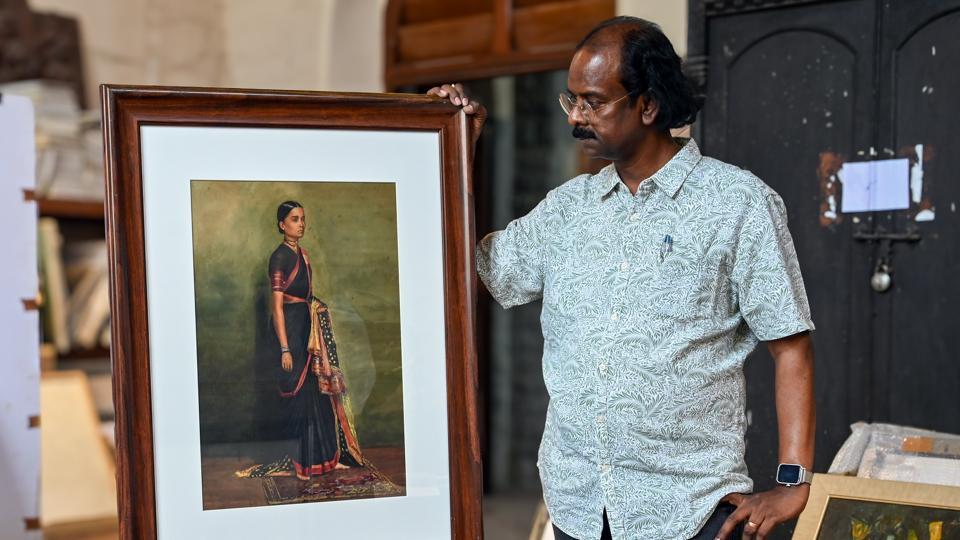
The exhibition harks back to a time when the institution played an intrinsic part in the city’s social, cultural and economic life. Featuring works done between the 1880s and the 1940s, it will be accompanied by walkthroughs and discussions that will draw attention to the impact that students and faculty had on significant buildings of the British Empire from the North and South blocks in New Delhi to the BMC building in Mumbai, just around the corner from JJ School.
“The exhibition covers the School’s evolution from its founding in 1857—when it embodied the British imperative to ‘improve’ native craftsmanship through European methods—to its emergence as a vital crucible for Indian artistic identity,” said Ritu Vajpeyi Mohan, senior vice-president, DAG. “Within its walls, students balanced European techniques with Indian traditions, navigating between classical sculptures and Ajanta murals, Victorian aesthetics and modernism, revealing the fascinating tensions that shaped their artistic development.”
“The impact of the JJ School of Art on Bombay cannot be understated,” said John Douglas, the School’s acting head of department, Drawing and Painting. “John Lockwood Kipling and John Griffiths started the drawing and painting course, and this is how academic realism entered the syllabus. But the students chose subjects from their own surroundings.” Portraits of locals, interiors of temples, and even scenes from mythological retellings populate the canvases of the illustrious JJ alumni that form part of this exhibition. Among them are Ramkrishna Waman Deuskar, Dhurandhar (as widely popular an academic Indian artist as Raja Ravi Varma), Abalal Rahiman and Pakala Thirumal Reddy.
The story of the JJ classroom mirrors the story of a modern India coming into its own. Kipling and Griffiths were alumni of the South Kensington School of Art and brought European formalism and Western ideals of what constituted scientific study and industrial purpose to art and design. Kipling—father of Jungle Book author Rudyard Kipling—created sculptural decorations for many of the Gothic Revival buildings like Victoria Terminus.
Griffiths, who became principal in 1872, led the students to document the mural paintings of the Ajanta caves, one of the first art exercises in modern times to engage with the ancient Buddhist works. In the decades that followed, study tours to the Ajanta-Ellora caves became de rigueur as European art masters sought to reintroduce their students to a subcontinental heritage.
Later, when William Gladstone Solomon was principal of the JJ School of Art from 1918 to 1937, he not only started a design class focusing on motifs from Indian crafts and traditions, and live sittings of nude models, but also won commissions for making murals in official buildings of the British Empire. However, he is best remembered for championing a kind of revivalism that saw students merge classical forms of Europe with Indian sensibilities to create what was uniquely the Bombay School.
“The exhibition explores not only the institutional history but the rich social fabric of the School, from study tours and tea parties to the groundbreaking inclusion of women artists within its halls,” said Mohan. “In tracing this journey of such a hallowed institution, we witness how art education became both mirror and catalyst for India’s evolving artistic consciousness.”
The exhibition forms part of the DAG’s annual art and heritage festival called The City as a Museum, which will also include a tour to the Elephanta Caves with art historian Giles Tillotson. There will also be a discussion in the painting studio in Alfred Talkies on the early years of modernists Tyeb Mehta and M F Husain between members of the former’s family and city historians. The festival, which has completed four editions in Kolkata, comes to Mumbai for the first time.
Stay updated with all the Breaking News and Latest News from Mumbai. Click here for comprehensive coverage of top Cities including Bengaluru, Delhi, Hyderabad, and more across India along with Stay informed on the latest happenings in World News.


