
 E-Paper



Mumbai Story: From sea unto sea?
The city’s geography and future is being threatened by rising sea levels as an outcome of global warming

 Prefer HTon Google


November arrived this year with thunder and rain. It was unseasonal rain, we were told. Mumbai has been through several such spells this year. The monsoon out-rained many records: it saw the highest seasonal rainfall in 65 years, five days of extremely high rainfall, September was the wettest month in many decades, and then there was the unseasonal rain up to Diwali with the threat of more rain. Climate change was manifesting itself.
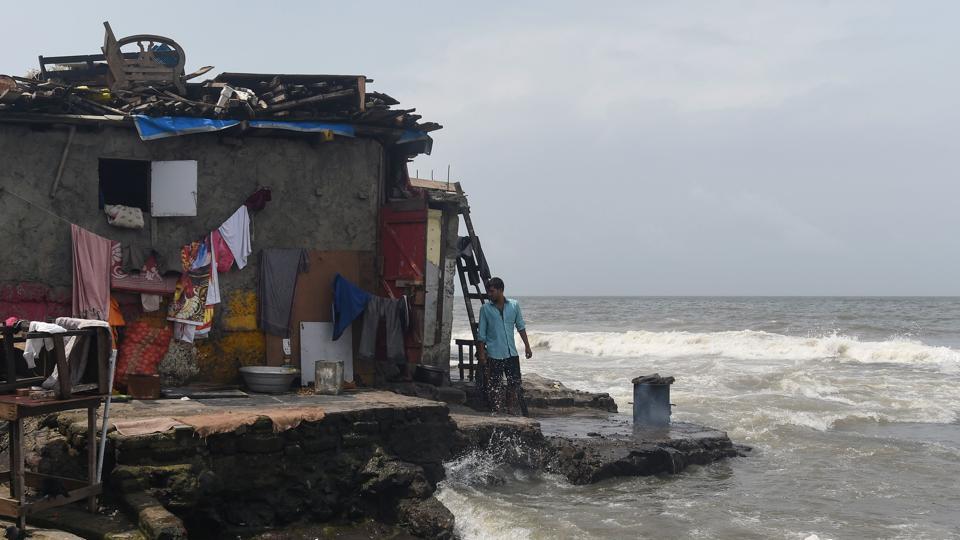
This unseasonal spell of rain came on the back of news that could make the July 2005 flood look like a bathroom shower. Mumbai, like many other coastal cities in the world, could be underwater by 2050 with large parts of it submerged in the Arabian Sea or ravaged by recurring floods, noted a study published by Climate Central, a New Jersey-based independent organisation of scientists, journalists and researchers, working on the breakdown of climate change.
Mumbai’s geography and future being threatened by rising sea levels as an outcome of global warming is not new information. Indian and international agencies have periodically pointed this out for the better part of the last decade but it acquired urgency only in the recent past. The Inter-Governmental Panel on Climate Change (IPCC) reports pointed to this. Mumbai is the second-most economically vulnerable city after China’s Guangzhou and could face losses of a staggering $6.4 billion in a few years, even if it “just held steady at the current level of flood risk”, said Science News last year.
Indian studies focused on Mumbai and rising sea levels, have similar warnings. Large sections of the old city centre and its western-eastern ridges are, particularly at risk. The projections are such that seawater could submerge now-thriving areas up to the Sanjay Gandhi National Park (SGNP). If Mumbai, the city claimed from the sea, has to have a fighting chance at survival, there is no option other than to address this issue with the urgency and significance it calls for. But who should do this?
The onus clearly lies on the governments, both the state government of Maharashtra and Mumbai’s municipal corporation. Both are either self-absorbed with power games or behave as if the unseasonal weather conditions and warnings of rising sea levels will simply vanish with the next bright sunrise. Ideally, they should set up a specific task force for this purpose.
This task force should draw up a plan and programme from 2020 to 2050, assuming worst-case scenarios and lesser emergencies, and layout clear steps for mitigation of floods and the possibility of submergence, with responsibilities for different agencies. Scientists, environmentalists, urban planners, marine ecologists, disaster response professionals, policymakers, state representatives, and others should be part of this force so that multiple disciplines draw from one another towards a singular purpose.
Its recommendations should be binding on governments. Else, they would be consigned to government shelves. The Chitale Committee report after the July 2005 flood had recommended that Mumbai’s flood-prone zones and vulnerable areas should be clearly marked out and there should not be any construction or densification in them. Governments have hardly followed the letter or spirit of these words; instead, the real estate lobby has influenced the “development” of Mumbai.
Mumbai’s natural water channels should be freed from encroachments and construction, to allow rainwater to flow to the sea. Its natural habitats like the Aarey Milk Colony, SGNP, mangroves, salt pan lands, and rivers can be protected as bulwarks. The ill-advised coastal road must be immediately shelved; there could not be a more blinkered project than this, more so after the Climate Central projection. The 2050 prognosis is frightening. That the response to it has to be led by political leaders who could not form a government two weeks after getting a clear majority in the Assembly election, is as worrying.


