
 E-Paper



Nine of 10 sites from last year on Ghaziabad’s pollution hot spot list again
The identified spots are Sahibabad, Raj Nagar Extension, Delhi-Meerut Road, Loni, Delhi-Bhopra border, south side GT Road Industrial Area, Sanjay Nagar, Vasundhara, Siddharth Vihar and Indirapuram. Except for Indirapuram, all other sites were identified as pollution hot spots last year, too

 Prefer HTon Google


The Uttar Pradesh Pollution Control Board (UPPCB) has identified 10 major pollution hot spots in Ghaziabad, where regular monitoring and enforcement will be taken up, the UPPCB officials said Wednesday.
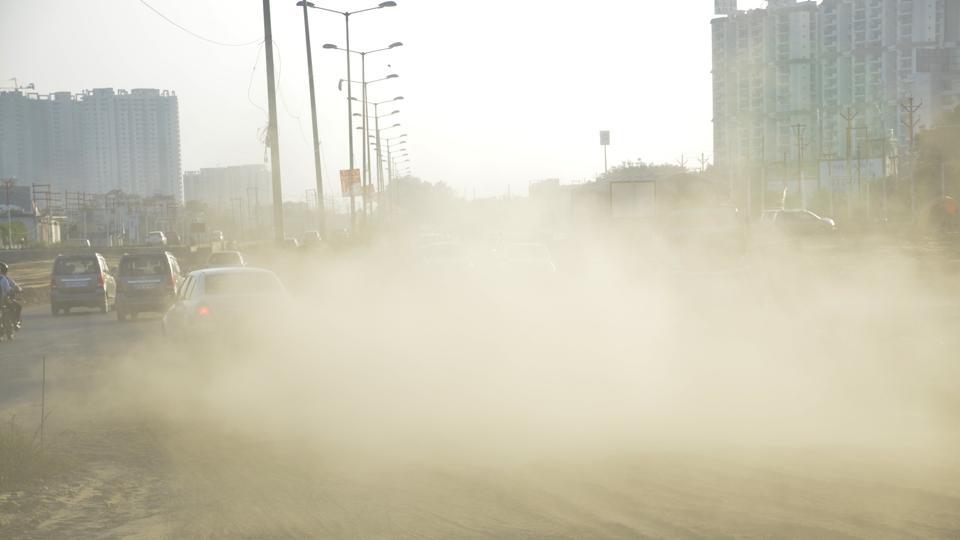
The identified spots are Sahibabad, Raj Nagar Extension, Delhi-Meerut Road, Loni, Delhi-Bhopra border, south side GT Road Industrial Area, Sanjay Nagar, Vasundhara, Siddharth Vihar and Indirapuram. Except for Indirapuram, all other sites were identified as pollution hot spots last year, too, pollution control board officials said.
“The 10 spots have been identified on the basis of factors that could escalate air pollution events. These factors include traffic congestion, road dust, dumping and burning of municipal solid waste, construction of infrastructure projects, open storage of construction material etc,” said Utsav Sharma, regional officer, UPPCB.
“Our teams will now take up regular monitoring and carry out enforcement along with teams of different departments. The major cause of concern in industrial areas is the presence of unpaved roads for which the respective agencies will take up work,” he said.
The environmentalists said reoccurrence of nine sites on the hot spot list shows that different agencies have not paid attention to local sources of pollution.
“The city has persistent issues of garbage burning, unpaved roads, vehicular emissions, traffic congestion due to faulty road engineering etc. The fact that nine of these sites were pollution hot spots last year too shows that there has been little effort to control pollution sources in these sites. The agencies must be held accountable for that lapse. If these conditions prevail, then the city will continue to remain polluted and the public money will go down the drain,” said Akash Vashishtha, a city-based environmentalist.
Other said the city, on the whole, needs special monitoring.
“The number of pollution hot spots has not reduced and that indicates lapses on the part of agencies and departments tasked with controlling pollution. This city needs special monitoring by agencies such as the Central Pollution Control Board and the Commission for Air Quality Management. Otherwise, these conditions will continue to prevail and residents will suffer year after year. The stack emissions from factories also need to be monitored,” said Sushil Raghav, another city-based environmentalist.
Ghaziabad is among the 16 “non-attainment” cities in the state of Uttar Pradesh and its pollution levels generally remain on the higher side during the onset of winter. Cities are declared “non-attainment” if they do not meet the National Ambient Air Quality Standards for particulate matter (PM10) or nitrogen dioxide (NO2) over a period of five years.
Earlier in April, the city ranked as the second-most polluted city in the world after Bhiwadi in Rajasthan on the World Air Quality Report-2021. The annual report, prepared by Switzerland-based organisation IQAir, surveyed 6,475 cities across the world.
The UPPCB officials in Noida said they have already identified pollution hot spots in the city and most of them are construction zones.
“We have already identified areas such as sectors 71-79, Sector 150, the sites of four under-construction underpasses on the Noida-Greater Noida expressway, Parthala, Dadri Elevated Road and also Sector 116. The Gautam Budh Nagar traffic police will identify their respective hot spots on the basis of traffic volume and congestion,” said Praveen Kumar, regional officer, UPPCB, Noida.
He said potential garbage burning zones such as dump yards and also those affected by dust and construction and demolition activities have already been categorised as hot spots and they are regularly monitored along with enforcement.


