E-Paper



How army men at Assam’s Narangi military station ‘co-exist’ with wild elephants
The army men at Narangi say that elephants from the adjacent Amchang wildlife sanctuary enter their military station almost every day

 Prefer HTon Google


In September last year, a video went viral on social media showing an elephant entering a playground at the Narangi military station in Assam’s Guwahati and kicking a football when some army men were playing the game. After a few seconds, the tusker left the ground at a slow pace, and the players continued the game, seemingly unperturbed.
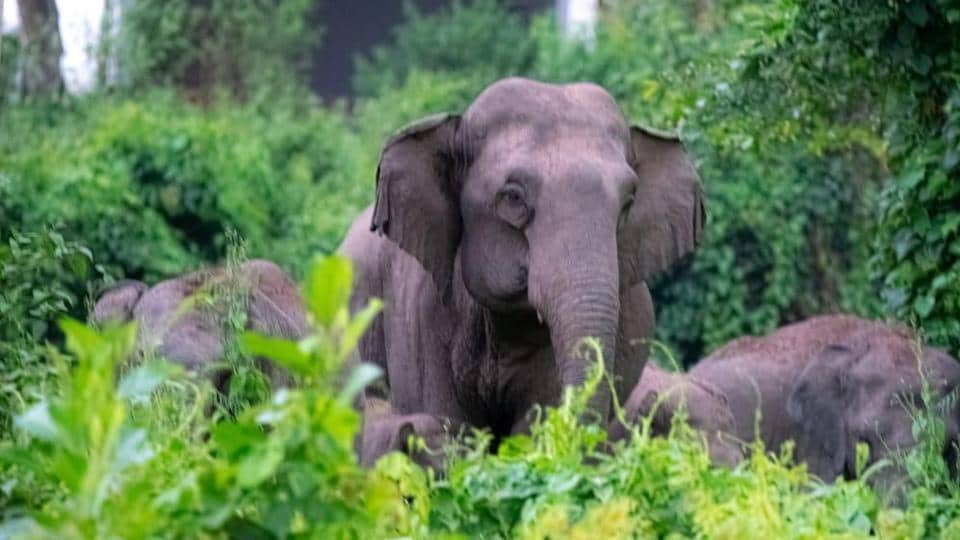
This, however, was not a rare scene in the Narangi military station, which is located adjacent to the Amchang wildlife sanctuary, a reserve forest spread across 78.64 km. The military personnel here say that elephants from the sanctuary enter their staion in herds or individually almost every day, and the army men are trained with the help of locals, scientists and forest department officials in how to co-exist with them.
According to the Assam government figures, the state has around 5,700 wild elephants, and in a statement given to the Assam assembly in March this year, forest minister Chandra Mohan Patowary informed that more than 70 people and 80 elephants are killed on an average annually in the state because of human-elephant conflict.
However, the personnel at Narangi say that they have taken steps to ensure that there is peaceful co-existence with the elephants at the station without hampering their activities.
The station, set up in 1961 and spread across around 3,500 acres, is one of the most important bases of the Indian Army, and it houses several units including the headquarters of the 51 Sub Area.
“The forest existed much before the military station came up here. The animals have the first right here,” said Maj. Gen. RK Jha, GOC, 51 Sub Area.
The army personnel said that they are instructed to stop their vehicles and allow the elephants to cross and not disturb them in any manner. At some places, portions of walls have been broken to allow the pachyderms to move around easily.
Jha said that the military personnel here fondly call the elephants ‘Maharaj’ or king. “If a herd of ‘Maharaj’ is walking past and there’s a gate which is closed, the sentries have been instructed to open them to allow the Maharaj and his family to move to a pond or any other area. We don’t burst crackers or use hooters that might scare the elephants. Even the pachyderms seem to understand that they are safe. We live in good harmony.”
He said that there had been instances in the past where humans have tried to scare away the elephants or they have damaged vehicles and shops. But most of these incidents have happened on the periphery of the military station and not within.
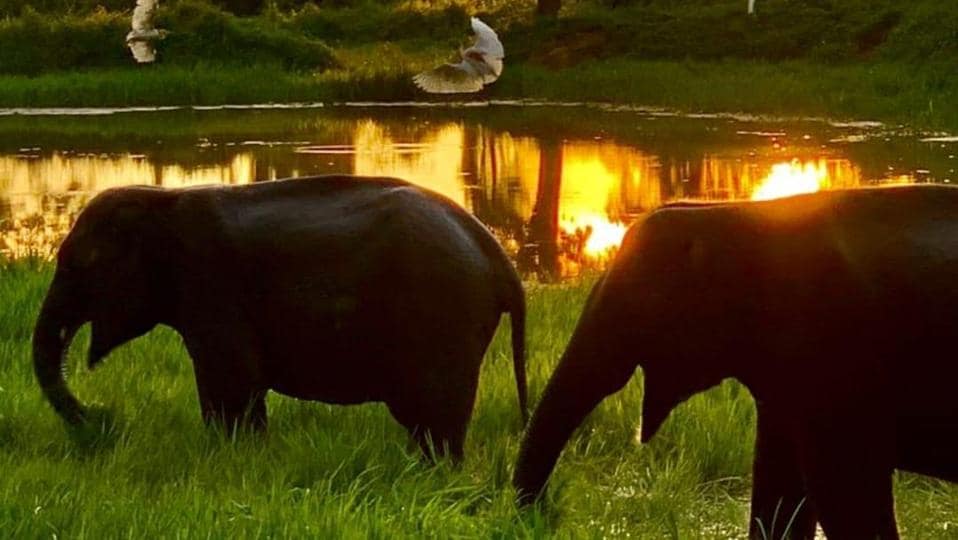
Brigadier Sanjeev Chopra, deputy GOC, 51 Sub Area, said that nearly two-thirds of the Narangi military station comprises construction-free spaces where there’s an abundance of trees and ponds. “Authorities at the station ensure that there is bare minimum construction in the area and trees are not cut,” he added.
He said that the army has a state-of-the-art communication hub at the station with high-resolution cameras placed at strategic locations with the dual purpose of ensuring security of the area and also to keep track of elephant movements. “Whenever a large herd or an individual is sighted, a message is relayed to all so that the animals are not disturbed in any way,” he said.
“Army authorities keep a close touch with the state forest department to alert them about elephant movements and if there’s any untoward incident where a pachyderm gets injured or trapped,” he added.
Jayashree Naiding, divisional forest officer, Guwahati wildlife division, said, “We are in close coordination with the army authorities at Narangi military station to ensure the well-being of the elephants that come to the area to use it as a transit to move to other areas. Forest department personnel from the Guwahati wildlife division and the Kamrup East division are stationed in the area 24 X 7 on a rotation basis for the same.”
“There are times when the elephants move out of the military station area and go to nearby residential and commercial places. When that happens, we try and ensure that there’s no conflict. The army authorities in Narangi have demonstrated that through concerted efforts of all, there can be peaceful co-existence between the wild pachyderms and humans,” she added.