E-Paper



Rare Ureilite Meteorite formed Dhala structure in MP: AU study
Scientists from Allahabad University and the University of Bern have discovered that the Dhala structure in India was formed by a rare ureilite meteorite between 2500 and 1700 million years ago, making it the world's seventh oldest impact structure. This finding could revolutionize our understanding of impact events on Earth and the early history of the solar system. Further investigations into the Dhala impact structure are underway to uncover more details about the nature of this rare meteorite and its implications for our understanding of the early solar system and the development of life on Earth.

 Prefer HTon Google


The Earth has been continuously bombarded since its formation by asteroids, comets and meteorites with varied intensity. However, the scientists are unsure about the types of impactors and their origin, ie whether they came from the Solar System or beyond.
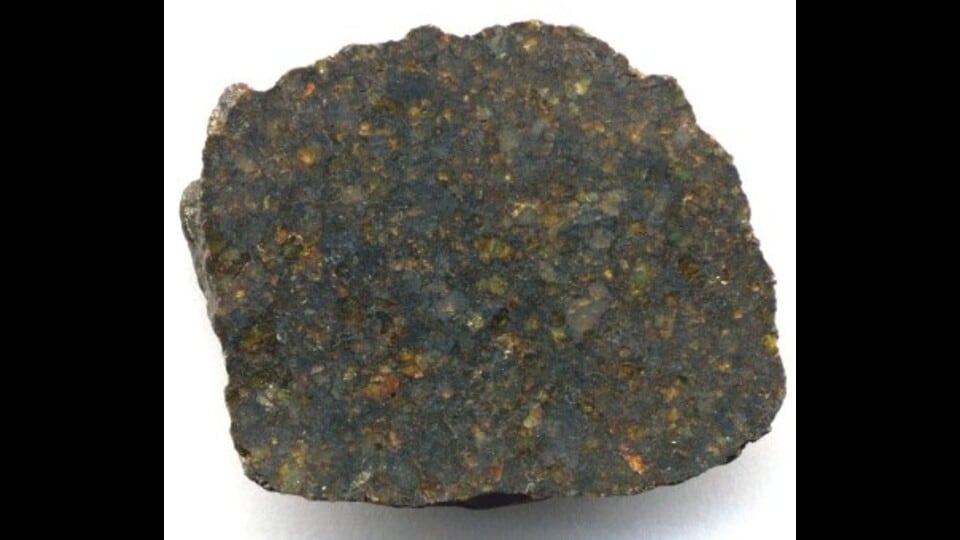
In a recently published groundbreaking discovery, the scientists from the Allahabad University (AU), India, and the University of Bern, Switzerland, have revealed that the Dhala structure located in Shivpuri district of Madhya Pradesh was formed by the impact of an exceptionally rare and primitive type of meteorite known as “Ureilite” between 2500 too 1700 million years ago and is known to be the world’s seventh oldest impact structure on Earth till date.
Aryavart Anand, the lead scientist from the Bern, Switzerland, used the Chromium-isotope systematics to identify the impactor type from chemical traces and also utilized the published Osmium isotope data of 2017 by Prof JK Pati of AU’s Earth and Planetary Sciences department and his group.
The around 11 km diameter Dhala impact structure is the largest confirmed impact structure reported so far between Mediterranean and south-east Asia and was confirmed by Prof JK Pati of Department of Earth and Planetary Sciences, AU in 2005.
According to the scientists, the finding of impactor type for Dhala structure is set to revolutionize our understanding of impact events on Earth and the early history of the solar system as well.
This discovery has now been published in the May, 2023 issue of ‘Meteoritics and Planetary Science’, a prestigious journal of the Meteoritical Society, USA.
“Ureilites are a unique class of primitive achondrite, comprising only a tiny fraction of all known meteorites on Earth. These stony meteorites are composed of olivine, pyroxene, and a small amount (less than 10%) of interstitial materials including carbon (diamond and other polymorphs), metal sulphides and a few fine-grained silicates. It is now believed that the ureilite meteorite, likely measuring 1 km in diameter, impacted on the granitoid rocks of the Bundelkhand craton at an extraordinary speed (>15 km/sec), resulting into formation of the ‘Dhala impact structure’,” shared Prof Pati.
Although ordinary chondrites (the most abundant meteorite class) dominate the current collection of meteorites on Earth amounting for 85% of meteorite falls, the identification of projectile type for the Dhala impact structure argue for a much diverse source of the objects that collided with the Earth over its geological history than has been supposed previously, Prof Pati maintained.
This finding has marked a monumental moment in the field of impact cratering research and planetary science worldwide.
Further investigations into the Dhala impact structure are already underway, informed Anuj Kumar Singh, Shyama Prasad Mukherjee Fellow (Department of Earth and Planetary Sciences, AU), one of the co-authors of the published paper, as scientists are eager to uncover more details about the nature of this rare ureilite meteorite and its potential implications for our understanding of the early solar system.
Accordingly, the detailed study of this impact event could offer a deeper understanding on the role of meteorites in delivering organic compounds and water to Earth, possibly playing a significant role in the development of life on our planet. This finding also has significant implications for the study of impact structures on other solid planetary bodies, offering valuable insights into the geological evolution of the universe, he added.