E-Paper



Second phase of caste census starts in Bihar
The first round of the so-called caste census was conducted between January 7 and 21.

 Prefer HTon Google


Bakhtiarpur (Patna): Bihar kicked off the second round of its caste-based survey on Saturday, marking the beginning of a crucial exercise that will attempt to successfully enumerate all castes in one of India’s most-populous states for the first time since Independence.
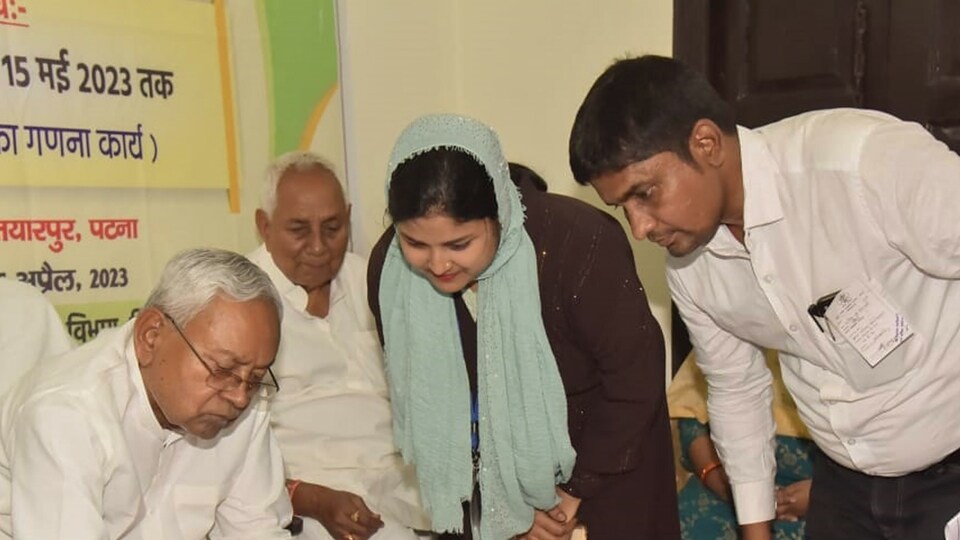
The first round of the so-called caste census was conducted between January 7 and 21, when officials listed the households in their respective districts and numbered them. In the second phase, enumerators will document socioeconomic indicators as well as the caste status of roughly 127 million people.
“The caste survey that began today is a good exercise. It will give us information about the numbers of every caste, their socioeconomic status, and help us design government programmes better,” chief minister Nitish Kumar told reporters after taking part in the survey in his ancestral home in Bakhtiarpur.
He said that the report of the survey will be tabled in the Bihar assembly and then made public. “We’ll also tell the Centre…it’ll be good if there is a caste-based census across the country. Many people have wrong ideas about this.”
The second round of the survey will continue till May 15. Around 320,000 enumerators will fan out across the state, documenting the details of 29 million registered households on 17 socioeconomic criteria – ranging from employment, education, marital status, land holding and property ownership – and caste. Enumerators will have to choose between 214 pre-registered castes that have been allotted individual codes. Officials said the data will be recorded on a paper form, and then uploaded on a specially designed app. “50,000 entries had already been filed by 2pm,” said Mohammad Sohail, secretary of the general administration department, the nodal body overseeing the exercise.
Counting caste has always been a contentious ask in India. British-era censuses counted caste in minute detail but the last one to enumerate all castes was conducted in 1931. Independent India abolished the practice and subsequent censuses only counted scheduled castes and tribes. Though unofficial estimates exist, especially of the numerical strength of backward groups, there is no official count.
In 2011, the central government announced that alongside the regular census, a socioeconomic and caste census will also be conducted. But the caste data was never made public and the government later told Parliament that methodological infirmities held up an accurate analysis of the data.
“Because we are doing it for the first time, we are getting a lot of interest from other states as well. This has been our longstanding demand…many states also want a caste census and we have raised this issue in Parliament as well,” Kumar said.
The survey is happening against the backdrop of a political churn in a state considered as the cradle of backward caste assertion. The ruling coalition in Bihar – comprising the Janata Dal (United), Rashtriya Janata Dal and Congress – hopes to use the caste census to resurrect a new model of social justice politics to take on the Bharatiya Janata Party ahead of the 2024 general elections. The BJP has remained cautious on the demand, joining an all-party delegation to back the census but also expressing reservation.
The exercise is also facing legal challenges. On Tuesday, the Patna high court will decide whether a petition filed by an activist – who has challenged the exercise on the grounds that only the Centre can notify a census – is admissible.
In this speech, Kumar also hit out at the Centre for not allowing a national caste count and for delaying the decennial census. “This has happened for the first time.”
The BJP hit back, with state spokesperson Nikhil Anand saying: “After sitting in the lap of RJD, Nitish Kumar is practising the politics of Muslim appeasement and casteism. He has become a desperate contender to become PM…he is fast losing ground under his feet.”