


 Live Score
 Cricket Teams
 Cricket Players
From rejection to 190: Matt Renshaw makes his long wait count
Once tipped to open for Australia for a decade, Matt Renshaw endured years of brutal rejection before his remarkable 190 rescued Australia in the 1st Test.

 Prefer HTon Google


Matt Renshaw was an up-and-coming prodigy of Australian cricket, tipped to be their Test opener for the next decade. When the left-hander debuted in 2016 against South Africa in Adelaide, he was just 20. However, the discussion was about his technique, maturity, and temperament at such a young age. The Aussies had apparently found an answer to their opening puzzle during a transition period.
The team's skipper, Steve Smith, was quite excited about the emergence of the new generation. “There’s no reason why we can’t play together for the next five to 10 years and create something really special together, Smith said to AAP, as quoted by Cricket Australia.
Even the coach at the time, Darren Lehmann, also welcomed the new generation: “We had to inject some new players, players who can grow and play for 10 years,” he said, as quoted by CA.
These reactions were about the new generation of players who found their way into the team rather than Renshaw alone. But the selectors had a lot of confidence in the young left-handed opener.
His batting transition from the domestic to the international stage captivated experts. He had already scored a magnificent 184 vs Pakistan in Sydney and soon became the first Australian batter to score 500 Test runs before turning 21. However, nine months later, he was out of the side.
Before the 2017 Ashes, Renshaw had a poor run in the domestic arena. In that season of the Sheffield Shield, he scored just 70 runs in 6 innings at an average of 11.66. On the other hand, Cameron Bancroft had 442 runs at 110.50, and the selectors decided to give the man in form a go.
The left-hander returned for a solitary Test match after the 2018 Sandpapergate scandal, but scored only 13 runs. His batting numbers kept slipping. By February 2020, he had gone 28 innings without a century. Queensland also dropped him, prompting him to take a break from the game.
Turn around with the bat
Renshaw returned to cricket and started rebuilding his game in the middle order for Queensland. He had been trained as an opener from the beginning of his career, and playing in the middle needed him to use different skills. But Renshaw adapted quickly.
In the 2020-21 season, Renshaw scored 500 runs in the Shield at an average of 62.50. He even returned to Test cricket in 2023, but with little return. The next breakthrough came through consistent showing in the domestic arena, along with a more liberated approach in white-ball cricket. In the 2025-26 season, Renshaw amassed 499 runs in the Shield at an average of 49.90.
The selectors were made to look at him again, and this time he was called for the series against Bangladesh in August 2026. In the only innings that he played in the series, Renshaw scored 8 off 10. It looked like whenever it came to performing at the biggest stage, something went wrong for him.
Then came Durban. South Africa moved him to number five, and when he walked out to bat, there could not have been a sterner test waiting. Renshaw came in at 83/4 and soon saw Steve Smith depart. Australia kept losing wickets and were soon struggling at 124/6.
Anrich Nortje was in the middle of a hostile spell. The South African pacer was simultaneously targeting his body and also testing his outside edge. At the other end, Marco Jansen was struggling him with awkward bounce. Renshaw responded with patience, disciplined leaves and soft hands. When Australia walked back at the end of the day, Renshaw was unbeaten on 45 off 115 deliveries, with only three boundaries hit during his stay.
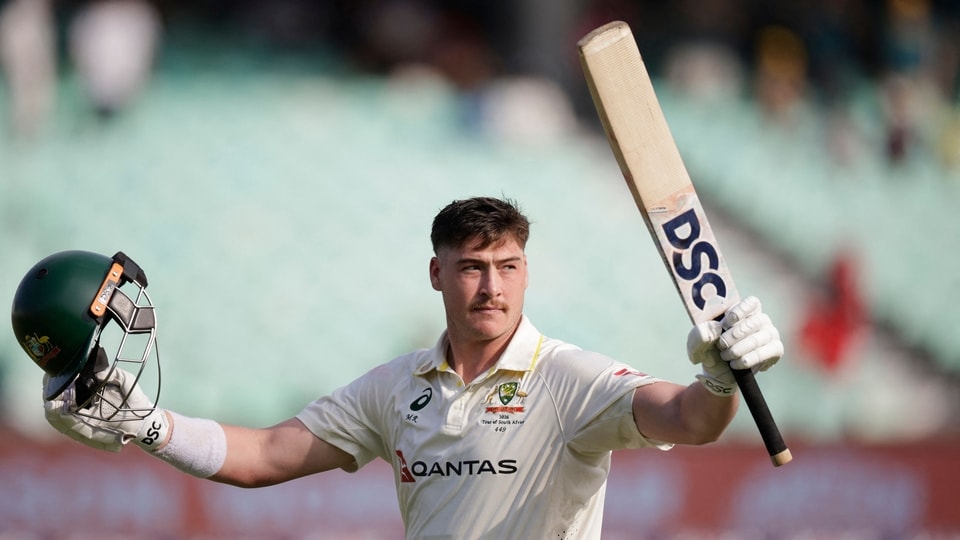
On the second day, Pat Cummins and Renshaw added 86 runs, as the left-hander went past his half-century off 117 deliveries. After nearly nine years and nine months, Renshaw reached his second Test century off 204 balls. A reward for amazing grit, resilience and patience.
However, the visitors' struggles were not over. Soon, Australia were left reeling at 230/8, and this required Renshaw to draw on all his experience batting in the middle-order for so long in the domestic arena. While Nathan Lyon displayed his abilities with the bat, scoring 27 off 92 balls, Renshaw kept the Australian innings moving. The ninth-wicket partnership worked for 134 runs and ensured that Australia got close to the 400-run mark.
The resilience ultimately broke, as Lyon’s dismissal was followed by Renshaw's departure at a personal score of 190. Even though he missed a double hundred, he would be proud of the effort he put in under pressure on his return to the purest format. An analysis by Cricket Australia revealed that Renshaw left 28% of the deliveries he faced during the marathon knock. A testament to the patience and resilience he has cultivated during his time away from Test cricket.


