


 Live Score
 Cricket Teams
 Cricket Players
India find Hardik Pandya's successor as World Cup 2027 plans take shape: ‘He is a natural backup to Hardik’
Ryan ten Doeschate endorses Nitish Kumar Reddy as a key future all-rounder for India, highlighting his potential to fill Hardik Pandya's role.

 Prefer HTon Google


India assistant coach Ryan ten Doeschate has offered a strong endorsement of Nitish Kumar Reddy’s long-term value to the Indian ODI side, calling the youngster the “natural successor or backup” to Hardik Pandya as the team continues to assess its all-rounder pool ahead of the 2027 World Cup.
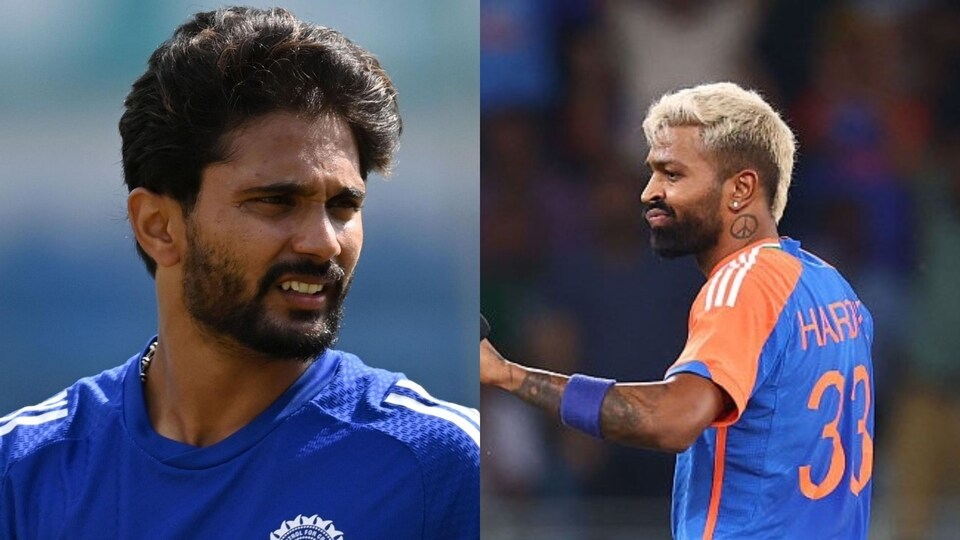
Speaking in a BCCI video, ten Doeschate said India’s all-rounder depth was progressing well, but also underlined why Hardik remains such a rare commodity in white-ball cricket.
“It’s really good. I would still say the majority of those guys are bowling all-rounders. And when Hardik is fit, he obviously brings a different element because he’s such a strong batter, such a strong finisher. A sort of role scarcity - it is difficult to find a finisher who gives you overs as well,” ten Doeschate said.
Hardik missed the ongoing Afghanistan ODI series after suffering a fresh quadriceps-related setback while working towards his return, once again pushing India into the familiar search for a seam-bowling all-rounder who can balance the XI.
That search has brought Nitish into sharper focus. The 23-year-old has already been seen as one of India’s more exciting long-format prospects, but his ODI role has become more important in Hardik’s absence.
Ten Doeschate said Nitish had shown enough over a sustained period to convince the team management of his potential importance.
“Those guys are all tracking really nicely. Like I said with Nitish, for the last 18 months, he’s shown glimpses of how important he can be to this team, particularly in this format. And I feel his body’s getting stronger and stronger, and I sort of feel he is the natural successor or backup to Hardik,” he added.
Also Read: First Vaibhav Sooryavanshi, now another Bihar teen leaves cricket stunned with 306*
India’s eye on South Africa 2027
The comment is significant because India’s planning is increasingly being shaped by the next ODI World Cup, which will be played in South Africa, Zimbabwe and Namibia. In South African conditions, India may have to move away from spin-heavy combinations and play three specialist seamers more often.
That is where lower-order batting from bowlers and all-rounders becomes crucial. Ten Doeschate pointed to the likes of Gurnoor Brar and Harsh Dubey as examples of players who may not be Hardik-like batting all-rounders, but can still add important value with the bat from the lower order.
“Certainly to see these other guys chipping in and working on their games, even someone like Gurnoor and Harsh, again, they’re bowling all-rounders. But the fact that we feel we’ve got guys who can hold the bat at number nine, obviously looking forward for the next 14, 15 months, that is going to be very important,” he said.
“Especially in South Africa, when you want to play three proper out-and-out seamers, those guys are going to need to bat. So yeah, a lot of good signs on the all-rounder front and also on the fast-bowling front.”
India’s Afghanistan series has already given the management a look at fresh pace options, with Gurnoor Brar, Harsh Dubey and Prince Yadav among those getting attention. Ten Doeschate said the emergence of these names has made India’s seam-bowling resources look healthier.
“I think it’s been refreshing this week to see Prince, to see Gurnoor, to see Auqib Nabi. All of a sudden, the cupboard of seamers is very full, which is a great sign for this team,” he said.
For India, the larger question remains whether anyone can truly replicate Hardik’s rare package of finishing power and seam-bowling utility. Ten Doeschate’s answer, for now, appears clear: Nitish is the closest long-term bet.


