


 Live Score
 Teams
Teams Players
Steve Smith eyes 2028 Olympics but makes no Ashes promise: ‘I don’t even know if I'll be there yet'
Steve Smith remains unsure about playing the next Ashes in England, taking his Test future series by series while targeting the 2028 Los Angeles Olympics.

 Prefer HTon Google


Steve Smith has left the door open to retiring from Test cricket before Australia’s next Ashes tour of England, with the former captain admitting he is no longer looking too far ahead in the longest format. Smith, 37, remains one of the central figures in Australia’s Test side and has unfinished business in England, where he has never been part of an Ashes-winning touring team. Australia retained the urn after drawing the 2019 and 2023 series 2-2, but their last series victory on English soil came in 2001.
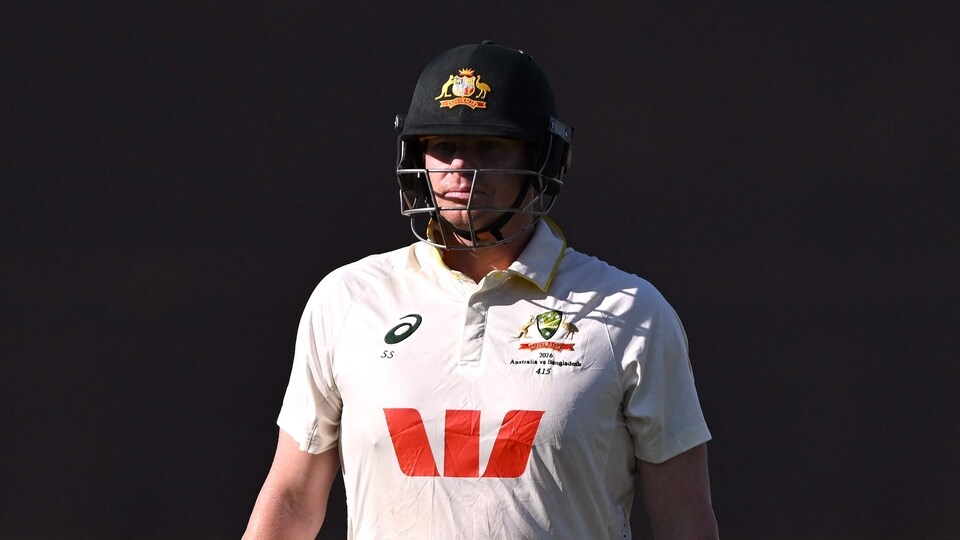
Yet even the possibility of finally completing that chapter is not enough for Smith to guarantee that he will still be playing Tests by the time Australia return to England next summer. “I don’t even know if I’ll be there yet,” Smith told The Telegraph, when asked about the prospect of another Ashes campaign in England. I’m kind of a series-by-series proposition, as I’ve been for a while, and that’s still a fair way away for me right now. So, yeah, I’d love to win one there or to have won one there, but you wait and see if that comes to fruition.”
Smith's focus shifts towards Olympic dream
Smith was speaking while playing for Amsterdam Flames in the European T20 Premier League in Dublin, at a time when England were completing their Test series whitewash over Pakistan.
The Australian, however, appears increasingly focused on a target that lies beyond his Test career. Cricket will return to the Olympic programme at the 2028 Los Angeles Games after an absence of 128 years, with T20 competitions scheduled for both men and women. Smith will be 39 by then, but has made no secret of his desire to remain in contention for Australia’s Olympic squad. His decision to keep playing franchise and short-format cricket, including his current stint in Europe, is directly connected to that ambition. “Right now probably it’s just the Olympics to try to be a part of that,” Smith said of the major goal still left on his career checklist. One of the reasons why I wanted to play with Amsterdam here was just to continue playing as much T20 cricket as I can. I was keen immediately to come and play in a new market and, hopefully, share some experiences with the local players and associate players: share a dressing room with them and try to impart some of my knowledge on to them. It’s been really good.”
Smith’s uncertainty over his Test future comes despite a career that already places him among the most accomplished batters of his generation. After 125 Tests, he has 37 centuries and averages 54, numbers that have left him comfortable with what he has achieved in the format.
There is no fixed retirement date, however. Smith believes he can continue playing T20 cricket beyond the end of his Test career and is yet to decide whether coaching, despite his famously obsessive approach to batting, will eventually appeal to him. “I still like to think I could play T20 cricket for a while,” he said. “What’s next for me when I finish? I’m not sure, but yeah, hopefully a bit more time left playing. I’ve achieved a lot in the game. It’s been a great ride for the last 15 years or thereabouts. I’ve had a lot of fun. I’m still enjoying it, so I don’t have an end date, we’ll wait and see. But it’s been a good ride.”
For now, Test cricket still demands Smith’s attention. Australia have entered an unusually congested stretch of their red-ball calendar, with 20 Tests scheduled across 11 months and the possibility of a 21st if they reach the World Test Championship final. After their recent series against Bangladesh, Australia are due to travel to South Africa for three Tests, where Smith could also find himself in a different position in the batting order. Chairman of selectors George Bailey has raised the possibility of moving him from his long-established No. 4 position to No. 3.
But beyond the immediate assignments, Smith is refusing to map out his Test career. The Ashes remain an attraction, and a first series victory in England would fill one of the few gaps on his extraordinary resume. Whether he will still be around to chase it, though, is now very much an open question.


