Wuthering Heights review: Margot Robbie, Jacob Elordi are miscast in Emerald Fennell's mockery of Emily Brontë's classic
Wuthering Heights review: Margot Robbie and Jacob Elordi are miscast in this highly sexualised and stupidly melodramatic reimagination by Emerald Fennell.
Cast: Margot Robbie, Jacob Elordi, Hong Chau, Alison Oliver, Owen Cooper
Director: Emerald Fennell
Rating: ★
‘I did not feel as if I were in the company of my own species,’ is how Heathcliff is described by Nelly in Emily Brontë's Wuthering Heights, which was first published in 1847. Be the work of a visionary or divine, there is little space for anyone to question the fact that in Heathcliff, Brontë created a figure of extreme contradictions. The book itself is a rush of maddening emotion, possessing the fury and rage of a volcano, one that refuses to obey. The new adaptation, directed by Academy Award-winner Emerald Fennell, demands obedience. In doing so, it commits the error not only of discarding the gigantic obligation of adaptation but also of making an utter mess of it.
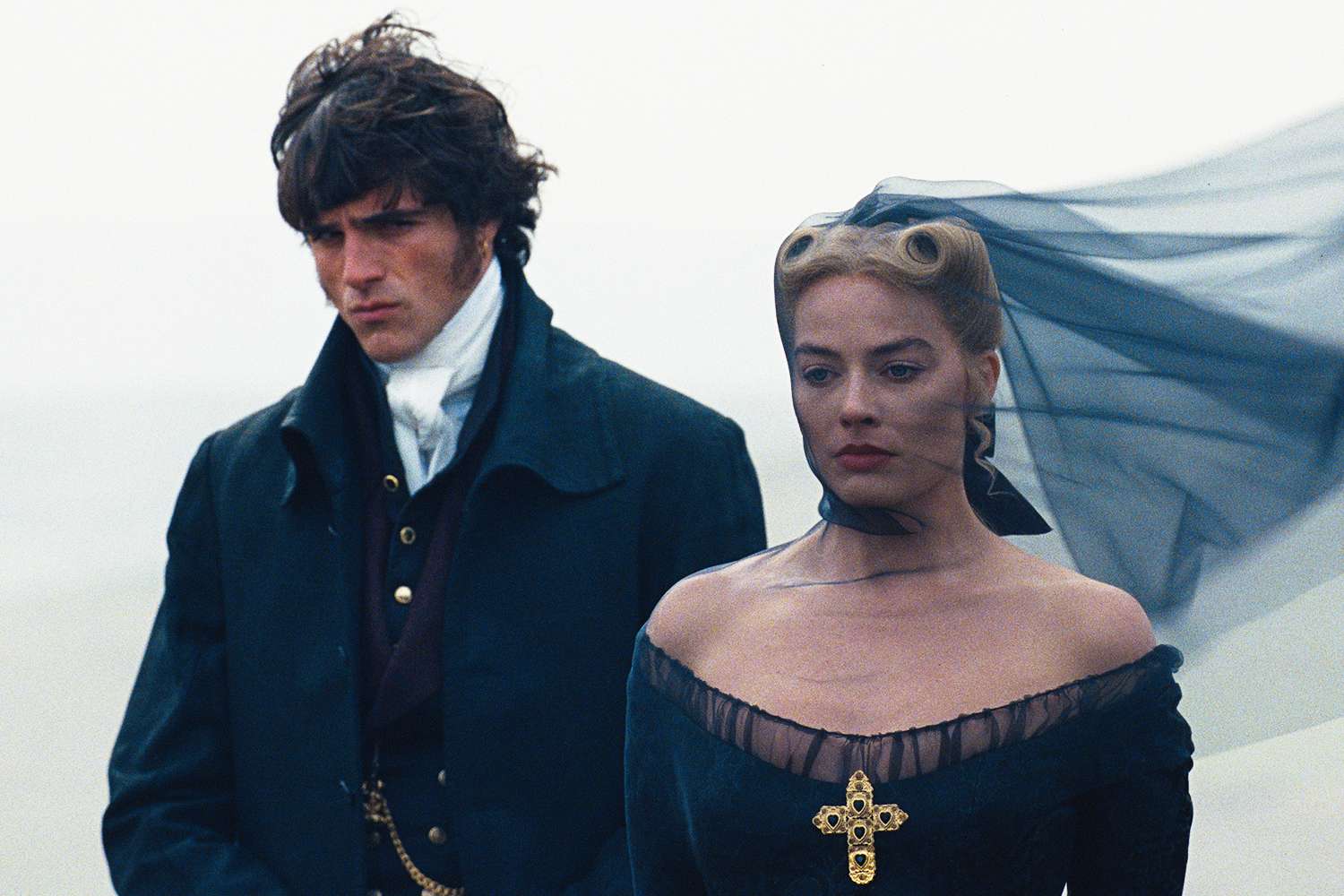
Wuthering Heights review: Jacob Elordi and Margot Robbie in a scene from Emerald Fennell's film. (Warner Bros. Pictures via AP) (AP)
A pointless version
At Wuthering Heights, Young Cathy Earnshaw (Charlotte Mellington) grows fond of the new boy her gambling father has brought along with him. She names him Heathcliff, and he is played by last year's Adolescence breakout star Owen Cooper. He will be your pet, Cathy's father, Mr Earnshaw, tells her. But as they grow up, Cathy (now played by Margot Robbie) and Heathcliff (Jacob Elordi), their growing fondness for one another becomes a trap. She soon meets the wealthy neighbour, Edgar Linton (Shazad Latif), at Thrushcross Grange and decides to marry him. But her decision, grown out of the side-eyed trickery of househelp Nelly (Hong Chau), upends all of their lives forever.
Movie Review
Wuthering Heights
1/5
Period drama
Director
Emerald Fennell
Cast
Margot Robbie, Jacob Elordi, Hong Chau, Shazad Latif, Alison Oliver, Martin Clunes, Ewan Mitchell
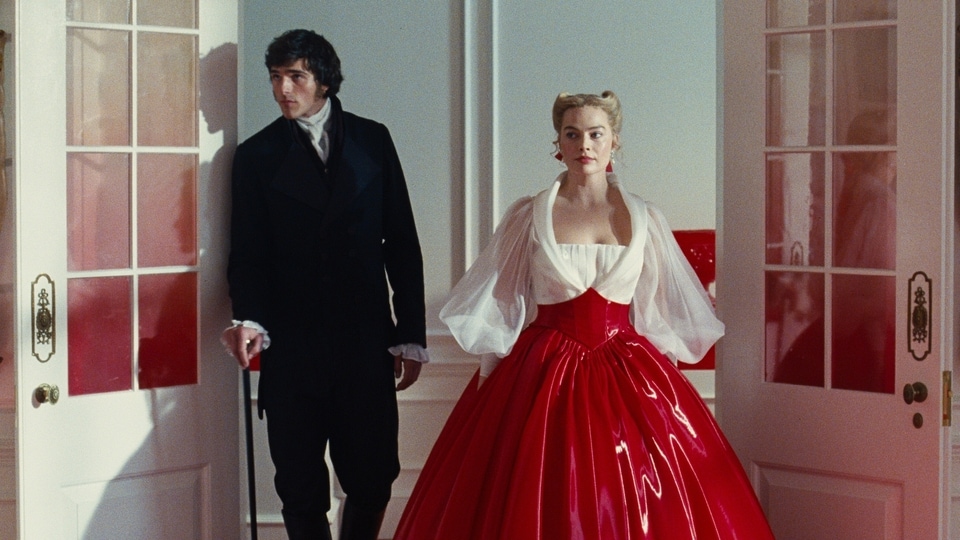
Fennell gets rid of Cathy's elder brother, Hindley, and the entire story-within-a-story format of Brontë's vision, which made it so memorable and inscrutable at the same breadth. Here, there is no Mr Lockwood to position as the mouthpiece of the viewer. The viewer, in Fennell's version, is a slime leaving a trail on the wall. It must follow adequately; in silence, in chronology. The viewer must then lazily accept that Cathy and Heathcliff's romance will burn everything, that their passion devours them whole. Cathy masturbates, historical inaccuracies pile up not only in Jacqueline Durran's latex-adorned costumes but also in Suzie Davie's morbid production design, and Heathcliff is hurt. The Charli XCX songs make little to no impact.
Highly sexualised and still boring
Fennell has such a distinctive eye for lush, absorbing detail. Some of her frames are utterly breathtaking, thanks in no small part to the cinematographer Linus Sandgren's evocative play of light and colour. But when all the attention from the costumes to the walls to the necklaces comes off, little remains in the frame to hold on to. Fennell even manages to make the central affair between Cathy and Heathcliff, even when highly sexualised, boring. An entire montage of scenes features them having sex, wherever they can, really, and it still feels lifeless and unintentionally hilarious.
It does not help that not only Jacob Elordi but also Margot Robbie are miscast here. Margot's Cathy never aligns with the recklessness and hurt, and over time becomes a weeping mess. Elordi's casting is more unyielding and misguided. The actor is too rigid in the painfully toned-down dialogues, and his Heathcliff is never the man who lives for revenge. There is no passion and fury, no hurt caused. He is too Darcyfied to make an impact. Perhaps the worst hit is Nelly's role here. Undoubtedly one of the most ingenious characters in all of literature, here she is played by Hong Chau with a sense of misplaced jealousy. Alison Oliver is the only one who emerges unscathed in the role of Isabella. Fennell does not know what to do with her, so Oliver runs with it.
Wuthering Heights, or “Wuthering Heights” as Fennell would like to name it with the quotation marks, has been accounted for by the writer-director. There's no way to make the film; she's merely making a version of it, she has stated. Like William Wyler’s 1939 Laurence Olivier version or the 1992 one with Ralph Fiennes. But if that new version allows for the book's definitive take on economic disparities and classism to make space for bodice-ripping sexual awakening and campy love affair, then you have lost me.
I cannot take it as a ‘version’ of its source either. It is just an empty version, borne out of little curiosity and even less depth. Shock value seems to be its watchword. It makes an absolute mockery of the source material by turning a doomed tale of obsession and fate into a love story. This is a film that works as a fantasy bereft of emotion, a film designed to ragebait viewers into believing transgression looks so sexy. This is a film that is in immediate need of the book in the first place.
Santanu Das is a Senior Content Producer at Hindustan Times with over 5 years of experience, writing on films, pop culture and film festivals. He has a keen interest in writing about South Asian independent films and has covered several film festivals, including Sundance and CPH: Docx. He also brings a sharp perspective to the monthly column called The Fault in Our Stars, where he writes about a recent film/series and what stops the ‘good’ from becoming ‘great’.
A gold medalist from Banaras Hindu University, Santanu completed his postgraduate studies in English from Jadavpur University. He is also a Rotten Tomatoes-certified film critic. When not watching films or speaking to celebrities, Santanu can be found reading a book. Some of his favourite films are Aparajito, Ponyo and The Double Life of Veronique. His favourite books include The Corrections, The God of Small Things and A Room of One's Own.
Santanu continues to write passionately about films and celebrity culture. He brings a relatable, as well as critically informed, lens to entertainment and culture for a wide audience.
Find him on LinkedIn: santanudasfilm
Instagram: @santupechaRead More
Stay connected with all the glitz and glam from the world of entertainment, right from Hollywood gossip to Bollywood chit chat. Also don't miss out on music buzz, anime scoops and OTT action.
Home/Entertainment/Hollywood/Wuthering Heights Review: Margot Robbie, Jacob Elordi Are Miscast In Emerald Fennell's Mockery Of Emily Brontë's Classic

 E-Paper