
 E-Paper



Medical Treatment Abroad with Airomedical: Five Things Indian Patients Should Check Before Booking
Patients considering treatment in Germany should compare specialist experience, hospital services, quality indicators, and patient reviews.

 Prefer HTon Google


A recommendation for treatment abroad often comes with a long list of questions. Which hospital is the right fit? How much will the treatment cost? Is travel safe in my condition? And what happens after I return home? For many patients, finding answers to these practical concerns can feel almost as important as choosing a doctor.
Medical travel involves much more than scheduling an appointment. Finding the right hospital is only one part of the process. Questions about costs, travel, medical records, and follow-up care can be just as important once planning begins.
Germany is one of the countries frequently considered by patients from India seeking specialized care. Services such as Airomedical help patients compare hospitals, arrange consultations, and organize treatment abroad, but there are still several important factors patients should evaluate before making a final decision.
Here are five important things to check before committing to treatment abroad.
Check Hospital Credentials and Relevant Experience
When considering overseas care, patients should look beyond a hospital's reputation and examine its experience in treating their specific condition. It is also worth checking whether the hospital has access to different specialists who can work together when additional questions arise during diagnosis.
The experience of Ms. Poonam from India illustrates why this matters. After being diagnosed with pulmonary fibrosis, she wanted a more comprehensive evaluation and turned to Airomedical for support. The team matched her with PD. Dr. med. Gregor Zimmermann at University Hospital Rechts der Isar in Munich, a university hospital affiliated with the Technical University of Munich.
During her visit, Ms. Poonam had several tests, including a high-resolution CT scan, serology, and bronchoalveolar lavage. The results did not provide a simple answer, but offered a more complex picture. The doctors diagnosed her with an interstitial lung disease of unknown origin, and ground-glass opacities and early fibrotic changes in her lungs.
Pulmonary fibrosis is part of a broader group of more than 200 interstitial lung diseases (ILDs), many of which can share similar symptoms while requiring different approaches to diagnosis and treatment.
The findings led doctors to look beyond the lungs. To rule out other factors that might be affecting her condition, they recommended additional cardiac testing, including a heart MRI. Airomedical arranged an appointment with Prof. Dr. med. Karl-Ludwig Laugwitz for the very next day, giving Ms. Poonam the opportunity to continue her evaluation at the same hospital rather than starting over with a new team elsewhere.
This reminds patients considering treatment abroad that hospital credentials are more than rankings and titles. When a diagnosis is not clear, or symptoms involve more than one organ system, having access to different specialists under one roof can save time and make the diagnostic process much more efficient.
Use Rankings and Patient Reviews to Narrow Down Your Options
Once patients have identified hospitals with relevant expertise, the next step is comparing their options. Rankings and patient reviews can help organize a long list of hospitals into a manageable shortlist, particularly when researching treatment in a healthcare system that is unfamiliar.
Patients looking at leading oncology hospitals in Germany may come across hospital rankings, specialist profiles, and independent review platforms. These resources can provide useful information about a hospital's areas of expertise, available treatments, and patient experience. They can also help patients compare hospitals when multiple options seem equally suitable.
Quality standards may also offer additional reassurance. According to the German Cancer Society, Germany had 2,294 certified cancer centers across 2,429 locations as of the end of 2025. In addition, the certification network includes more than 190 European Cancer Centers. These centers are regularly evaluated and bring together specialists from multiple disciplines involved in cancer care.
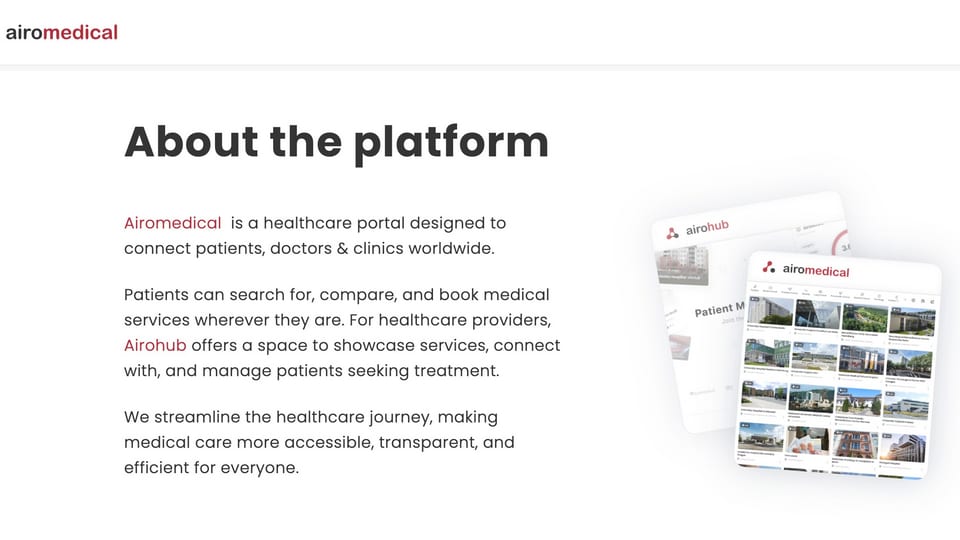
The platform, airomedical.com, allows patients to compare hospitals, physician qualifications, treatment options, and patient experiences in one place before requesting a consultation. Looking at several factors together often provides a more balanced picture than relying on a single ranking or review.
A top position in a ranking can be reassuring, but it is rarely the whole story. Patients are often better served by looking at the experience of the specialists, the services available at the hospital, and how well those resources match their individual needs.

Request a Written Cost Estimate Before You Commit
Cross-border healthcare often involves much more than the procedure itself. In addition to consultations, tests, surgery, or other treatments, patients may face costs related to hospitalization, medications, rehabilitation, travel, accommodation, and interpretation services.
Many patients focus on the price of treatment itself and pay less attention to the additional expenses that can arise once travel plans are underway. Hospital stays may be longer, extra tests might be suggested, or new specialists could become involved after doctors review medical records.
A written estimate also helps in comparing options before making a decision. Two hospitals may offer you different prices for what seems like the same treatment, but it’s the devil in the detail. One offer may include the diagnostic tests, another may list them separately.
That’s why it pays to read the fine print. Patients should be clear on what's covered, what may be charged separately, and whether extra consultations or diagnostic tests may affect the final bill.
Understand Visa Requirements and Travel Fitness
Many patients spend weeks comparing hospitals only to find paperwork becomes the next hurdle. Medical records, appointment letters, visa documents, and supporting forms must be prepared before the trip can proceed.
Requirements vary from country to country, but hospitals will often request medical records, test results, and appointment documentation before a visa application can be completed. Delays are not uncommon, particularly when additional paperwork is needed.
Patients also need to think realistically about the journey itself. A long international flight may be more challenging for someone living with a serious lung condition, recovering from surgery, or managing advanced cancer or heart disease.
Ms. Poonam's experience is a good example. What initially appeared to be a pulmonary issue ultimately required consultation with both lung and heart specialists in Germany. Her case serves as a reminder that travel plans should be discussed with the treating physician, if symptoms are still being evaluated or a diagnosis is unclear.
It is also worth checking practical details such as medication supplies, travel insurance, and access to medical records before departure. These little preparations are rarely given much thought, but they can save a lot of worry on the road.
Plan Follow-Up Care Before Returning Home
One of the most overlooked aspects of a medical journey is what happens after treatment is completed. While patients often focus on choosing a hospital and arranging travel, follow-up care can be just as important as the initial consultation or procedure.
When patients are discharged, they typically go home with their test results, discharge summaries, imaging studies and medication recommendations. Having those documents ready and available can save time at future appointments with local doctors.
Recovery doesn’t end when a patient leaves the hospital. A surgeon may want to monitor the healing process, an oncologist might request additional testing, or may need to adjust medications based on follow-up results. Knowing who will manage those conversations in advance can prevent confusion later.
Remote consultations have become increasingly common, and according to the World Health Organization, 77% of countries in the European Region provide telemedicine or remote patient-monitoring services. So, patients considering treatment abroad from India should also ask about contacts with their overseas medical team once they return home.
The Value of Being Prepared
Medical travel can create opportunities to access specialists, diagnostic tests, and treatments that may not be readily available at home. At the same time, a successful medical journey often depends on much more than selecting a hospital or booking a consultation.
Ms. Poonam's experience in Germany began with a search for answers about a lung condition. Along the way, it expanded into consultations with specialists from different departments and additional testing that helped doctors build a more complete picture of her health. It is the kind of situation many patients do not anticipate when they first start looking at hospitals abroad.
Long before the first consultation takes place, patients often compare hospitals, gather records, plan travel, and think about what happens once they return home. Those decisions may not receive the same attention as the treatment itself, but they are very much part of the process.
References
- German Cancer Society (Deutsche Krebsgesellschaft). Certification of Cancer Centres (Zertifizierung von Krebszentren). Berlin, Germany. Updated 2025.
- Kozina J. & Dr. Volvak Marta. Top 10 Best Cancer Hospitals In Germany. Airomedical. Updated 2026.
- Marlies Wijsenbeek, Atsushi Suzuki, Toby M. Maher. Interstitial Lung Diseases. The Lancet. 2022.
- Pulmonary Fibrosis Foundation. Fact Sheets for Pulmonary Fibrosis and Interstitial Lung Disease. Chicago, IL: Pulmonary Fibrosis Foundation. 2026.
- Volvak Natalia. Integrated Lung & Heart Evaluation in Germany: A Pulmonary Fibrosis Patient Story from India. Airomedical. 2026.
- American Lung Association. Types, Causes and Risk Factors of Pulmonary Fibrosis. Chicago, IL: American Lung Association. 2026.
- World Health Organization Regional Office for Europe. The Rise of Telehealth in the European Region: Insights from Norway. Copenhagen: WHO Europe. 2024.
Note to readers: This article is part of HT's paid consumer connect initiative and is independently created by the brand. HT assumes no editorial responsibility for the content, including its accuracy, completeness, or any errors or omissions. Readers are advised to verify all information independently.
Want to get your story featured as above? click here!


