
 E-Paper





Leena Dhankhar is Senior Editor and Bureau Chief, Gurugram, at Hindustan Times, where she has spent over 17 years chronicling the transformation of one of India's fastest-growing urban regions. From starting her career as a crime reporter to leading the Gurugram bureau, her journalism has been defined by investigative reporting, in-depth storytelling and an unwavering focus on public interest. Over nearly two decades, she has reported extensively across crime, politics, civic governance, elections, real estate, environment, courts, sports, education and entertainment, covering Gurugram, Faridabad, Nuh and Palwal. Her reporting has exposed several major scams and systemic failures, including insurance frauds, waste management irregularities, illegal arms manufacturing units in Nuh, illegal mining in the Aravallis, organised crime networks and governance lapses affecting millions of residents. Known for her investigative work and exclusive stories, Leena has reported on high-impact national issues, including the Nicaragua charter flight carrying Indian migrants that was turned back amid allegations of human trafficking, exposing the growing network of illegal immigration rackets. Her work has also focused on gang wars, prison administration, juvenile crime, women and child protection systems, the functioning of the Juvenile Justice Board and Child Welfare Committee, and environmental challenges such as pollution, waterlogging and deteriorating civic infrastructure. Beyond hard news, Leena has extensively documented Haryana's rich heritage, forests and wildlife, bringing attention to the state's historical landmarks, biodiversity, conservation efforts and ecological challenges through immersive reportage and feature writing. Her journalism has consistently gone beyond breaking news. She has documented Gurugram's rapid urbanisation through long-form narratives and enterprise reporting on issues ranging from pothole-ridden roads, flooding and waste management to the changing social fabric of India's Millennium City. She also writes widely read feature columns, including The Outsider, Changemaker, and Concern for Gurugram, profiling people, places and ideas shaping the city's identity. Leena is the author of Gurugram School Murder, published by Juggernaut Books, a deeply reported account of one of India's most high-profile school murder investigations. She is currently working on her second book, an investigative work exploring some of India's most significant scams and fraud investigations. Beyond print journalism, she has expanded her storytelling through public speaking and digital media. She is a TEDx speaker and has produced podcasts exploring Gurugram's transformation, civic challenges and untold stories. Her work reflects a commitment to narrative journalism that combines rigorous reporting with compelling storytelling. A law graduate with an MBA in Human Resources, Leena brings a multidisciplinary perspective to her reporting, particularly on governance, public policy and legal affairs. She has travelled extensively across India to pursue investigative assignments, often reporting from remote locations and conflict-prone areas in search of stories that matter.
Gurgaon RWAs to have rules, organise awareness camps to manage pet litter
Several Gurgaon residents’ welfare associations (RWAs) have decided to set guidelines for pet owners to have clearly defined walking trails for dogs, pet litter areas and corresponding pet litter dustbins.


Several residents’ welfare associations (RWAs) have decided to set guidelines for pet owners to have clearly defined walking trails for dogs, pet litter areas and corresponding pet litter dustbins.
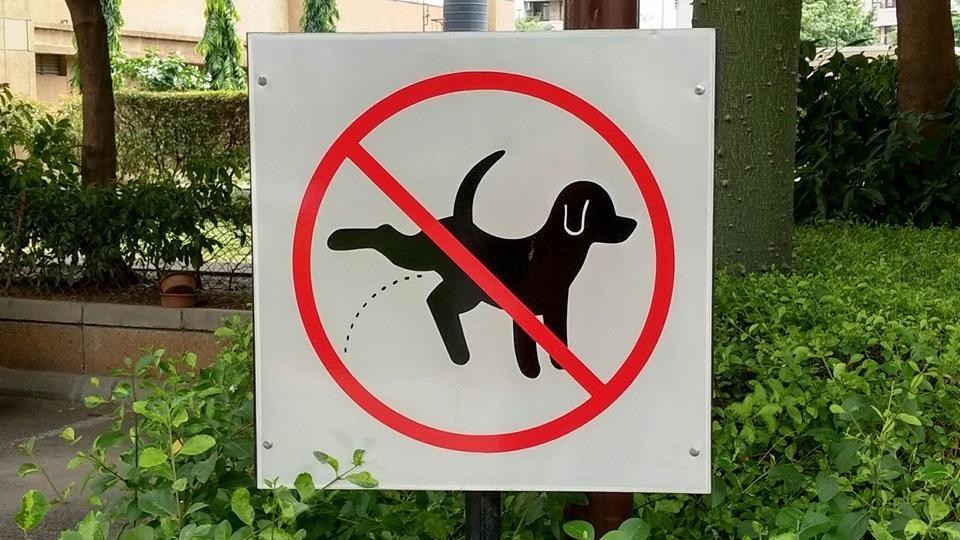
This comes a day after HT highlighted the problems caused by pet litter in gated communities. RWAs were not able to issue guidelines or implement rules until now to ensure that pet owners take full responsibility of keeping roads clean.
Many RWAs are keen on raising awareness and bringing about a positive change in maintaining cleanliness and hygiene in their condominiums with the cooperation of pet owners.
Amit Jindal, president RWA, Vipul Greens, Sector 48, said, “Stray dogs are a risk to the safety of people, especially the kids and the elderly. We spend a lot on maintaining cleanliness in the society and dog litter creates a mess. We will impose penalties and will ensure action is taken against the pet owner. We will have CCTV cameras to monitor these issues. We have already made two littering points on the outer side of the condominium , but people do not care about keeping the area clean. We are also trying to organise sessions to educate residents and domestic helps on these ‘not so common’ issues.
A few condominiums have a strict pet etiquette policy, including ‘scoop the poop’ wherein the dog walker has to pick the litter and discard it in the designated bin/area.
Parimal Bardhan, RWA president of DLF Phase 1 H and B Block, said, “Dog lovers in our community have the least respect for neighbours as they don’t hesitate to turn a blind eye while their pets, chaperoned by their helps, defecate in front of others’ homes.”
“A large majority of house helps walking the dogs are often busy on phone or with their own socialising and do not care for the stroll and play activity of the pet, nor do they train or guide the pet to defecate in green areas. They allow the pet to defecate in the middle of the road and leave without clearing the litter . A few are also seen punishing the pets and pulling them along. Pets are most obedient and trainable. Since most people have started keeping pets, it’s most imperative to establish proper pet etiquette,” said Ruchika Sethi Takkar, activist and a resident of Nirvana Country.
Another resident Suman Gupta, Jai Heights, Sector 52, said, “Well-defined guidelines and respecting pet owners’ rights are needed. But what’s most critical is that pet owners recognise that the pet is an extended family member and take responsibility as a pet parent. They should only let pets defecate in designated areas and not in lobbies, common walkways.”
“In the absence of RWA guidelines, dogs are free to litter in front of our homes. I believe Central Park and few other condominiums have very strict guidelines wherein you are supposed to pick up the poop and discard it appropriately,” Takkar said.
On the other hand, animal conservationists feel that making rules and regulation for pets are not fair and they should not be ill-treated .
Prerna Bindra, animal rights activist, said, “A lot of societies have laid down rules which are illegal. The pet owners should behave responsibly, if they are taking their pet in the lift, they should make sure the pet doesn’t litter inside . But not allowing a pet inside a lift is not fair.”


