E-Paper



Nearly 9 decades of Amelia Earhart mystery and the expedition sailing to a remote island to test a theory
Amelia Earhart vanished over the Pacific in 1937. A US team is now heading to a remote atoll to check whether a lagoon shape is her plane, or a fallen tree.

 Prefer HTon Google


A 17-member team of US researchers is sailing across the South Pacific to Nikumaroro, an uninhabited coral atoll in Kiribati, to find out whether a shape in its lagoon is the wreck of the aircraft Amelia Earhart was flying when she disappeared in July 1937.
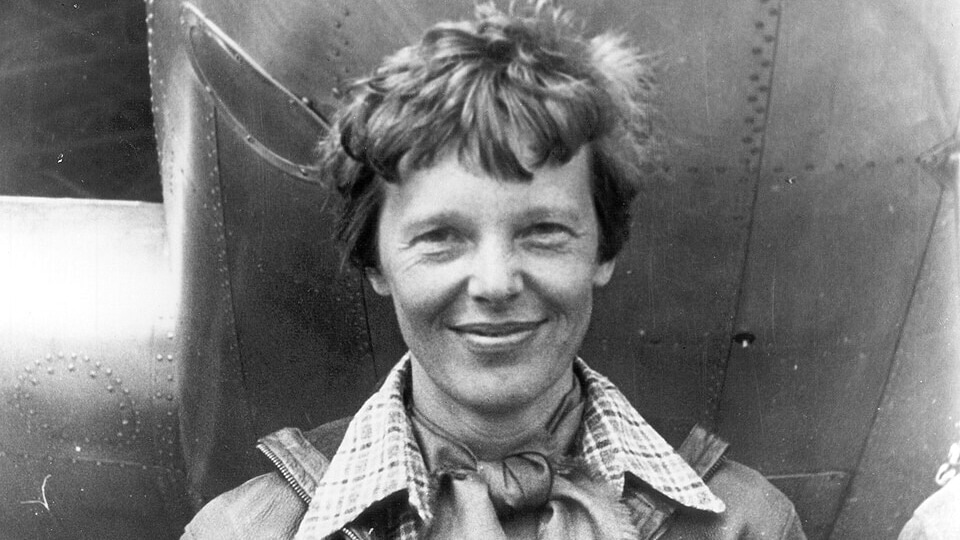
The expedition, led by Richard Pettigrew of the Archaeological Legacy Institute and backed by Purdue University, is going after what its members call the Taraia Object. The shape was first picked out in satellite imagery in 2020, and the team believes it could be the Lockheed Electra in which Earhart and her navigator, Fred Noonan, vanished on one of the final legs of a round-the-world flight.
Ric Gillespie, who has led several earlier expeditions to the atoll, says the object is a fallen tree.
What is the expedition looking for?
The object is an elongated, branching shape in shallow water near the shore of the atoll's Taraia Peninsula. Pettigrew's team believes it could be part of Earhart's twin-engine Lockheed Electra 10-E.
The team is travelling aboard the vessel Marin Mainiku and plans to spend five days on the atoll, according to Reuters. Once there, the researchers intend to sweep the site for magnetic metals, cut back the vegetation and dredge away the sediment that has built up around the object so they can get a close look at what lies beneath.
The BBC reported that weather and sea conditions could limit how long they get at the site. The island is also home to large coconut crabs, and the crew plans to sleep aboard the ship rather than ashore.
In 1937
Earhart took off from Oakland, California, on May 20, 1937, hoping to become the first woman to fly around the world. She and Noonan flew a modified Electra, which she called her "flying laboratory", on a route close to the equator across parts of South America, Africa and Asia. By the time they reached Lae in Papua New Guinea, they had covered about 22,000 miles (35,400km), and another 7,000 miles (11,300km) of Pacific Ocean still lay between Earhart and her record. On July 2 they took off for Howland Island, an island of less than 2 sq km about 4,000km away, where they planned to refuel.
The US Coast Guard cutter Itasca waited off Howland to guide them in. Earhart and Noonan could not hear the ship's voice transmissions, but the Itasca could hear her. "We must be on you, but cannot see you, but gas is running low," she radioed. At 8.43am came her last known message, which the BBC has reported she broadcast sounding close to tears: "We are on the line 157 337… We are running on line north and south." A line of position tells a navigator which line on the chart the aircraft is on, but not where on that line it is, and Earhart was flying up and down hers in the hope of sighting the island.
The Navy ordered six warships into the hunt, and the search covered more than 250,000 square miles of ocean around Howland. It included a flyover of Gardner Island, the old name for Nikumaroro, and found neither the aircraft nor its crew.
The official finding was that Earhart and Noonan missed Howland, ran out of fuel and went down in the ocean.
The castaway theory
A popular alternative theory says that Earhart and Noonan, unable to find Howland, flew on to Nikumaroro, about 400 miles (640km) to the south-east, and made an emergency landing on the reef or close to it.
The International Group for Historic Aircraft Recovery (TIGHAR), which Gillespie co-founded, has spent decades testing the idea on the island. Its searchers have recovered a glass cosmetic jar believed to date from the 1930s and the remains of a jackknife resembling one Earhart is believed to have carried. Gillespie has also worked through records of radio transmissions and a photograph of the shoreline that he believes may show the Electra's landing gear poking out of the water.
In this version of events, Earhart and possibly Noonan survived for a time on rainwater and whatever food the island offered, while the aircraft was swept off the reef into the sea.
None of it has been proven, and Pettigrew's team is testing a narrower claim: that the Taraia Object is the Electra.
Tree or plane?
The expedition team says the shape in the satellite images resembles a fuselage and wings, and that the object also shows up in aerial photographs taken in 1938, a year after Earhart vanished, according to Reuters. The researchers argue that earlier searches could have missed it because sediment had buried parts of it.
Gillespie has no doubt it is a fallen pandanus tree, a plant native to the region. "You can see the root ball. You can see the branches," he told Reuters. He has said teams visited the site in 2001 and 2007 and swept it with metal detectors.
Gillespie still believes Earhart came down on Nikumaroro, but he thinks the tides dragged the plane off the reef and the surf broke it apart. He doubts there is much left to find. A 2019 search of the surrounding waters involving the marine archaeologist Robert Ballard, the explorer who found the Titanic, came up empty, Reuters reported.
If the object turns out to be an aircraft, the castaway theory gets its strongest evidence yet. If it is a tree, the wider theory survives.
The enduring mystery
Nearly 90 years of searching have not turned up any proof. Without wreckage or remains of the two fliers, every account of the final flight depends on how researchers interpret radio logs, old photographs and objects pulled from the sand. Each of the three main explanations has enough evidence to keep its supporters going and too little to win the argument.
The official account fits the radio record best, since Earhart's last calls show she believed she was close to Howland and short of fuel. The ocean exploration firm Nauticos searched the seabed there on three expeditions between 2002 and 2017, covering an area roughly the size of the US state of Connecticut, and found nothing. In January 2024 another company, Deep Sea Vision, released a sonar image from west of Howland that appeared to show an aircraft on the seabed. Later that year, it said the object was a natural rock formation.
The castaway theory draws on what the 1937 search had recorded. A Navy pilot who flew over Gardner Island a week after the disappearance, Lieutenant John Lambrecht, reported that "signs of recent habitation were clearly visible", though the island had no known settlers at the time. Shortwave listeners also reported hearing what they believed were distress calls from Earhart, reports that were long dismissed. Bones were found on the island in 1940 and later lost, and only seven measurements survive. A scientist who examined the bones in 1941 concluded that they came from a man, and a 2015 study of the measurements backed that finding.
In 2018 Richard Jantz, an anthropologist at the University of Tennessee, re-examined the surviving measurements and concluded that they matched Earhart's estimated build more closely than they matched 99% of a large reference sample. The two readings of the measurements remain in dispute, and with the bones gone, nobody can test them directly.
A third theory holds that Earhart and Noonan came down in the Marshall Islands and were captured by Japanese forces. A photograph promoted in a 2017 History Channel documentary as showing the pair on a dock in the Marshalls turned out to have been taken at Jaluit Atoll in 1935, according to a military expert quoted by AFP, and published in a Japanese photographer's travelogue before the disappearance.
Capturing public attention
Earhart was one of the most famous people in the US by the time she took off from Lae. In 1928, she became the first woman to cross the Atlantic by air, though as a passenger.
In 1932, she crossed it alone, the first woman to do so, bringing her red and gold monoplane down in a field at Culmore in Northern Ireland, the Associated Press reported. A US newspaper that carried the AP report quoted her in its headline as exclaiming "I've done it!" as she stepped from the plane, and introduced her as the wife of a New York publisher, George Putnam.
Earhart also used her fame to push for women in the field. At Purdue she spent two years as a visiting faculty member, counselling women students on careers and advising the aeronautics department, according to Reuters. The university also funded development of the modified Electra.
Before the final flight, she wrote to Putnam: “I want to do it because I want to do it. Women must try to do things as men have tried. When they fail, their failure must be but a challenge to others.”
She was 39 when she disappeared, on the most ambitious flight of her career.
What happens next?
Once the team reaches Nikumaroro, it will try to establish whether the Taraia Object is aircraft wreckage by looking for metal and for structure that tells an airframe apart from wood. If it proves to be part of the Electra, any recovery would need further permission from the Kiribati government, Reuters reported. If the inspection is inconclusive, the object will likely join a long list of leads that looked like an aircraft from above and could not be confirmed on the ground.