
 E-Paper



Poland’s president won’t swear in judges and its government won’t publish rulings. Inside the court crisis
The suspension of the constitutional tribunal’s chief is the latest in a fight between the pro-EU Donald Tusk government and PiS over who controls the court

 Prefer HTon Google


The suspension of the head of Poland’s Constitutional Tribunal on Friday night, backed by Prime Minister Donald Tusk’s government and denounced by the opposition as a coup, is the latest move in a fight that began in 2015 over who controls the court that rules on whether Poland’s laws are constitutional.
Since then, each side has refused to recognise judges chosen by the other. Law and Justice (PiS), the national-conservative party that governed from 2015 to 2023, built a majority of its own nominees on the court, which European courts later ruled was no longer independent. Tusk’s pro-European coalition, in power since 2023, has stopped publishing the tribunal’s rulings and elected new judges. President Karol Nawrocki, a PiS ally, has refused to swear in five of them.
The court is effectively paralysed. The fight over it is also a fight over Poland’s place in Europe, between a government that leans on European law and an opposition that speaks for national sovereignty. On Russia, the two camps are much closer.
Friday’s crisis
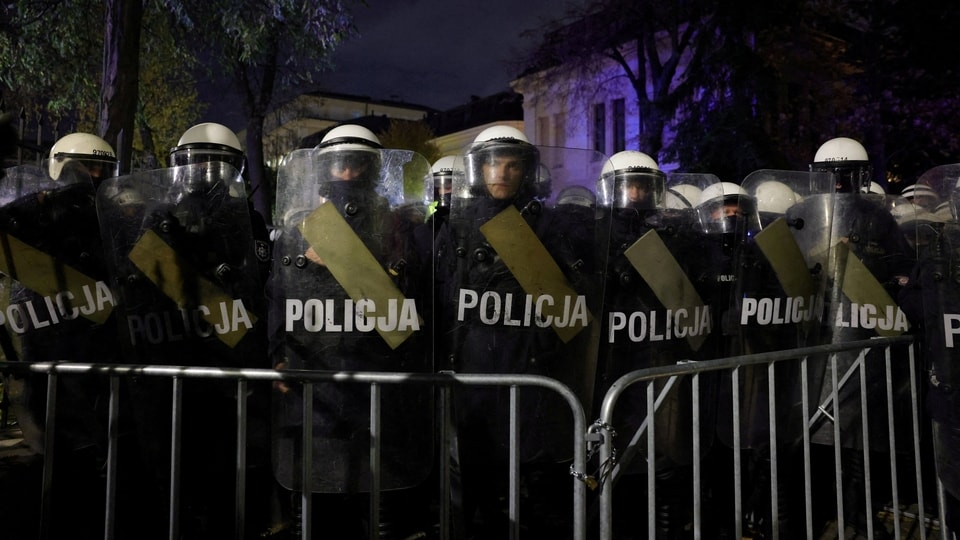
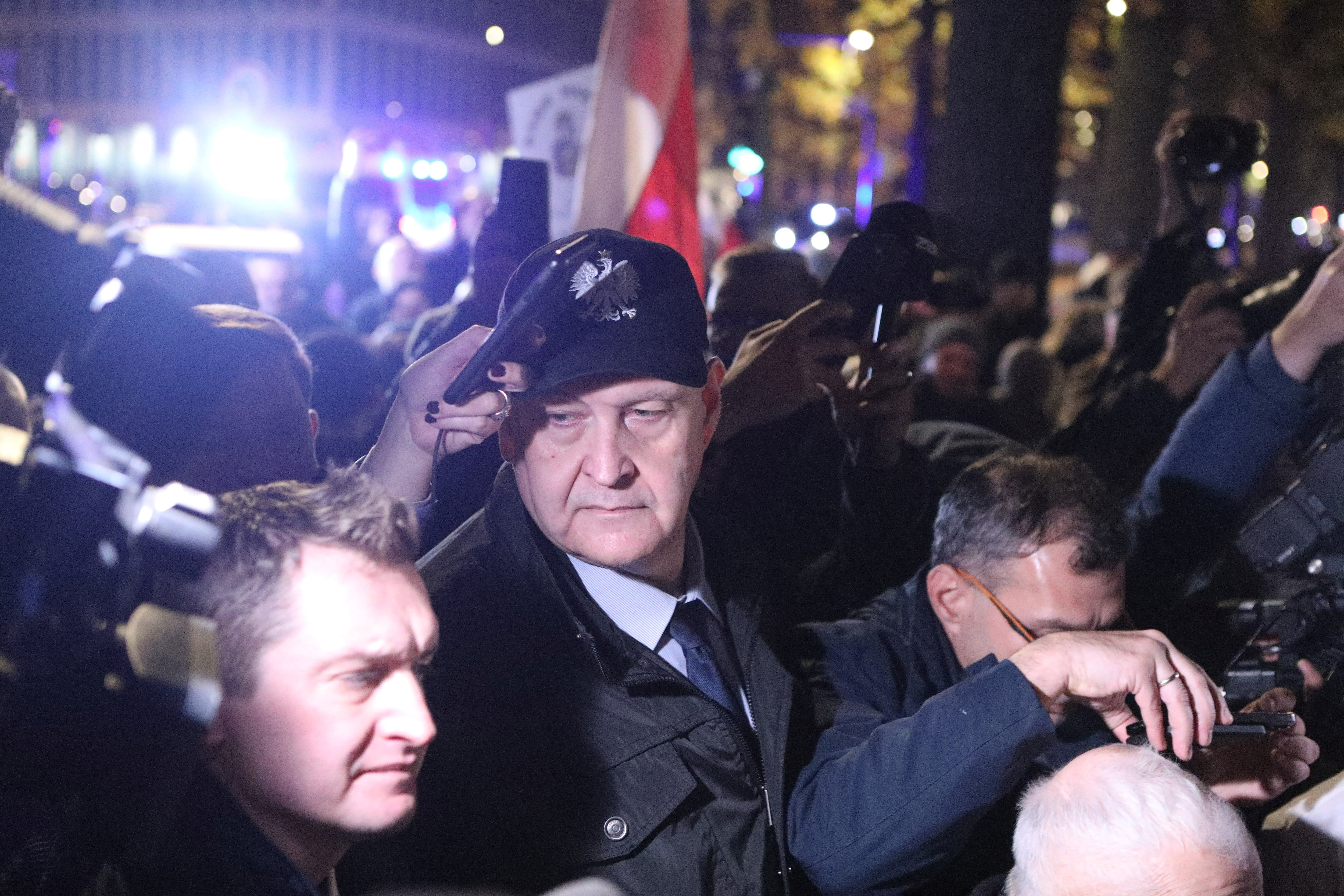
A notice on the tribunal’s website suspended its president, Bogdan Święczkowski, and his deputy, Bartłomiej Sochański, for a month, and put Anna Korwin-Piotrowska, one of the judges Nawrocki has not sworn in, in charge. The site went down soon after, and the Associated Press (AP) could not verify the official reasons. Justice minister Waldemar Żurek said he had asked for both men to be stripped of their immunity so they could face criminal charges, the BBC reported. Riot police kept protesters out of the building, the tribunal’s own X account called the move a coup d’etat, and Nawrocki, who turned back a flight to Senegal, entered the court early on Saturday.
What the tribunal does
Poland’s constitution gives the tribunal 15 judges, each chosen by the Sejm, the lower house of parliament, for a single nine-year term. The court rules on whether laws comply with the constitution, and its rulings are final and binding on everyone. A ruling takes effect only once it is published in the official journal.
The president of Poland can send a bill to the court before signing it, and appoints the court’s president from candidates put forward by its judges.
A majority on the tribunal can therefore strike down a government’s laws, and a president can use the court to challenge them. Nawrocki still asks it to review laws, Bloomberg reported.
How the dispute began
The crisis began in 2015, the year PiS took power. The outgoing parliament had already filled seats on the tribunal, but PiS sought to appoint its own judges to those same seats, Reuters reported. It moved quickly because the court decides on the legality of legislation, the BBC reported, and its nominees went on to gain a majority.
Critics at home and abroad said the tribunal no longer met the standards of an independent and impartial court, Reuters reported, and the EU accused PiS of subverting the rule of law. The EU imposed fines on Poland over the party’s judicial reforms, according to AP.
Two European courts later ruled against the tribunal. The European Court of Human Rights and the EU’s Court of Justice found that the PiS majority had elected three judges improperly, since their seats had already been validly filled, the BBC reported. The European Court of Human Rights ruled in 2021 that a case heard by one of those judges had not been heard by a court established by law. The EU’s Court of Justice went further in December 2025, ruling that the tribunal as a whole is not an independent and impartial court.
Why it has lasted
Tusk’s coalition took office in 2023 pledging to restore the rule of law and reform the court, Reuters reported. It has tried three routes, and none has broken the deadlock.
The first was to stop publishing the tribunal’s rulings, citing the European judgments, the BBC reported. Unpublished, those rulings do not take effect, though the constitution also requires them to be published immediately.
The second was legislation. Andrzej Duda, Nawrocki’s PiS-backed predecessor, and then Nawrocki vetoed the government’s attempts to undo the PiS-era changes. Overturning a veto needs three-fifths of the Sejm, or 276 of its 460 members if all are present.
Tusk’s coalition mustered 243 votes in a confidence vote in June 2025, Reuters reported, well short of that.
The third was to fill the court’s empty seats. Under Polish law, a newly elected judge takes office only after swearing an oath in the president’s presence. Nawrocki has refused to swear in five judges elected by parliament since March, citing alleged flaws in how they were chosen, the BBC reported.
The judges took their oath before parliament instead, and Święczkowski, a former deputy justice minister under PiS, kept them out of the building, DW reported.
In September, parliament added Maciej Berek, a former minister in Tusk’s cabinet and the government’s top legal adviser, to the court. Nawrocki refused to swear him in as well. Critics said the choice undercut the government’s own aim of restoring checks and balances, Reuters reported.
Earlier this month, the Venice Commission, the Council of Europe’s advisory body on constitutional matters, said Nawrocki should swear the judges in so they could sit, the BBC reported. Tusk said last month that he needed to be sure his judges would walk into the court building. “Maybe it won’t be very elegant,” he added, according to Bloomberg.
Europe, and Russia
The government presents the crisis as a matter of European law. The tribunal “was politicised under the previous government”, Radosław Sikorski, the foreign minister, told reporters in Atlanta on Friday, according to Bloomberg. The move, he said, would allow “the majority of duly elected judges to make the tribunal function again”.
Tusk wrote on X that restoring the rule of law “requires decisive action”.
PiS presents it as an attack on Poland’s constitution. Jarosław Kaczyński, the party’s leader, said Poland was “becoming a police state”, Bloomberg reported. Zbigniew Ziobro, a former justice minister in the PiS government, called it “a blatant, criminal attack on the constitutional order”, according to AP.
The two camps are not as divided over Russia. Under PiS, Poland was one of Ukraine’s staunchest allies after Russia’s 2022 invasion, supplying tanks and howitzers.
What happens next
The suspension runs for a month, and its legal basis is disputed even among critics of PiS. Marcin Matczak, a law professor who opposed the PiS reforms, said it had no legal basis “for a million reasons” and would bury the tribunal and the question of the rule of law “for two decades”.
Parliamentary elections are due next year. Some of Tusk’s supporters had accused him of failing to act decisively against the PiS-era changes, and some see Friday’s move as a bid for their votes.


