E-Paper



Dopamine loops, body image, cyber bullying: What science says about social media effects on kids
MeitY has been advised against a complete ban. India will have to decide what and how it wants to frame regulations, if any, on social media use.

 Prefer HTon Google


A complete social media ban for children may not work as intended, a discussion held on August 20 between the ministry of electronics and information technology (MeitY), civil society groups and the consultancy Space2Grow noted.

Participants at the meeting, led by MeitY secretary S Krishnan, argued that shutting children out entirely was not workable, and pushed instead for age-gating, a legally enforceable "duty of care" for social media firms, stronger parental controls and India-specific research into how children use the internet.
The discussions were meant to advise the Indian government, and aren't official policy as yet.
A look at what scientific studies have shown about social media's impact on health:
What's known
It begins with the mechanism. Social media websites run on a loop of likes, comments, shares and notifications, engineered to keep users returning.
Carol Vidal, a child and adolescent psychiatrist at Johns Hopkins Children's Center, and Jennifer Katzenstein, co-director of the Center for Behavioral Health at Johns Hopkins All Children's Hospital, said in an article that repeated exposure to this loop produces small, dopamine-linked rewards that pull young users back — a pattern they describe as genuinely difficult for adolescents to break.
A 2025 review in the Journal of Psychiatry and Psychiatric Disorders found that the same loop can activate dopaminergic reward pathways and reinforce compulsive behaviour, surfacing as impulsivity, attention difficulties and addiction-like patterns.
A pre-registered brain-imaging study published in NeuroImage earlier this year made clinical observations of this pattern.
Researchers at Zhejiang University scanned 56 young adults using fMRI and proton spectroscopy while they watched short videos, and found that watching a preferred clip measurably deactivated the dorsal anterior cingulate cortex and dorsolateral prefrontal cortex — the brain regions responsible for self-control and monitoring behaviour.
People with lower resting levels of glutamate, a neurotransmitter tied to this circuit, showed the deactivation most strongly. The study looked at short-video viewing in young adults in their twenties, not social media use in children specifically, but adolescent brains, where these same control regions are still developing, are considered more vulnerable to such disruptions.
Effects of manufactured content are similarly well documented. A 2025 US study in the same journal found that social media websites expose adolescents to unrealistic beauty standards, comparisons, cyberbullying and harmful material. Digitally altered images also distort how children see themselves, damaging their self-esteem and body image, it found.
The US Surgeon General's 2023 advisory reached a similar conclusion. It found that 46% of adolescents aged 13 to 17 said social media made them feel worse about their bodies.
Cyberbullying compounds this in a way offline bullying may not. Content posted online can stay accessible, get circulated, and reach an audience far wider than a school's boundaries.
Sleep is another arena that suffers. A 2024 Pew Research Center survey found that social media use was cutting into teenagers' sleep and productivity. The concern was enough for the UK government to announce a voluntary midnight-to-6am social media curfew for 16- and 17-year-olds in July this year.
Where the science is a mix
The findings become more complicated when researchers try to figure out if social media use, on its own, causes depression at a population level.
The 2025 review tied excessive engagement to anxiety and depression as one of the contributing factors.
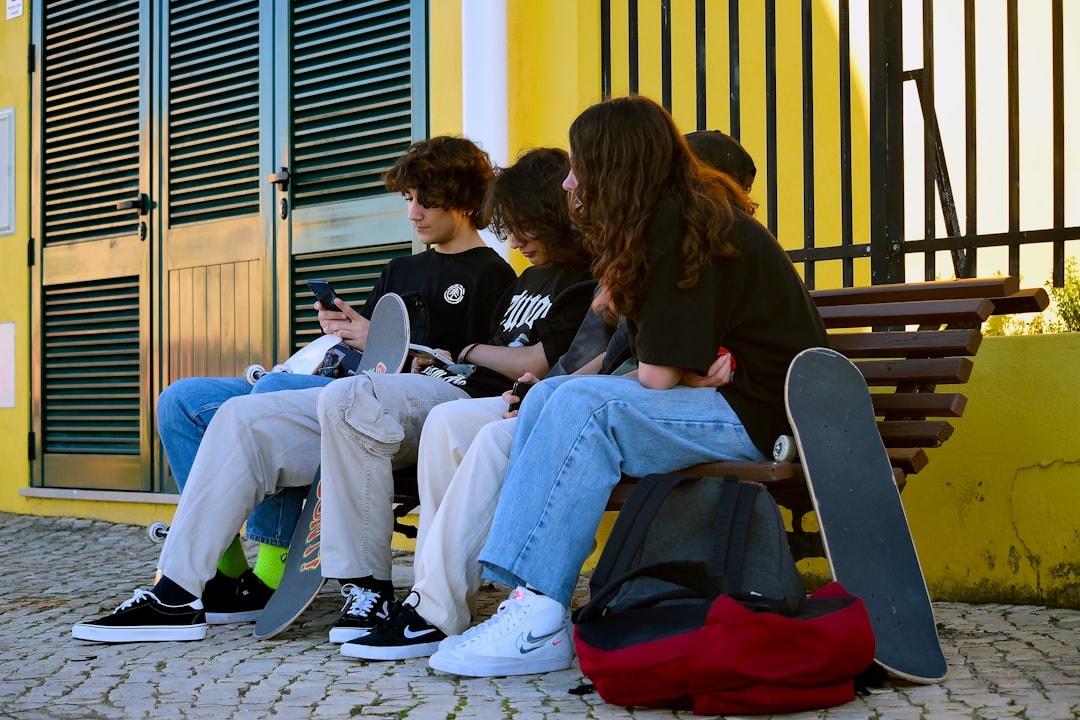
But Vidal and Katzenstein note that research has found elevated depression rates among adolescents at both very low and very high levels of use. Katzenstein calls the middle ground a possible "sweet spot", one that shifts with a child's developmental stage.
Also read: Tobacco moment for social media? How a 29-state US suit against Meta could rewrite social media
Peter Etchells, a psychology professor at Bath Spa University and a member of the UK's Expert Panel for Growing Up in an Online World, told The Guardian that the evidence was "really mixed".
A 2025 study in Nature Human Behaviour, which tracked adolescents with and without existing mental-health conditions, found a mix of experiences: better peer connection for some, and difficulty controlling use for others. The study could not conclude an overall association between social media use and mental health.
Psychologist Candice Odgers, who has studied adolescent mental health for 25 years, also argues that the debate blames social media too heavily for a wider youth mental-health crisis. "Its effects go in all directions," she told The Guardian, noting that for some young people, social media works as a genuine support network too.
But Jonathan Haidt, a social psychologist at the NYU Stern School of Business, and researcher Zachary Rausch published a paper as part of the 2026 World Happiness Report, arguing that the scale of social media use makes waiting for proof of causation the wrong call.
Haidt and Rausch called the mass rollout of smartphones and social media to children in the 2010s "a giant uncontrolled experiment" that had, on the available evidence, harmed a generation. "It is time to call it off," they wrote in the paper.
The paper said an average US teenager spent close to five hours a day on social media, with a quarter of 13- and 14-year-olds spending seven hours or more.
The key questions
Across the world, there is a growing reckoning on the effects of social media.
Australia last year became the first country to enforce a nationwide ban on social media for children under the age of 16. Other countries have followed suit in either passing similar laws or planning them. These include Malaysia, the UK, France, Canada, Germany, UAE, Norway and Denmark.
In the US, last week, a 29-state coalition took Meta to trial in a federal court, alleging that Instagram and Facebook, owned by the Mark Zuckerberg-led company, were built to be addictive to minors. The suit claims that the company hid the risks from the public despite being aware of them.
The developments leave India with a set of questions to answer. How much of the documented harm sits in a platform's design, how much in the content it carries — and does the law need different tools for each? Should India follow other countries in setting a minimum age, or shift the burden onto platforms? What role should parents, schools and children themselves play in whatever framework emerges? And so on.