
 E-Paper



From local to global: Placing India on the global chemical manufacturing map
This article is authored by Burjis Godrej, executive director, Godrej Agrovet Limited.

 Prefer HTon Google


India’s chemicals sector is undergoing a sweeping transformation that is turning local players global, with the country fast emerging as a global manufacturing hub.
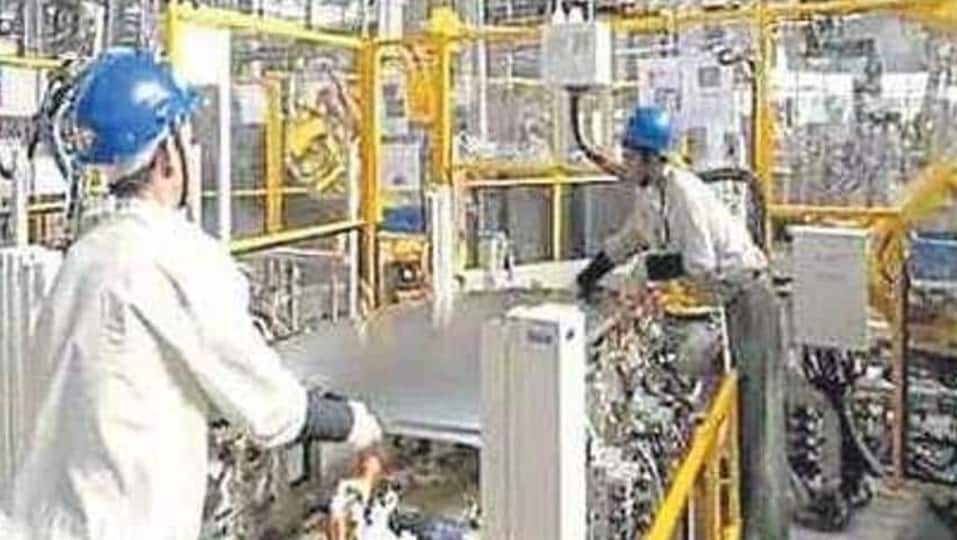
Growing domestic consumption, rising disposable incomes, a reshuffling of the geopolitical order and changing consumer preferences are accelerating already strong demand, putting India on the global chemical manufacturing map and making it the hub of choice for the world.
The sector is expected to log growth of between 11-12% between 2021-2027, according to a joint study by McKinsey and the Indian Chemical Council (ICC), and continue to grow at a still strong 7-10% from 2027-2040.
Already the sixth largest seller of chemicals in the world and the fourth largest in Asia, India’s contribution to global sales is expected to triple by 2040 at this rate of growth, making the country a $850-1,000 billion market with a 10-12% share of global sales, the report adds.
There is a lot working in our favour--like the geopolitical scenario for instance.
The European Union and the United States (US) have historically been the world’s key chemicals hubs. But the focus shifted to China due to its lower costs and government support. However, supply chain disruptions caused by the country’s approach to fighting the Covid-19 pandemic as well as an increase in tensions between China and the West have driven a shift towards a China+1 approach.
India has emerged as the obvious choice to fill the gap.
The country is sparing no effort to build up its manufacturing muscle, driven by government-led initiatives like the Production-Linked Incentives (PLI) scheme, aimed at improving the competitiveness of domestic manufacturing.
At the same time, India is also striking Free Trade Agreements (FTAs) with key trade partners which will complement the country’s growing manufacturing prowess by boosting exports of products, made locally. This two-pronged approach is crucial to truly driving the country’s emergence as a global manufacturing superpower.
FTAs with Australia and the United Arab Emirates have already delivered significant benefits. With several more such pacts on the cards, exports, including for the chemicals sector, are set to get a substantial boost.
Additionally, policies such as the petroleum, chemicals, and petrochemicals investment region (PCPIR) policy have played a significant role in building the industry's confidence.
Moves to promote the setting up of industry in Maharashtra, Gujarat and Jammu and Kashmir, as also enabling policy measures like the GST exemption, should also continue, as they will provide a further fillip to the chemicals manufacturing sector.
Combined with this, India’s strengths in process engineering, low-cost manufacturing capabilities, and abundant skilled manpower make it an attractive destination for manufacturing and sourcing hub.
However, there are challenges that if left unaddressed could hold the Indian chemicals space back from realising its full potential.
Chief among these is incorporating sustainability into our manufacturing. Consumers are becoming increasingly more discerning and demanding. They are growing conscious of where the products they buy come from and how they are manufactured. Companies are being held to account like never before. As a result, they are becoming increasingly choosy about where they source their raw materials from and who their suppliers are.
Sustainability today has become a key business differentiator but so has innovation.
The chemicals sector still imports roughly 50% of its basic chemicals and intermediates from China. There is, therefore, an immediate need to invest in the backward integration of key starting raw materials.
This will require the industry to develop its R&D capabilities and, as the benefits of this will only be felt over the longer term, also diversify its supplier base in the meantime through ‘friendshoring’.
Innovation will not simply be limited to raw materials either. It will need to be applied to the manufacturing process as a whole.
The US has for example introduced incentives to lure companies to manufacture locally. They do not have the manpower advantage that India does but they are bridging that via automation. The industry here will therefore have to equip itself to stave off and compete against such threats because this is an opportunity we cannot afford to miss.
The growth of the Indian chemical industry has the potential to generate significant employment opportunities. By becoming a chemical manufacturing hub and strengthening its position in the global market, the sector can play a pivotal role in India’s economic growth story.
Challenges persist. However, the pharmaceutical industry is an example that proves they are not surmountable. India today is quite literally the pharmacy to the world. I am confident that the chemicals industry can script a similar success story.
This article is authored by Burjis Godrej, executive director, Godrej Agrovet Limited.


