
 E-Paper



Ma Xingrui's fall and the crises of CCP governance
This article is authored by Sriparna Pathak.

 Prefer HTon Google


In the study of authoritarian regimes, particularly Leninist party-States, the tension between centralised control and adaptive governance has long been a central analytic puzzle. Scholars from Juan Linz to Andrew Nathan have highlighted how such systems can achieve short-term stability and mobilisation through hierarchical discipline, yet often falter when personalist leadership supplants institutional checks, breeding corruption, policy rigidity, and elite insecurity. Contemporary China under Xi Jinping exemplifies this dynamic. The recent dismissal of Politburo member Ma Xingrui, coupled with persistent domestic economic headwinds, rampant purges, and the State's evident struggles against extreme weather events like the 2026 typhoons, reveals not merely isolated failures but structural vulnerabilities in the Chinese Communist Party's (CCP) governance model. Over-centralisation, where loyalty trumps competence and fear stifles initiative, risks undermining the regime's claimed superiority in whole-of-nation coordination.
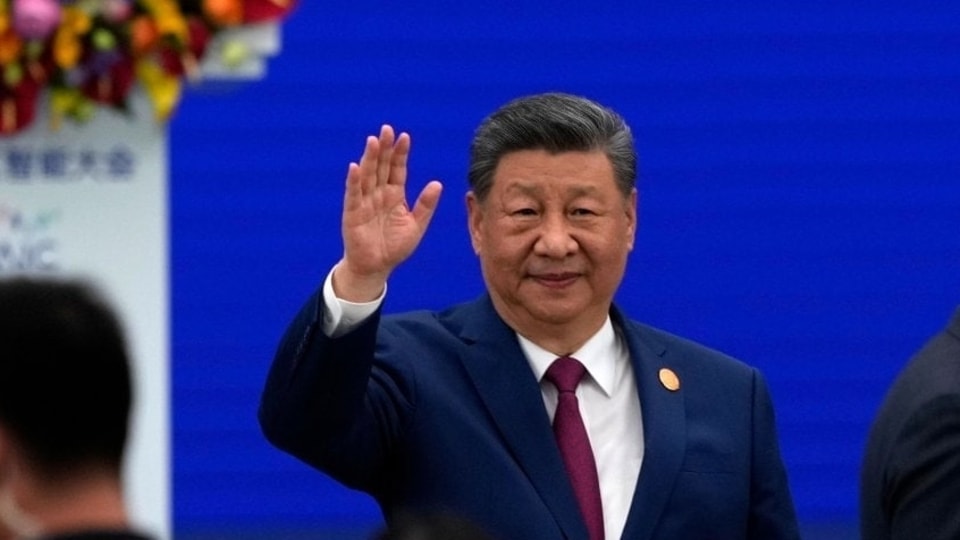
Ma Xingrui's trajectory and downfall offer a compelling case study. A technocrat with a background in aerospace engineering, Ma rose through roles in China's space program before transitioning to provincial leadership in Guangdong and Shenzhen, where he was credited with advancing innovation and Greater Bay Area integration. Appointed Xinjiang party secretary in late 2021, succeeding the hardline Chen Quanguo, Ma was initially viewed by some observers as a potential pivot toward economic normalisation after intense securitisation. His tenure emphasised “standardised” counter-terrorism under the rule of law, alongside pushes for industrial development in renewables, petrochemicals, and advanced manufacturing. Xinjiang's GDP reportedly grew, with efforts to integrate the region into Belt and Road supply chains and attract foreign investment. Security policies eased in visible ways, such as removing some residential checkpoints, while maintaining underlying controls, including labour transfers and surveillance.
Yet what could have gone wrong? Official accounts of Ma's expulsion in July 2026 paint a picture of profound personal and familial corruption: “losing ideals and beliefs,” betraying party principles, accepting bribes, engaging in power-for-sex and power-for-money deals, and enabling relatives to profit illicitly, including low-price housing and influence peddling. Investigations also highlighted his failure to supervise staff and lax “full strict governance” of the party in his domains. Associates from his Guangdong and Xinjiang tenures faced scrutiny, suggesting networks of patronage. As a civilian Politburo member and the third purged in the current term, following military figures, Ma's case underscores how even high-flying technocrats, once symbols of meritocratic renewal, are ensnared. His removal shrank the Politburo further, evoking purges unseen since the Cultural Revolution era in scope within a single term.
This is no aberration but part of a broader pattern. Xi's anti-corruption campaign, ongoing since 2012, has disciplined millions, with intensified targeting of “tigers” in the military, technology, and provincial ranks. While framed as moral renewal, it has coincided with, and arguably exacerbated, elite paralysis. Officials, wary of ambitious projects that might later be deemed reckless debt accumulation or disloyalty, prioritise signalling fealty over bold problem-solving. In an economic context of slowing growth, this dynamic is particularly damaging.
China's domestic economy has decelerated markedly. Second-quarter 2026 GDP growth hit a weak 4.3% year-on-year, the slowest in years, missing expectations amid a property slump, weak domestic demand, high youth unemployment, and cautious consumption. Export strengths in EVs, chips, and AI provide some buffer, but structural imbalances persist: Over-capacity in State-favoured sectors, demographic pressures, and local government debt. The leadership's lowered growth target, around 4.5-5%, reflects realism, yet purges foster risk-aversion. Technocrats like Ma, tasked with frontier governance and economic revitalisation in sensitive regions, operated under immense pressure. Centralised directives from Beijing often clash with local realities, breeding the very graft they purport to combat, family profiteering, opaque contracting, and blurred public-private lines in “party-State capitalism.”
Compounding these woes is the CCP's struggle with extreme weather, emblematic of governance limits despite massive infrastructure investments. In July 2026, Typhoon Maysak and subsequent storms like Bavi battered southern and eastern China, triggering deadly floods in Guangxi (dams breaching, villages inundated, thousands evacuated), tornadoes in Hubei (extremely destructive, killing dozens), and widespread disruptions. Xi Jinping called for all-out relief, but reports highlighted overwhelmed local responses, repeated activations of emergency levels, and cumulative damages from heavy rainfall amplified by climate patterns like El Niño. Extreme events test resilience, yet recurring crises suggest that top-down mobilisation, while impressive in scale, struggles with decentralised execution, local knowledge, and long-term climate adaptation. Purges and loyalty campaigns may deter corruption but also discourage the initiative needed for effective mitigation.
At the core lies the CCP's governance structure under Xi: deepened centralisation via leading small groups, nomenklatura control emphasising political reliability, and the supremacy of party organs over state bureaucracy. This selectocracy aims to ensure loyalty and coherence, countering factionalism. Yet it risks insulating decision-making from feedback, fostering sycophancy, and concentrating vulnerabilities in the person of the leader and his inner circle. Historical parallels in Communist systems, from Soviet stagnation to Mao-era volatility, warn that excessive personalisation erodes institutional resilience. Corruption persists not despite but partly because of opaque, loyalty-driven networks; economic slowdown deepens as fear chills entrepreneurship and reform experimentation; disaster response falters when local cadres await central cues.
Ma Xingrui's case, his Xinjiang record of balancing (or failing to fully transcend) repression with development, and the intersecting crises of 2026 illuminate a regime grappling with the limits of its model. Centralised power delivers narrative control and short-term campaigns, but sustained prosperity and resilience demand space for competence, accountability, and adaptation—qualities harder to cultivate in an atmosphere of perpetual purge. As China confronts demographic cliffs, technological decoupling risks, and a changing climate, the CCP's ability to evolve beyond fear-driven governance will determine whether it masters these challenges or succumbs to the classic authoritarian trap of brittle strength. The stakes extend beyond China's borders: A faltering giant aiming to continue reshaping global economics, security, and environmental futures. Observers would do well to watch not just the headlines of purges and storms, but the quieter erosion of adaptive capacity within the party’s iron frame- reminiscent of the Covid-19-struck China, and repetitive in the form of faltering management in recent climate-induced crises.
(The views expressed are personal)
This article is authored by Sriparna Pathak, professor, China Studies and International Relations, Jindal School of International Affairs, OP Jindal Global University, Sonipat.


