E-Paper



32 schools in Delhi get bomb hoax from 'Terrorizers 111 Group'
The sender, identifying as “The Terrorizers 111 Group,” claimed to have planted “pipe bombs and advanced explosive devices” in school buildings

 Prefer HTon Google


At least 32 schools in the Capital received an email on Monday morning threatening bomb blasts on their premises and demanding $5,000 in cryptocurrency. By evening, the Delhi Police declared all threats a hoax after bomb squads, local police and fire officials conducted extensive searches.
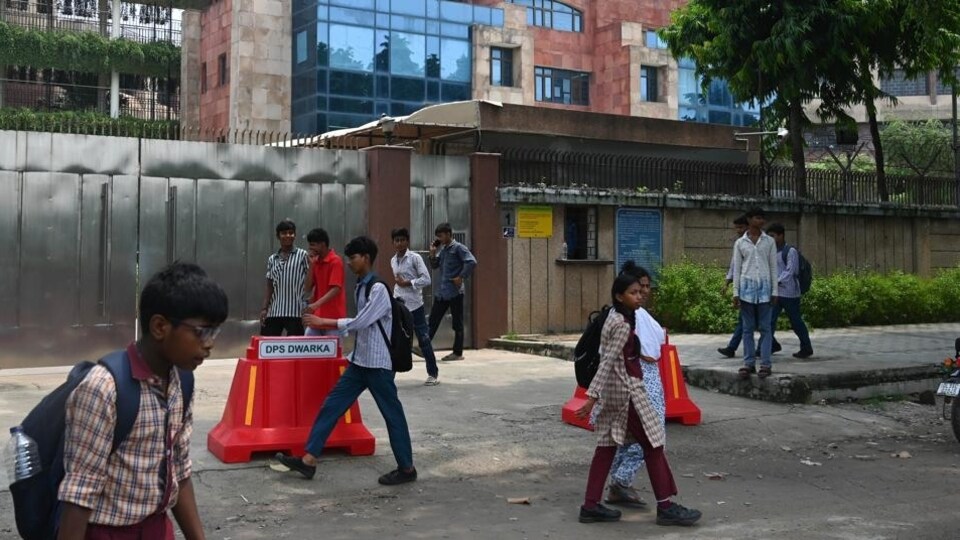
The schools targeted included Delhi Public School-Dwarka, BGS International, Global School, Dwarka International, Oxford Foundation in Baba Haridas Nagar, Shri Ram International in Najafgarh and Andhra School in Prasad Nagar, among others.
The sender, identifying as “The Terrorizers 111 Group,” claimed to have planted “pipe bombs and advanced explosive devices” in school buildings. The email also threatened that the group had hacked school IT systems, stolen student and staff databases, and taken control of surveillance cameras.
Also Read | ‘Common in Delhi now’: Parents react as schools evacuated after bomb threat
“Pay $5,000 in crypto to our Ethereum address within 72 hours or we will detonate the bombs,” the email warned, adding that hacked data would be leaked online if demands were ignored. The sender further cautioned schools against contacting the police, threatening “immediate action” if they did so.
“Evacuate now to save lives. We don’t forgive. We don’t forget. Send the money or face the consequences.”
The first reports of the email reached police at 7:24 am, with more schools reporting through noon.
“As soon as the threats surfaced, teams from the bomb disposal squad, fire department and local police conducted search-and-cordon operations,” a senior officer said. Students were either sent home or shifted to playgrounds until premises were cleared.
This is the third major wave of such hoax threats in recent months. In July, hoax threat emails were sent for four days with 45 schools and three colleges receiving a mass email overnight on the fourth day warning of explosives planted on their campuses.
In May 2024, a mass mail was sent to nearly 300 schools with a similar threat which later was declared a hoax. At least four such instances were reported the next few weeks wherein hospitals and museums received threat mails.
All were later declared hoaxes.
Investigators say tracing such senders remains a major challenge. Officers explained four common methods used to mask identities. The first is when senders use global service providers like Google, which cooperate with Indian law enforcement and can provide IP addresses, making tracking easier. The second involves providers like mail.ru or atomicmail.io that refuse to share data with Indian agencies unless approached through a Mutual Legal Assistance Treaty (MLAT), which can take up to two years. The May 2024 emails, an officer noted, were sent through such a domain and remain unsolved.
The third method is using the darknet and dark web, which are virtually impossible to trace, while the fourth is deploying proxy servers or VPNs that disguise the sender’s location.
Despite repeated hoaxes, police said each threat is treated with full seriousness. “We cannot risk lives by assuming it’s fake. Every email is investigated until declared otherwise,” an officer said.