E-Paper



Afghan president Ghani hits out at terror by Pak
Ghani used his address at the conference, hosted by Uzbekistan to foster connectivity between Central and South Asia, to criticise Pakistan for failing to deliver on its commitments to influence the Taliban to participate in negotiations and to prevent the cross-border movement of jihadi fighters.

 Prefer HTon Google


Afghan President Ashraf Ghani on Friday launched a blistering attack on Pakistan for failing to prevent foreign terrorists sneaking into Afghanistan and not doing enough to pressure the Taliban to join peace talks even as Prime Minister Imran Khan and world leaders listened on as part of the audience of a regional conference in Tashkent.
Ghani used his address at the conference, hosted by Uzbekistan to foster connectivity between Central and South Asia, to criticise Pakistan for failing to deliver on its commitments to influence the Taliban to participate in negotiations and to prevent the cross-border movement of jihadi fighters.
The president’s remarks reflected the Afghan government’s frustration over the Taliban’s refusal to begin talks to find a political settlement while it conducts a massive campaign to capture territory amid the rapid drawdown of US and NATO forces. Afghan officials have repeatedly blamed Pakistan for not putting pressure on Taliban leaders present on Pakistani soil to launch peace talks.
Khan, who addressed the conference after Ghani, responded to the allegations by saying he was “disappointed” by the Afghan leader’s comments and that no country had “tried harder to get Taliban on the dialogue table than Pakistan”.
Ghani told the audience, which included US deputy national security adviser Elizabeth Sherwood-Randall and special representative Zalmay Khalilzad, India’s external affairs minister S Jaishankar and Russian foreign minister Sergey Lavrov, that intelligence estimates indicated the “influx of over 10,000 jihadi fighters from Pakistan and other places in the last month as well as support from their affiliates and the trans-national organisations” for the Taliban. “There’s a consensus among credible international observers that [the Taliban have] not taken any steps to sever their relationship with terrorist organisations,” he said.
Contrary to the “repeated assurances by Prime Minister Khan and his generals that Pakistan does not find a Taliban takeover in Afghanistan in Pakistan’s interest and short of use of force, will use its power to influence to make the Taliban negotiate seriously, networks and organisations supporting the Taliban are openly celebrating the destruction of the assets and capabilities of the Afghan people and state,” he said.
Ghani said Afghanistan is not asking for sympathy but for a clear definition of interest. “Embracing regional connectivity and support for a political pathway to walk back the Taliban and their supporters from the brink of descent to hell is a win-win approach. To plunge Afghanistan into all-out war is to plunge the region into radical uncertainty,” he said.
“Pakistan, therefore, needs to be engaged coherently and urgently from the perspective of regional interest,” he added.
Ghani made it clear that while his government is committed to peace, the Afghan security forces will continue the fight. “We are prepared to face the Taliban and their supporters for as long as it takes, until they realise that a political solution is the only way forward,” he said.
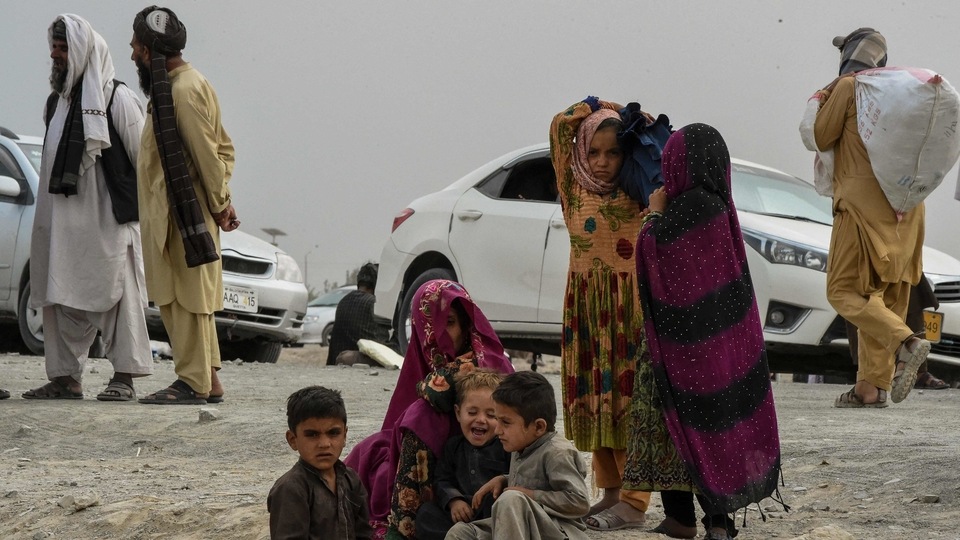
Khan said in his address that Pakistan’s foremost priority is stability in Afghanistan as it is “petrified” about the possible influx of more refugees at a time when it is supporting three million Afghan refugees.
“Let me just say that the country that is going to be most affected by turmoil in Afghanistan is Pakistan...the last thing Pakistan wants is more conflict,” he said.
“To blame Pakistan for what is going on in Afghanistan, I feel, is extremely unfair...,” he said. Khan also questioned whether the Taliban would compromise at a time when the US has set a date for the exit of its troops. “Why would they listen to us when they are sensing victory?”