
 E-Paper



Can’t compare tenets of Sikhism with hijab: Supreme Court
A bench of justices Hemant Gupta and Sudhanshu Dhulia told the counsel representing one of the petitioners that the religious significance of hijab will have to been seen separately and that any attempt to draw a parallel with five Ks of Sikhism will not be proper.

 Prefer HTon Google


The wearing of hijab cannot be compared to the five required articles of Sikhism which have been statutorily and judicially recognised, the Supreme Court observed on Friday as it continued hearing the Karnataka hijab row cases.
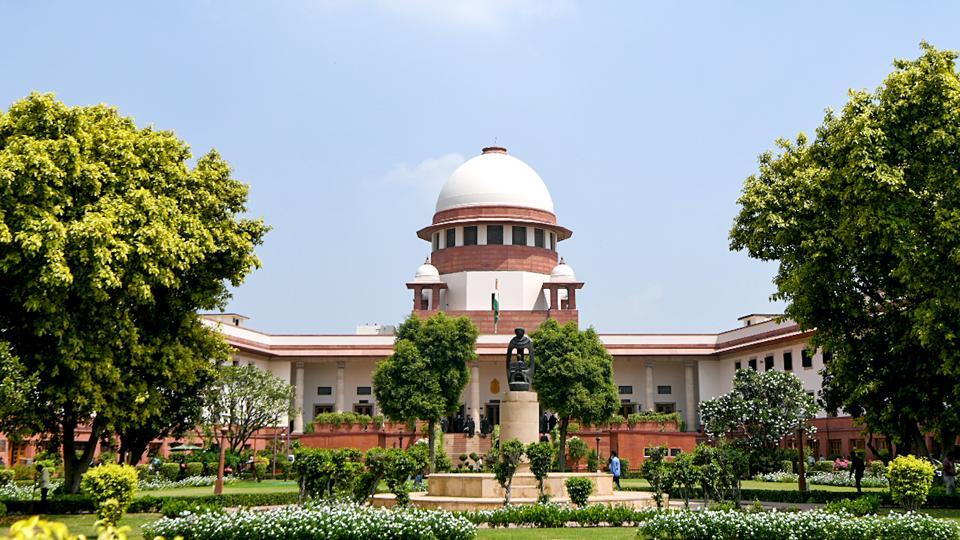
A bench of justices Hemant Gupta and Sudhanshu Dhulia told the counsel representing one of the petitioners that the religious significance of hijab will have to been seen separately and that any attempt to draw a parallel with five Ks of Sikhism will not be proper.
Five Ks of Sikhism or the article of faith in Sikhism include kesh, kangha, kara, kachera, and kirpan. Article 25 provides that wearing and carrying the kirpan shall be considered as included in the profession of the Sikh religion.
“It is not fair to compare tenets of Sikhism with hijab. There is a full court judgment by the Punjab and Haryana high court recognising it. That is now pending before this court. Article 25 also talks about wearing kirpan,” the court told advocate Nizam Pasha.
It added that the tenets of Sikhism have been “completely ingrained and well-recognised in the Indian culture” and have been followed for several hundred years. “So, don’t compare it (hijab) with practices which have been statutorily recognised for hundreds of years. The mandatory nature of five Ks has been recognised in various judgments,” said the bench.
Pasha, however, replied, that his argument is that hijab is also there in Islam for 1,400 years and has been recognised as a consistent practice, like the five Ks in Sikhism. He added that of the five Ks, the Constitution talks only about kirpan.
But the bench remained unimpressed. “Kara, Kirpan etc are well ingrained under Sikhism. So, don’t draw any parity with Sikhism. We will examine your case independently,” it told Pasha, who was appearing in one of the petitions against the March 15 judgment by the Karnataka high court, which held that wearing of hijab by Muslim women does not form a part of essential religious practice in Islam and that the state government is authorised to prescribe uniforms in its educational institutions.
During the three-hour-long hearing, the bench, at several junctures, sought to know from Pasha if any particular verse in Quran mandated hijab and therefore, the petitioners’ argument on hijab being a facet of a religious practice is supported by pertinent scriptures.
Pasha, on his part, emphasised that it is not for the State to decide matters of faith and spirituality of a person and that hijab or a veil has been in vogue for centuries. “Each individual’s understanding of the religion is to be protected. The State or courts cannot dictate what is the correct interpretation of the scriptures,” argued the lawyer.
The court asked Pasha to demonstrate how a hijab can be considered as an essential religious practice when one of the verses in the Quran, as read out by the lawyer, stated that there is no compulsion in the religion. Pasha replied that the “compulsion” has to be construed as compelling someone else to adopt Islam. He added that hijab must be protected under the Constitution even if it is considered as a cultural right.
As Pasha concluded his arguments, the bench adjourned the matter for Monday to resume the proceedings when senior counsel Salman Khurshid will take the mantle. After the petitioners, the state government will lead its arguments through Solicitor General Tushar Mehta and state’s Advocate General Prabhuling K Navadgi.
On Wednesday, the bench had commented that only one community wants to come to educational institutions wearing hijab while others are willing to follow the dress code, it prima facie disagreed that the Karnataka government’s February order on making uniforms mandatory targeted just one community. It had also disapproved the submissions of one of the petitioners that right to dress is a fundamental right since it involves freedom of expression.
“You cannot take it to illogical ends. If the right to dress is a fundamental right, the right to undress also becomes a fundamental right... Nobody is prohibiting you from wearing the hijab. The question is about wearing it in school,” the bench had on Wednesday told senior advocate Devadatt Kamat, who was appearing for a girl student from Udupi which turned out to be the epicentre of the original protests seeking to wear the hijab.



