
 E-Paper



Congress leaders Surjewala, Shivakumar held for protesting against Eshwarappa
Hundreds of Congress workers led by Siddaramaiah, Shivakumar and Surjewala took out a march in Bengaluru demanding the arrest of the minister and seeking a case against him under the Prevention of Corruption Act.

 Prefer HTon Google


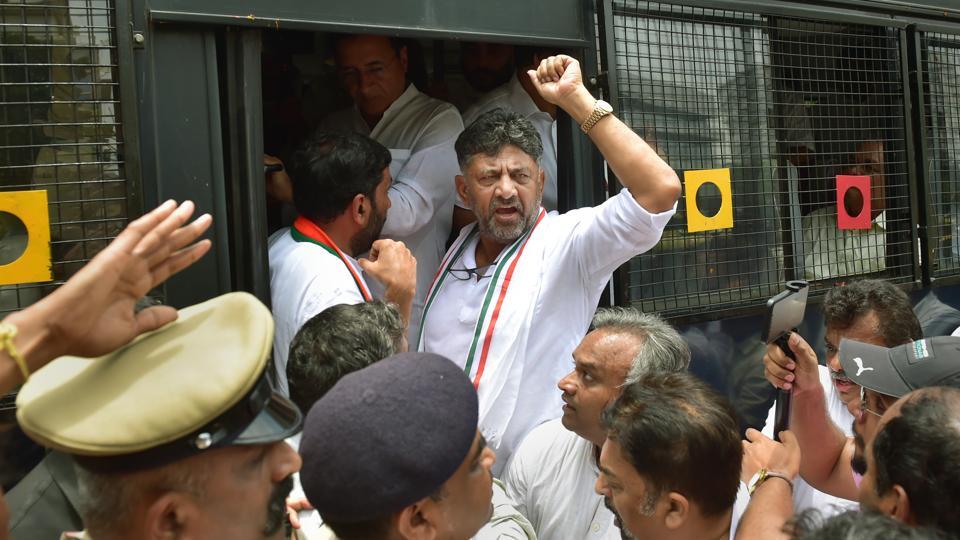
Former Karnataka chief minister Siddaramaiah, Congress general secretary Randeep Surjewala, Karnataka Pradesh Congress Committee president DK Shivakumar and other top state Congress leaders were arrested on Thursday for staging a protest demanding the removal of minister KS Eshwarrappa from the government.
Eshwarappa, who holds the Rural Development and Panchayati Raj portfolio, is facing charges of abetment to suicide of civil contractor Santosh K Patil from Hindalga village in Belagavi district. In his suicide note, Patil had written that Eshwarappa is “directly responsible” for his death.
Hundreds of Congress workers led by Siddaramaiah, Shivakumar and Surjewala took out a march in Bengaluru demanding the arrest of the minister and seeking a case against him under the Prevention of Corruption Act.
The Congress leaders and workers tried to break the police barricade. To stop them, police took them into preventive custody. They were first detained and later placed under arrest on the way to Karnataka CM Basavaraj Bommai’s residence where they planned to stage a massive agitation.
Congress leader Gourav Vallabh said, “Bommai ji, you were supposed to arrest the corrupt Eshwarappa and you are arresting the people who are fighting to get rid of corruption in Karnataka.”
Accusing chief minister Basavaraj Bommai of being a party and protector of corruption, the Congress leader alleged that the BJP government in Karnataka is a 40% commission government.
Vallabh demanded the arrest of Eshwarrapa and compensation and a job for Patil’s family from the Karnataka government.
The minister has not only dismissed the allegation but also refused to step down saying he was in no way involved in the incident as there is no documentary evidence to prove that the work order was issued in the first place.


