E-Paper



Defence minister Rajnath Singh calls for sustained investment in research
He referred to Operation Sindoor days ahead of its first anniversary, calling it a “unique” example of how the Indian military utilised advanced technology

 Prefer HTon Google


Defence minister Rajnath Singh on Monday stressed the need for sustained investment in research and the “element of surprise” to ensure preparedness in an era of rapid technological transformation.
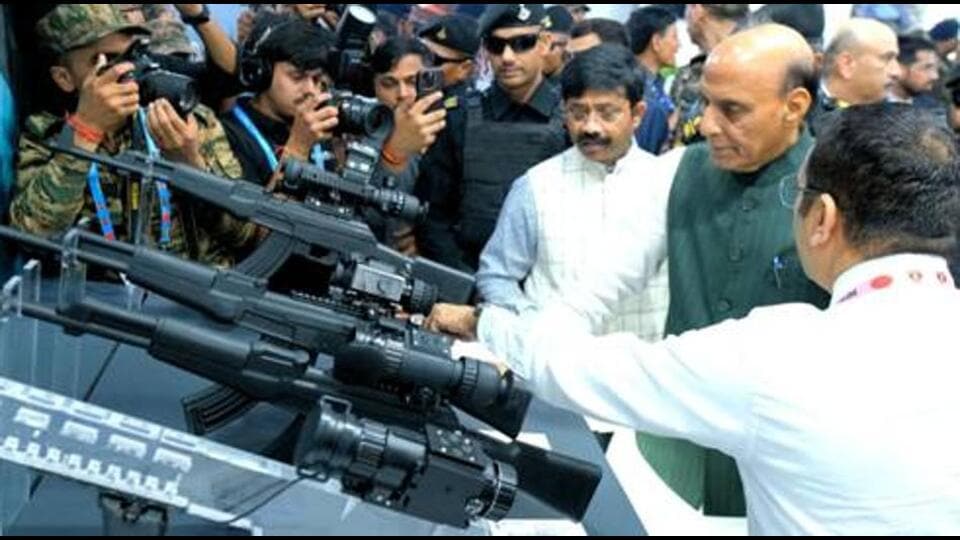
“There is no substitute for research. The nature of future wars is being determined in laboratories,” he told defence personnel, industry leaders, innovators, start-ups, and academia at the inaugural session of the three-day North Tech Symposium 2026 in Prayagraj.
He referred to Operation Sindoor days ahead of its first anniversary, calling it a “unique” example of how the Indian military utilised advanced technology to deliver a decisive blow to terror groups and their patrons.
Singh emphasised that the armed forces showed patience but were clinical in destroying terrorist infrastructure during Operation Sindoor. He added that the operation served as a global reminder of the Indian military’s capabilities.
India launched Operation Sindoor on May 7 last year in response to the April 2025 Pahalgam terror attack. The operation targeted terror infrastructure in Pakistan and Pakistan-occupied Kashmir.
“The decisive response our soldiers gave to the terrorists and their patrons made the entire nation proud. It was a good thing that we showed patience and destroyed only the terrorists; otherwise, the whole world knows what our armed forces are capable of,” Singh said. “The operation showcased the valour and capability of our forces. Indigenous systems such as Akashteer, the Akash missile system, and BrahMos were deployed.”
He spoke about Israel’s “Operation Grim Beeper” pager blasts in Lebanon and Syria to warn that “everything can be weaponised”, underlining the rapidly changing nature of modern warfare.
“Could anyone have imagined that a seemingly ordinary pager would become a bomb? The pager attacks in Lebanon and Syria have forced the entire world to rethink warfare. No one can predict what could become a weapon these days... Everything can be weaponised. Now, in such a situation, when this dire form of change is before us, the preparedness of a country like India becomes even more important...”
Singh highlighted how recent conflicts have demonstrated the speed at which warfare is changing. “In the Russia-Ukraine conflict, warfare shifted from tanks and missiles to game-changing drones and sensors within just three to four years.”
The defence minister said India must develop capabilities to deliver unexpected responses when required. “History shows that the decisive edge in war belongs to the side that possesses the element of surprise. While our armed forces are moving in that direction, we must accelerate our efforts.”
He said defence research has been placed at the core of national priorities, with the Defence Research and Development Organisation (DRDO) working closely with industry partners. “DRDO is no longer working in isolation.”
He noted that 25% of the defence R&D budget has been allocated to industry, academia, and start-ups, with over ₹4,500 crore already utilised. A new Transfer of Technology policy has waived the earlier 20% fee for development and production partners, leading to the transfer of over 2,200 technologies to industry.
Singh announced that Indian industries now have free access to DRDO patents. Additionally, DRDO’s testing facilities have been opened to industry on a payment basis, benefiting hundreds of firms annually.