
 E-Paper



Does India need stand-off missiles or more fighter jets?
The Narendra Modi government,after Operation Sindoor,has realised that what India needs is proper anti-ballistic missile defence, long-range air-to-air missiles

 Prefer HTon Google


Outgoing Air Chief Marshal Amarpreet Singh in his last media interaction raised red flags over declining fighter force levels and called for the induction of two squadrons (36 aircraft) of fighters each year to maintain the Indian Air Force (IAF)'s might over its regional rivals.
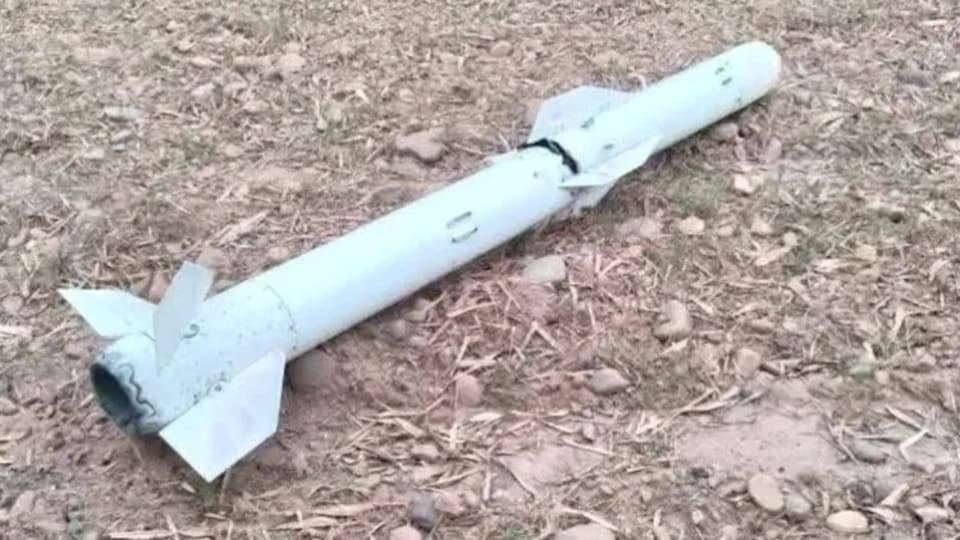
The chief hinted that fighter force levels were going down to 30 squadrons even though the Chief of Staff Committee (COSC) had mandated the strength to be 42 squadrons. What the chief is saying has merits. But there remains another question: what will a manned Indian fighter do against Chinese PL 17 beyond visual range air-to-air missiles with a range touching around 400 km or air defence systems like S-400, which take out the fighter at the range of over 300 km. What is the efficacy of a fighter that can be shot out of the sky the moment it stabilises to launch an air-to-ground or air-to-air missile ?
The Indian military may take comfort in the fact that it is well placed vis a vis Pakistan but its real adversary is China, which has achieved theatrization of commands, with much faster capacity to respond and with actionable intelligence. The Iranians with an air force not even worth the name have managed to stand up to US-Israel during seven months of war and have caused economic and political havoc in West Asia by targeting Gulf countries with unmanned combat air systems, cruise missiles, kamikaze drones and top of the line ballistic missiles. Iranian proxy, the Houthis, with no air force worth the name, have made life miserable for the Saudi-led Sunni Mecca alliance and has targeted Damman, Riyadh and East-West pipeline of the Kingdom with ballistic missiles. The Kingdom with American F-15, Tornado, Typhoon fighters have not been able to neutralise the Houthis but Saudi has plans to buy fifth generation US F35 fighters. The Houthi attacks have shown that Saudi does not have any anti-ballistic missile defence and its oil infrastructure is a sitting duck for Shia Houthi stand- off weapons.
The Narendra Modi government, after Operation Sindoor last May, has realised that what India needs is proper anti-ballistic missile defence, long-range air-to-air missiles, long-range loitering ammunition, hypersonic ballistic missiles and long range kamikaze drones. Ukraine, with hardly any fighter force, is using ramped up drone capacities has been able to hit Russian energy infrastructure so much so that no oil refinery is functioning in the former superpower.
Keeping in mind the need for long-range weapons, India is planning to acquire Russian RVV-BD air-to-air missiles with a range of around 300 km and integrate with Su-30 MKI fighters. It is developing Astra Mark II missile with a range of around 200 km with a test-fire scheduled this year. Astra Mark III will have a range of 300 km plus when its development is completed. India also will be getting 31 Predator high-altitude, long-range drones from US in 2028-29 with capacity to fire air-to-air missiles and heavy ordnance on ground.
It is not about whether the Indian Air Force should or should not get its fighters but the efficacy of an expensive system in times of long-range missile and air defence systems. The age of tanks and dogfights is long over. India cannot spend money on systems like Pantsir to protect its tanks while its S-400 systems are under threat from enemy rockets and missiles. Given that the defence budget is not unlimited, the priority today is a strong anti-ballistic missile system with a considerable inventory of missiles, long-range air defence (India’s fifth S-400 system comes from Russia next month), long-range drones, rockets and missiles. Even the acquisition of a fifth generation fighter like Su-57 does not make sense given that the Iranians blew the much-touted stealth features of the F-35 to smithereens by using basic infra-red heat seeking missiles during the Iran war. The F-35 survived but its image got hit.
India has to prepare for future wars with stand-off long-range weapons. For that, it will and is rethinking its military doctrines as even Pakistan is buying drones and long-range missiles in large numbers post-Operation Sindoor. What good is a fifth generation fighter if it gets shot out of the sky the moment it takes off by enemy air defence system.


