E-Paper



Drop 66A mention from all FIRs at once: Supreme Court
A bench, headed by Chief Justice of India (CJI) Uday Umesh Lalit, ordered that no citizen can be prosecuted under Section 66A, which authorised the police to arrest people for social media posts construed “offensive” or “menacing” until it was quashed by the top court in 2015 for being “unconstitutionally vague” and arbitrary.

 Prefer HTon Google


The Supreme Court on Wednesday directed states and Union territories (UTs) to immediately drop from all first information reports (FIRs) the charge under Section 66A of the Information Technology Act since the penal provision was declared unconstitutional seven years ago.
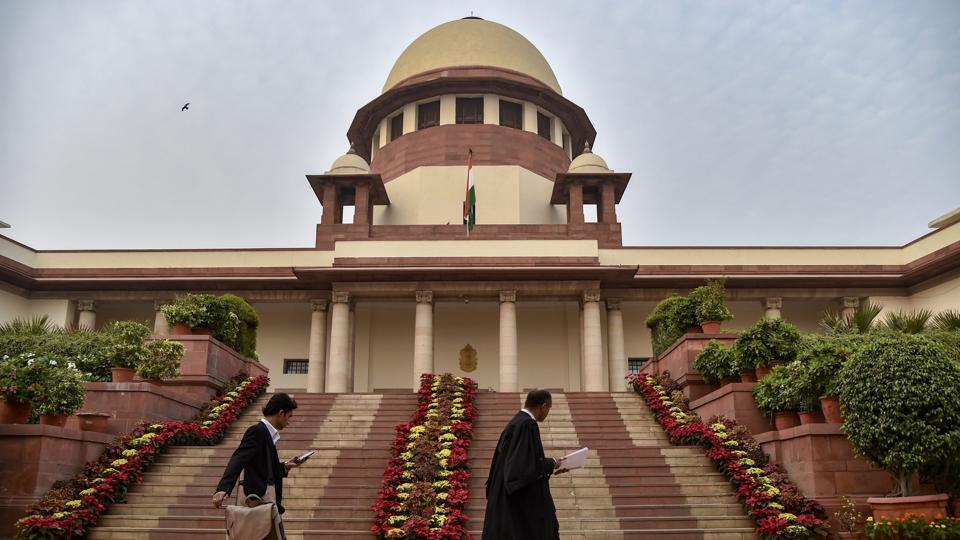
A bench, headed by Chief Justice of India (CJI) Uday Umesh Lalit, ordered that no citizen can be prosecuted under Section 66A, which authorised the police to arrest people for social media posts construed “offensive” or “menacing” until it was quashed by the top court in 2015 for being “unconstitutionally vague” and arbitrary.
“In all cases where citizens are facing prosecution for alleged violation of section 66A of the Act, the reference and reliance upon the said provision shall stand deleted,” directed the bench, which also included justices Ajay Rastogi and S Ravindra Bhat.
Confronted with a situation where police departments in several states were still invoking Section 66A, the court obligated state home secretaries and police chiefs to issue suitable instructions. “We direct all director generals of police as well as home secretaries of the states and competent officers in Union territories to instruct the entire police force in their respective states/Union territories not to register any complaint of crime with respect to alleged violation of section 66A,” it ordered.
The bench court clarified that this direction shall apply only with respect to offence punishable under Section 66A, but if there are other offences involved too, the law will take its own course with respect to the other charges.
The bench also said whenever any publication -- government, semi-government or private -- about the IT Act is published and Section 66A is quoted, readers must adequately be informed that the penal provision has already been held to be violative of the Constitution.
The court order came after advocate Zoheb Hussain, appearing for the Union government, placed on record an all-India status report with regard to pending cases under Section 66A. The report suggested that despite the issue regarding the validity of Section 66A of the Act having been decided by the apex court, a number of criminal proceedings still rely upon this provision and citizens are still facing prosecution.
“Such criminal proceedings, in our view, are directly in the teeth of the directions issued by this court in Shreya Singhal Vs Union of India (March 2015 judgement),” said the bench, as it proceeded to issue appropriate directives.
The court order came on a petition filed by NGO People’s Union for Civil Liberties (PUCL) for issuing directives to the Union government and subordinate courts in the country to make sure cases are not registered under Section 66A, and nobody is arrested or prosecuted under this quashed law.
Senior advocate Sanjay Parikh, appearing for the NGO, had cited a study conducted by Internet Freedom Foundation and Civic Data Labs, to show that 1,307 new cases got registered in the last six years under the law already struck down. Maharashtra topped the list with 381 cases, followed by Jharkhand (291), and Uttar Pradesh (245).
When the court took up the case last month, it called it a matter of “serious concern” that criminal cases were still being registered under Section 66A though the provision was quashed in 2015. The bench, on that day, asked Hussain to get in touch chief secretaries of all the states and UTs and impress upon them to take corrective steps expeditiously. Hussain was also asked to collate countrywide data on cases under Section 66A.
Section 66A was brought into the statute by the second United Progressive Alliance government in 2009. After a clutch of petitions challenged the validity of the law citing its abuse and vagueness, the National Democratic Alliance government told the court in 2014 that the provision will be administered in a reasonable manner and that a panel was also set up to review its applicability.
Underlining the supremacy of the right to freedom of speech and expression and the “chilling effect” Section 66A had on this fundamental right, the court, in its 2015 judgment, quashed the law noting that governments may come and go but Section 66A will go on forever and, what is otherwise invalid, cannot be saved by assurances.