E-Paper



Dust, heat and rain: Delhi sees a day of multiple weather phenomena
Officials said the rapidly changing conditions were driven by an active western disturbance and associated cyclonic circulations influencing northwest India

 Prefer HTon Google


It was a day of multiple weather phenomena for Delhi on Friday, as a dust storm kicked off morning proceedings— leading to a spike in pollution levels—before giving way to clear skies during the afternoon and then making way for a spell of rainfall from the evening. The India Meteorological Department (IMD) also issued an “orange” alert in the evening, warning of rainfall and lightning.
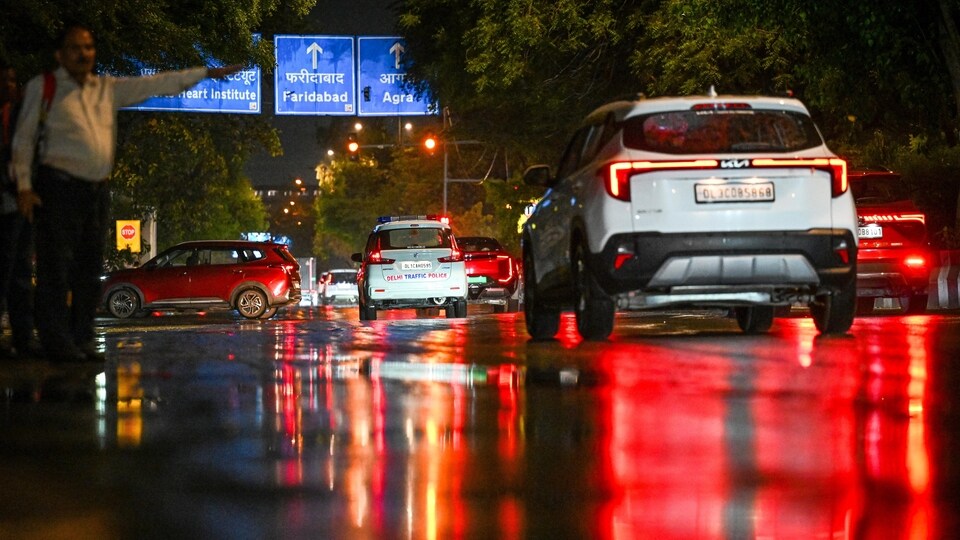
Delhi recorded a “poor” air quality index (AQI) of 266, a maximum temperature of 33.7 degrees Celsius (°C) and 0.4mm of rainfall on the day.
According to IMD data, strong surface winds of over 20kmph kicked up dust across parts of the city in the morning hours, causing a spike in the AQI from a “moderate” reading of 194 recorded a day before, according to the Central Pollution Control Board’s daily bulletin. Commuters reported reduced visibility on several stretches during the early hours.
The minimum temperature on Friday was 22.4°C, which was 3.4°C above normal, while the maximum temperature of 33.7°C was marginally below normal, as per the IMD. As wind speed kept up, intermittent spells of dust storms were recorded at isolated pockets in the afternoon.
Around 3-4pm, the wind speed dropped and cloud cover thickened, leading to a relatively cooler phase. “Generally cloudy sky with a spell of very light rain/drizzle accompanied with thunderstorms, lightning and strong surface winds were seen during evening to night,” an IMD official said.
Light rainfall started around 5pm in isolated pockets, gradually spreading across Delhi-NCR. By around 8pm, rainfall intensified into moderate showers in several areas, accompanied by gusty winds. The IMD issued an orange alert for the city, warning of thunderstorms, lightning and gusts of 40-50kmph or faster speeds.
What's behind the rapidly changing conditions
Officials said the rapidly changing conditions were driven by an active western disturbance and associated cyclonic circulations influencing northwest India. The IMD has forecast continued variability in weather over the coming days.
“On Saturday, the city is expected to witness a partly cloudy sky turning generally cloudy with one or two spells of light rain, thunderstorms and gusty winds. The maximum temperature is likely to dip further to the 29-31°C range, remaining below normal,” an IMD official said.
Similar conditions are expected on Sunday, with the possibility of light rain and thunderstorms during the afternoon and evening, along with strong winds, the IMD said, adding that the maximum temperature is expected to remain appreciably below normal. A gradual stabilisation is likely from Monday, although partly cloudy skies will persist.
The IMD has attributed this extended spell of unsettled weather to two successive western disturbances, with peak activity expected around April 3-4 and again around April 7.
“When such conditions arise during the pre-monsoon season, around March-April, it creates thunderclouds that are capable of bringing hailstorms and thunderstorms, as seen across Rajasthan and Haryana, which led to fluctuations in Delhi,” said Mahesh Palawat, president at Skymet weather.
He said that the weather system will move closer to Delhi and western Uttar Pradesh on Saturday. “The day will be better on April 5 with similar fluctuations and rainfall likely again on April 6 and 7 due to another western disturbance,” Palawat said.