
 E-Paper



Taliban got Pak Army chief’s nod on allowing return of Indian diplomats: New book
“The Return of the Taliban” by Hassan Abbas offers other insights into the close ties between the Taliban and the Pakistani military

 Prefer HTon Google


The Taliban setup in Afghanistan consulted the Pakistan Army before allowing the Indian government to send a team to re-establish a diplomatic presence in Kabul in June 2022, according to a new book by a former Pakistani federal police officer and academic.
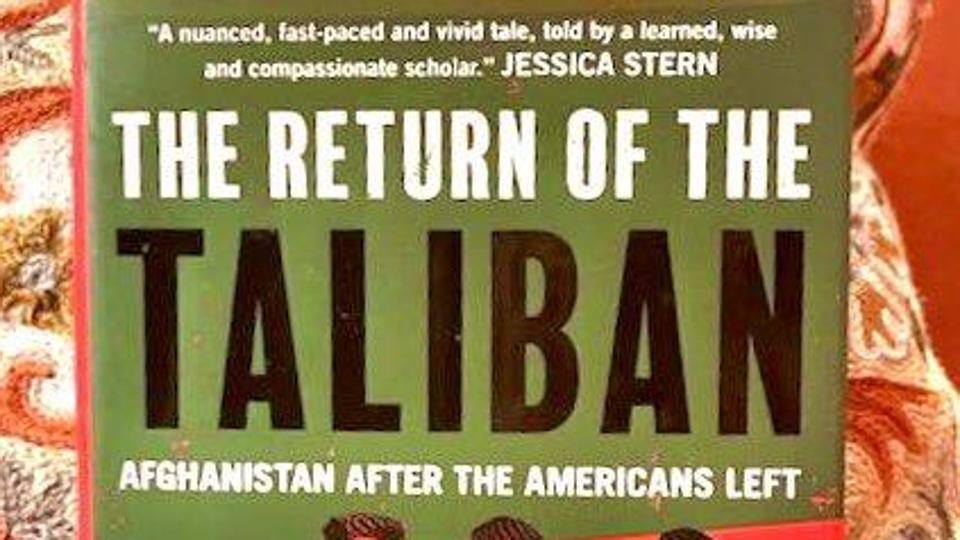
“The Return of the Taliban” by Hassan Abbas, currently senior advisor at Asia Society and distinguished professor at the Near East South Asia Strategic Studies Centre at the US National Defense University, offers other insights into the close ties between the Taliban and the Pakistani military, as well as Islamabad’s persisting worries about an Indian role in Afghanistan.
After shuttering its consulates in Herat, Kandahar, Jalalabad and Mazar-e-Sharif, India had pulled out all its officials and security personnel from Kabul after the fall of the Ashraf Ghani government in August 2021, largely on account of security concerns.
Also Read: Taliban kill ISIS mastermind of 2021 Kabul airport attack: US
In June last year, India deployed a “technical team” led by a middle-ranking diplomat in Kabul to re-establish its presence in Afghanistan.
Abbas writes in the book that the Taliban’s interim foreign minister, Amir Khan Muttaqi, “had a detailed meeting” with Pakistan’s then army chief, Gen Qamar Javed Bajwa, “before he could request that India send back its diplomats and technical staff to the Indian embassy in Afghanistan”.
Given the Pakistani side’s belief that India used its access to Kabul during the Ashraf Ghani government’s reign to “restrict Pakistan’s influence in Afghanistan”, it was “nothing short of a big surprise that Pakistan signed off on the Taliban’s diplomatic relationship with India”, the book states.
“Regardless, it couldn’t have happened without Pakistan – and Pakistan acted this way because it just might open up prospects of some aid for the Taliban in Afghanistan,” Abbas writes.
The book cites an unnamed Pakistani general as saying that the Pakistani military is “fully in the picture as to how India attempted to access Anas Haqqani, the younger brother of Siraj Haqqani, via the Iranian IRCG (International Revolutionary Guard Corps)”.
Anas Haqqani is currently one of the top leaders of the Taliban setup in Kabul.
In recent months, Indian officials have met several leaders of the Haqqani Network, one of the main factions of the Afghan Taliban, during their visits to Kabul.
However, the book states that Pakistan’s intelligence services continue to harbour suspicions about Sher Mohammad Abbas Stanikzai, a former member of the Taliban’s Doha political office and currently the deputy foreign minister, solely because he graduated from the Indian Military Academy (IMA) in the 1980s. “This last qualification, though, was enough to make him a suspect in the eyes of Pakistan’s intelligence services as they never trusted him fully even though he worked closely with them at times,” Abbas writes.
Stanikzai was a key contact in the Indian side’s secret talks with the Afghan Taliban before the group assumed power in Kabul in 2021. In recent months, however, he has been sidelined.
At the same time, the book details how the Afghan Taliban has sought to play down its continuing close links with Pakistan’s military. While the Taliban have turned to Pakistan obtain counter-terrorism capability to fight the Islamic State-Khorasan Province (ISK), including drones and other hi-tech equipment, the group is “increasingly conscious of their reputation as closely aligned with Pakistan’s army and intelligence services—and they know that the relationship is not particularly popular in Afghanistan”.
“Consequently, when the Taliban requested Pakistani military and intelligence leaders to publicly keep their distance from them, it still came as a surprise. Islamabad was initially unclear if it was Taliban diplomacy or hypocrisy. Relations even started deteriorating once Kabul expressed its inability to pursue Pakistani Taliban roaming around in Afghanistan the way Pakistan wanted,” Abbas writes.
Abbas, who served as an officer in the administrations of former premier Benazir Bhutto (1995-1996) and former military dictator Pervez Musharraf (1999-2000), writes that the reason the Afghan Taliban are “hesitant to take strong action against the TTP [Tehreek-e-Taliban Pakistan] is due to their considered opinion that TTP cadres currently hiding in Afghanistan could easily drift toward joining ISK ranks in the event that the Afghan Taliban are seen to be ditching them”.



