
 E-Paper



GE Aerospace-HAL jet engine deal to ensure 80% technology transfer to India
GE Aerospace and Hindustan Aeronautics Limited have signed an MOU to produce fighter jet engines in India

 Prefer HTon Google


New Delhi The deal between the world’s leading aircraft engine maker GE Aerospace and Hindustan Aeronautics Limited (HAL) to produce fighter jet engines in the country for the Tejas light combat aircraft Mk2 will involve 80% transfer of technology (ToT) from the US to India, is estimated to be worth around $ 1 billion, and will result in the new fighter jet having an indigenous content of around 75%, top defence ministry officials tracking the development said on Friday.
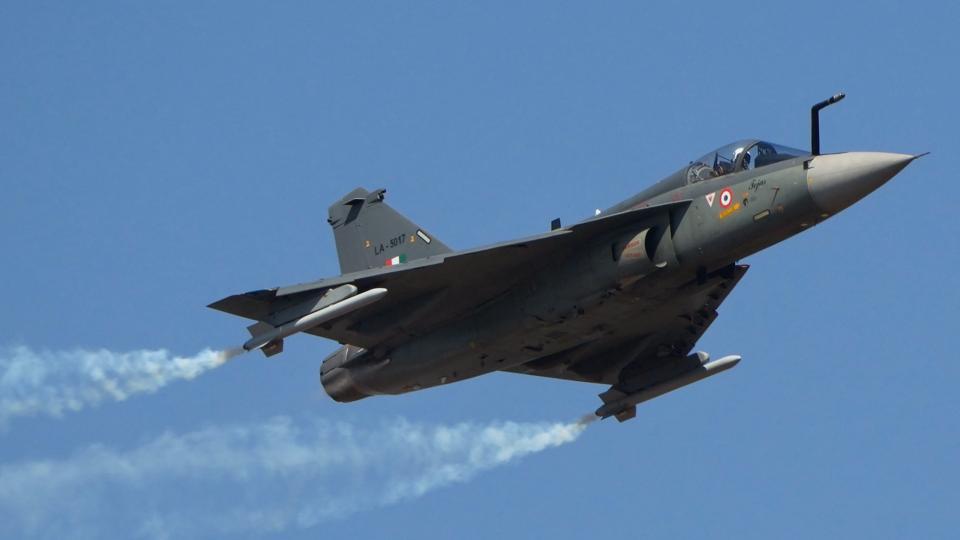
GE Aerospace and HAL signed a memorandum of understanding (MoU) in Washington on Thursday to produce the F414 engines in the country during Prime Minister Narendra Modi’s state visit to the US.
The deal with GE Aerospace to produce 99 F414 engines under licence is likely to be signed during the current financial year, and the first lot of engines will be made in India three years thereafter, the officials said.
Read: GE Aerospace, HAL to co-produce F414 engines for fighter jets. 5 things to know
The ToT will cover 11 critical areas many of which were entirely off-limits more than a decade ago, when GE Aerospace and India’s Aeronautical Development Agency (ADA) began talks on the possible production of the engines in the country, said one of the officials cited above who asked not to be named.
Back then, the US agreed to only 58% technology transfer, keeping several key engine technologies out of India’s reach, HT has learnt.
“Jet engine technology was something that India had been unable to crack for decades,” said a second official, who also asked not to be named. The top factors for lagging in the critical domain were paucity of funds and lack of encouragement to scientists from the Gas Turbine Research Establishment, he added.
“But now India will be among the few countries to possess aero engine technologies. India has come a long way since 2012 when discussions with the US engine maker began. This level and scale of technology transfer has never happened before,” he said.
The production of jet engines in the country will help increase the indigenous content in the LCA Mk2, which will form an important element of the Indian Air Force’s future combat capabilities as India is planning to build around 130 such fighter jets.
Defence minister Rajnath Singh has been a leading proponent of bringing advanced technologies to India, including jet engines.
The F414 has evolved from the F404 engine that powers the existing LCA variants -- Mk1 and Mk1A. The LCA Mk2 will be a further development of the Mk1A.
“The LCA Mk1A has local content of 54%, which will be steadily increased to 62%. The LCA Mk2 will be around 75% indigenous as the engines will be manufactured in India through ToT,” said a third official, who also asked not to be named.
Read: Tejas LCA Mk2 fighters get advanced GE-F414 engine. Which other jets have this?
The complex engine technologies that will be transferred to India include machining and coating for single crystal turbine blades, fabrication of powder metallurgy discs, inertia friction welding for fan and afterburner, laser drilling technology for combustor, special coatings for corrosion and erosion, machining and coating of ceramic matrix composites for nozzle guide vanes. flaps and other parts, machining of thin-walled titanium casing, polymer matrix composites for bypass duct and bottle boring of shafts, the officials said.
“The US had restricted the scope of ToT in many of these critical areas when engine production modalities were agreed to in 2012. With the scope of ToT going up from 58% to 80%, these technologies will now come to India,” said the first official.
The single-engine fighter jet will be the most advanced LCA variant. The government has sanctioned around ₹10,000 crore for the LCA Mk2 programme. The Cabinet Committee on Security, headed by Modi, in August 2022 cleared the much-awaited LCA Mk2 project.
The new fighter jet will cater to the future requirements of IAF, which has already inducted several of the 40 earlier variants of the LCA and ordered 83 newer Mk1A variants.
The LCA Mk2 will have improved range, higher weapons payload capacity, superior radar capability, better avionics, advanced electronics, enhanced survivability, better situational awareness for pilots, network centric capabilities, and the ability to quickly switch from one role to another, the officials said.
The 17.5-tonne fighter will have a maximum speed of 1.8 Mach, compared to the 13.5-tonne LCA Mk1A that has a top speed of 1.6 Mach. The new aircraft will come with a payload capacity of 6.5 tonne (compared to 3.5 tonne for the Mk1A) and it will carry a mix of weapons including beyond visual range air-to-air missiles, air-to-ground missiles, heavy precision guided weapons and conventional bombs, the officials said.


