
 E-Paper



Government set to usher greatest overhaul of India’s military structure
The Modi government is all set to initiate independent India’s greatest military reforms.

 Prefer HTon Google


The Modi government is all set to initiate independent India’s greatest military reforms with the creation of Integrated Theatre Commands based on geographical areas of operation or functionality and a single-point military advisor designated as Chief of Defence Staff (CDS). The post of CDS, who will be responsible for acquisition and logistics, was recommended by the Kargil Review Committee headed by K Subrahmanyam after the war of 1999.
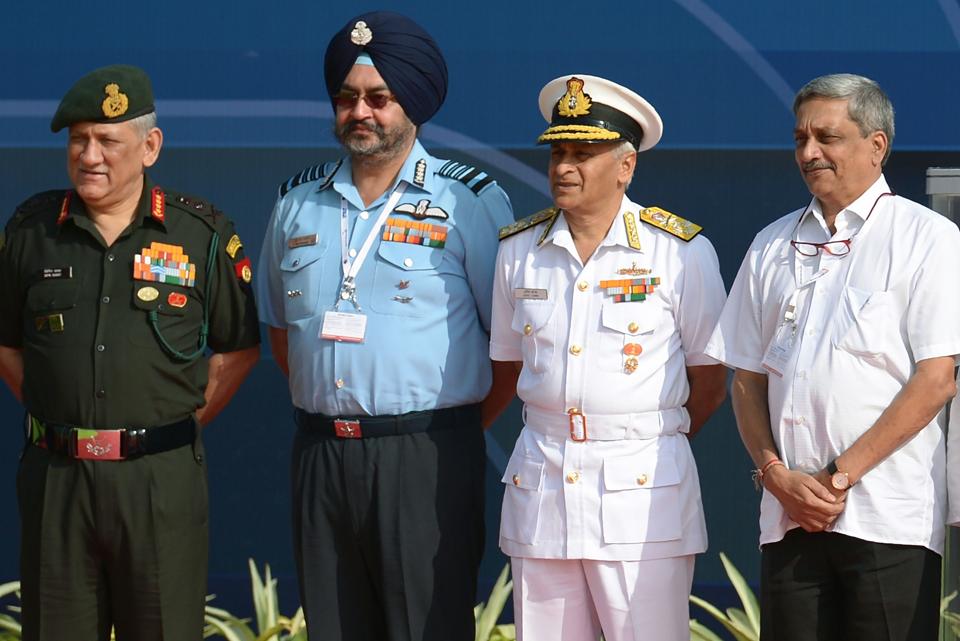
South Block sources told Hindustan Times that a discussion on the subject has already taken place between Prime Minister Modi and Defence minister Manohar Parrikar. Another meeting is expected after the ongoing round of Assembly elections to fine-tune the structured proposal.
In the meantime, the Ministry of Defence is preparing a note on the envisaged structure of the integrated commands which are broadly based on the US military command structure, and proposed division of assets. Once cleared by Parrikar, the comprehensive note will be put up to the Cabinet Committee on Security (CCS) for final approval and implementation.
The US has seven geographical and two functional commands, China has seven military area commands with Lanzhou and Chengdu MACs looking after the Line of Actual Control (LAC) with India. The Indian military structure is largely derived from the colonial past with the Army and Air Force having seven commands each and Navy three commands apart from the Andamans and Nicobar Command that was created last decade.
Although the theatre command concept is still work in progress, there are strong indications that each command with dedicated military resources will have a geographical area of responsibility with the commander reporting to the defence minister and ultimately the prime minister.
For instance, Western Command facing Pakistan will stretch from Karakoram pass in Jammu and Kashmir to Kanyakumari with complements of Army, Air Force and Navy meshed together and military objectives defined. On the anvil is a Northern Command that will take care of the military duties on LAC with Nepal and Bhutan. Similarly, Eastern Command will look after the border with Bangladesh and Myanmar. The Strategic Command and Transport Command could be based on functionality with pooled resources.
South Block sources said the defence ministry is toying with the idea of creating an Indian Ocean Command, responsible for the western, eastern and southern seaboards as well protecting Indian influence from Gulf of Aden to Malacca Straits at the mouth of the South China Sea.
As each theatre command headed by a four-star general or admiral will have dedicated rather than shared assets, India would have to go in for serious materiel purchases through the Make in India route to equip the geographical formations. “Even though there is a green signal for the proposal, the implementation will take some years before it starts functioning on ground,” said a senior official.


