E-Paper



Hormuz crisis: India calls for safe transit, speaks against attacks on shipping
Jaishankar said he underlined India’s commitment to safe and unimpeded transit passage of maritime shipping and that attacks on them were completely unacceptable

 Prefer HTon Google


India pushed for safe and unimpeded transit passage of merchant vessels amid the closure of the Strait of Hormuz and opposed attacks on shipping at a meeting convened by Japan on Wednesday, with external affairs minister S Jaishankar saying the country will work with partners to develop supply chain resilience.
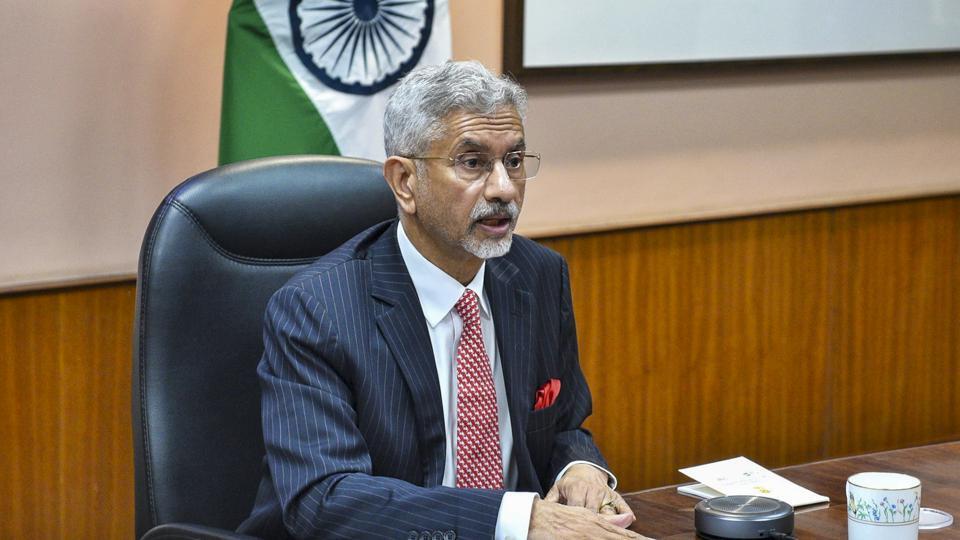
Jaishankar represented India at the “Asia Zero-Emission Community (AZEC) plus” meeting chaired by Japanese Prime Minister Sanae Takaichi that focused on energy supply chain disruptions caused by the closure of the Strait of Hormuz. India and other countries across Asia have been impacted by the closure of the waterway, used to transport half of New Delhi’s oil imports.
“Underlined India’s strong commitment to safe and unimpeded transit passage of maritime shipping. Attacks on merchant shipping are completely unacceptable,” Jaishankar said on social media after the meeting.
“Global growth demands that energy markets are not constricted. As a major energy consumer, India will work with like-minded partners to develop supply chain resilience,” he said.
The meeting – joined by the 11 members of AZEC, including Australia and Singapore, and partners such as India, Bangladesh and South Korea – saw Japan unveiling a new initiative called Partnership On Wide Energy and Resources Resilience (POWERR) Asia to provide financial cooperation to Asian countries hit by fuel supply shortages and supply chain disruptions.
According to a readout from Japan’s foreign ministry, financial support totalling about $10 billion will be used to provide fiscal support to Asian governments, strengthening energy supply systems and diversifying energy sources. As part of efforts to strengthen supply systems, Japan will support crude oil stockpiling systems, construction of infrastructure such as storage tanks, restoration of oil production facilities in oil-producing countries in West Asia, and securing the safety of sea lanes.
Takaichi said the countries most affected by disruptions in the supply of energy and other resources through the Strait of Hormuz are located in Asia, and it is necessary for Asian countries to work together to respond to this shared challenge. She described POWERR Asia as a new cooperation framework of emergency and structural responses with medium to long-term perspectives. The framework aims to cooperate in emergency responses through financing procurement of crude oil and maintaining supply chains in Asia.
Others who participated in the meeting were Philippines President Ferdinand R. Marcos, Malaysian Prime Minister Anwar Ibrahim, Singapore Prime Minister Lawrence Wong, and Bangladesh Prime Minister Tarique Rahman.
Meanwhile, external affairs ministry spokesperson Randhir Jaiswal told a media briefing in New Delhi that Prime Minister Narendra Modi had emphasised the importance of keeping the Strait of Hormuz “open, safe and secure” during a phone call with US President Donald Trump on Tuesday. Trump had called Modi to brief him on the latest developments in the West Asia crisis.
Fifteen Indian-flagged or owned vessels are currently located to the west of the Strait of Hormuz, while nine vessels, most of them LPG carriers, have transited the waterway since the start of the West Asia conflict on February 28.
“We are talking with several countries about the Strait of Hormuz to ensure that the rest of our vessels can transit in a safe manner and come to India,” Jaiswal said.
With a US waiver on sanctions on Russian oil having expired and another on Iranian oil set to end, Jaiswal reiterated India’s intention to diversify sourcing to ensure the country’s energy security. “We have a position laid down on several occasions – we continue to buy oil from diversified sources keeping in mind the energy security needs of 1.4 billion people, as also the situation in the international market and the global situation that we have to deal with,” he said.