
 E-Paper



How to build wealth on irregular income
Gig economy is booming in India, but irregular incomes come without traditional safety nets. Here’s how gig workers can build a system to safeguard finances

 Prefer HTon Google


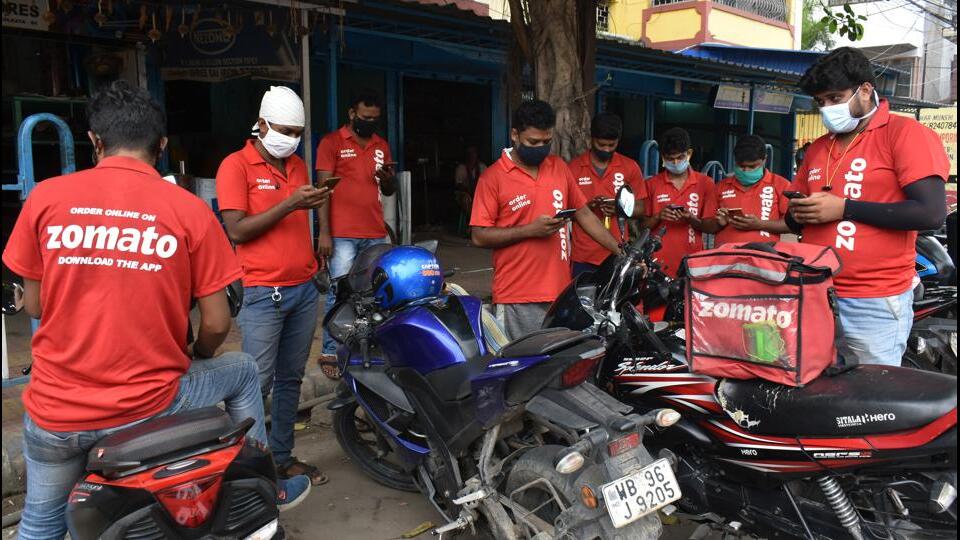
India’s gig economy — freelancers, independent contractors and consultants, delivery partners and platform partners — is booming. The Economic Survey 2025-26 says the segment grew 55%, from 7.7 million workers in FY21 to 12 million in FY25, and now represents more than 2% of India’s total workforce.
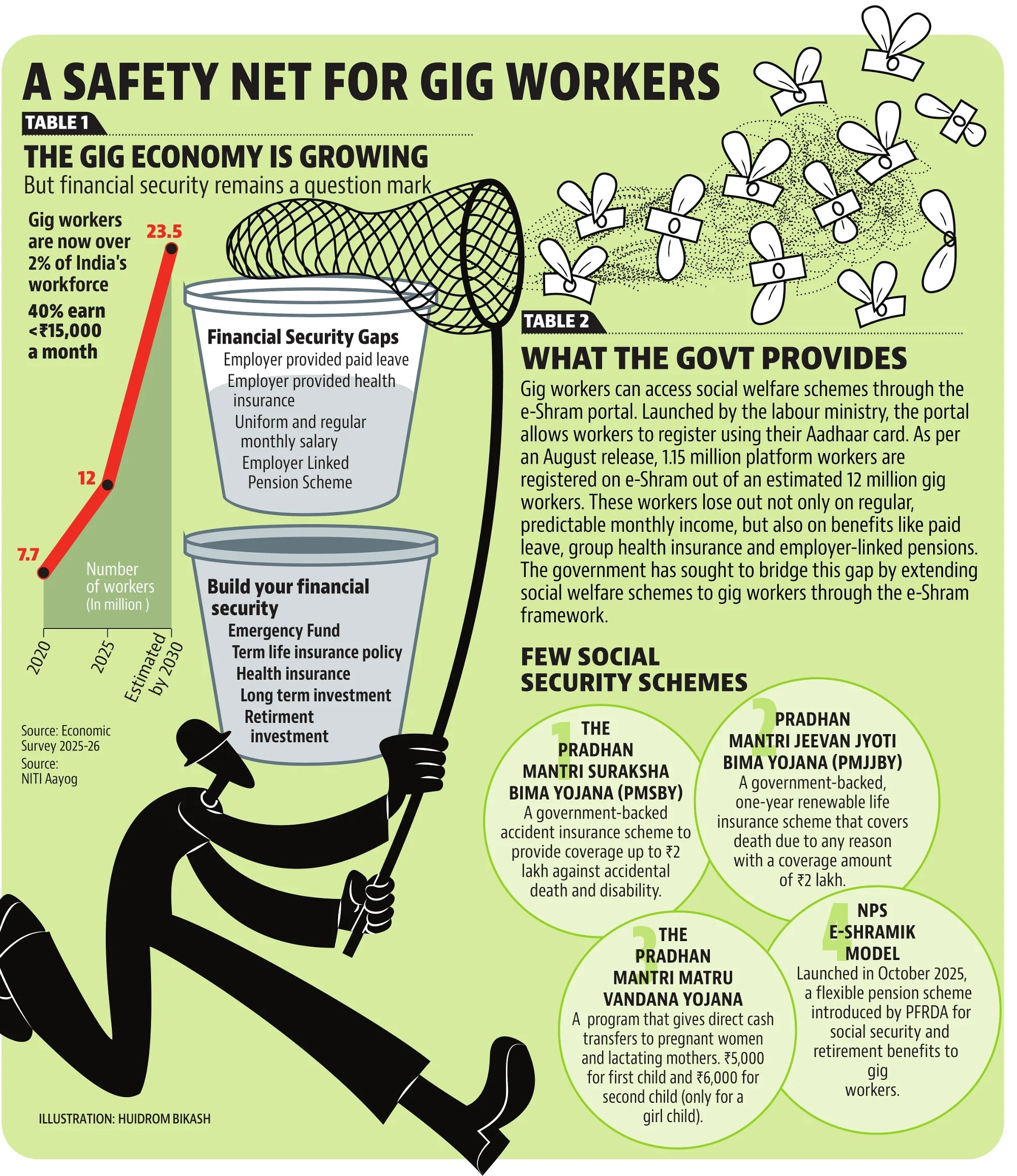
The Labour Codes formally recognise gig and platform workers, with specific welfare schemes aimed at providing access to social security benefits (See Table 2).
However, with inflation and rising life expectancy, it is prudent to look beyond government welfare for long-term financial security. If you are a freelancer or gig worker, build your own system to safeguard your income despite having no fixed employer, monthly income or conventional safety net.
1 Align savings to income, not the month
A standard monthly SIP is useful for building savings and investment discipline, but it relies on regular income, which freelancers cannot always count on.
Instead, set aside a proportion of your income whenever an invoice is cleared, regardless of the amount or frequency. Automate a fixed proportion of every income credit as savings. Small investments of ₹500 or ₹1,000 are now possible through digital platforms. Move surpluses to a separate account, review them at a defined frequency and allocate them across assets as needed.
Pay yourself first rather than saving what is left over. Your system should include an emergency fund, long-term wealth creation and retirement planning.
“We do a quarterly check in to see how much surplus has accumulated and use a three-ladder approach where income is not uniform every month. Ladder one is ensuring funds for emergencies – addressed with low duration funds. Since, income is irregular, ladder two caters to expenses that can come up in one to three years, addressed with medium term, balanced funds. Ladder three is long term wealth creation,” says Nisreen Mamaji, CFP and founder, MoneyWorks Financial Services.
She prioritises near-term needs until a reasonable corpus is built. “Least amount of money goes towards the goal with the longest duration. For those who have been working as freelancers for 7-8 years or more, capital is available for investing across the three tiers. For others who are just starting out, the focus is on creating that emergency fund and being prepared with a financial cushion,” Mamaji said.
2 Build a larger emergency fund
Irregular income can make it difficult to determine how much to set aside. While six months of expenses is the usual recommendation, freelancers should consider building a fund that covers 9-12 months.
Also base the calculation on your most financially difficult month or lowest-earning month. That should be the benchmark for your essential expenses.
“Regardless of income size, one must inculcate the habit of saving before moving towards wealth creation. We try to identify needs and aspirations and nudge our clients towards achieving that, rather than telling them what to do,” says Hitesh Soni, QPFP, founder, Check Investments.
Soni uses a 30:10:30:30 structure: at least 30% of income for basic living expenses, 10% for lifestyle spending, 30% for loan repayments and the remaining 30% for investments, with at least 10% of income going into low-risk investments for emergencies.
3 Optimise insurance premium payments
Term life insurance, where you have dependents, and adequate health insurance are non-negotiable, regardless of how you earn.
Soni cited a case involving an unorganised sector worker earning ₹5,000 a month. He began with a savings target of 10%, or ₹500 a month. Over time, ₹15,000 accumulated, allowing her to set aside money for emergencies and investments while also buying adequate health insurance.
“Now if there is a big health related expense, she doesn’t need to panic or dip into the newly created savings pile,” he said.
Given variable income, consider paying insurance premiums annually rather than monthly. You could designate a month when income is typically higher — festive months, for example — for premium payments.
4 File returns and maintain documents
“It’s important to formalize your work by filing returns, even if they are nil. Once, you are part of the system
and recognizable, your eligibility for loans and insurance goes up,” says Mamaji.
Access to formal credit can be difficult for gig workers and freelancers. Filing taxes, maintaining written agreements for projects and keeping verified invoices can help establish an income trail when seeking credit from a bank or NBFC. This can also prove useful if you eventually start a business and need formal funding. Formal credit typically offers lower interest rates and clearer repayment terms than informal borrowing.
5 Diversify your income sources
Actively diversify your income sources to improve financial stability. If, for example, you are a video editor, spread your work across social media, print media, content creators, industries and genres. If one source dries up, others can provide a cushion.
At least some income sources should ideally be uncorrelated. There is no substitute for active income, so building expertise across multiple clients and services is critical for long-term sustainability.
What should you do?
Government social welfare schemes are important, but they should supplement — not substitute for — the financial security system you build yourself.
Know your highest potential income and, more importantly, your lowest monthly earnings. Use the latter to calculate a 9-12 month emergency fund.
Then put adequate health and term insurance in place. For long-term wealth creation, remember that uneven active income should not be paired with high-risk investments. Disciplined investing in a balanced portfolio is a better complement to irregular income than trying to replace it through high-risk trading.
Finally, without an employer-linked pension scheme, prioritise retirement savings that can be automated and locked in. A lock-in can ensure
that retirement savings remain protected even during months when current income is low or absent. The National Pension System and voluntary provident fund are options worth exploring.


