
 E-Paper





Rezaul Hasan Laskar is Foreign Editor with the Hindustan Times, which he joined in 2015. He began as a journalist in his hometown of Shillong in northeast India and has worked in newspapers and wire services over the years. He moved to New Delhi in 1997 and initially focused on defence, national security, Jammu and Kashmir and the northeast, while also working of foreign policy and international relations. He has been part of the media delegation accompanying PMs on foreign visits and has reported from destinations ranging from Tibet to Ukraine. Between 2007 and 2013, he was the Press Trust of India correspondent in Pakistan, one of only two Indian journalists allowed to report from the country. He extensively covered Pakistan’s domestic politics and the life of the common people, as well as the fallout of the 2008 Mumbai attacks on India-Pakistan relations and the subsequent trial in Pakistan of the suspects involved in the attack. As part of his reportage in Pakistan, he travelled the breadth of the country, from the Swat Valley to Balochistan. Reza’s first gig in journalism was writing a weekly music column, and music – especially classic rock – remains a keen interest. He is also a movie buff and a keen photographer.
India declines to comment on Hasina’s planned homecoming, says extradition separate from voluntary return
India says Sheikh Hasina’s plan to return to Bangladesh on December 16 is separate from Dhaka’s pending extradition request, which is still being examined.

India on Wednesday declined to comment on former premier Sheikh Hasina’s plan to return to Bangladesh on December 16, with the external affairs ministry making it clear that her intention to voluntarily return to her country should not be conflated with Dhaka’s pending request for her extradition.
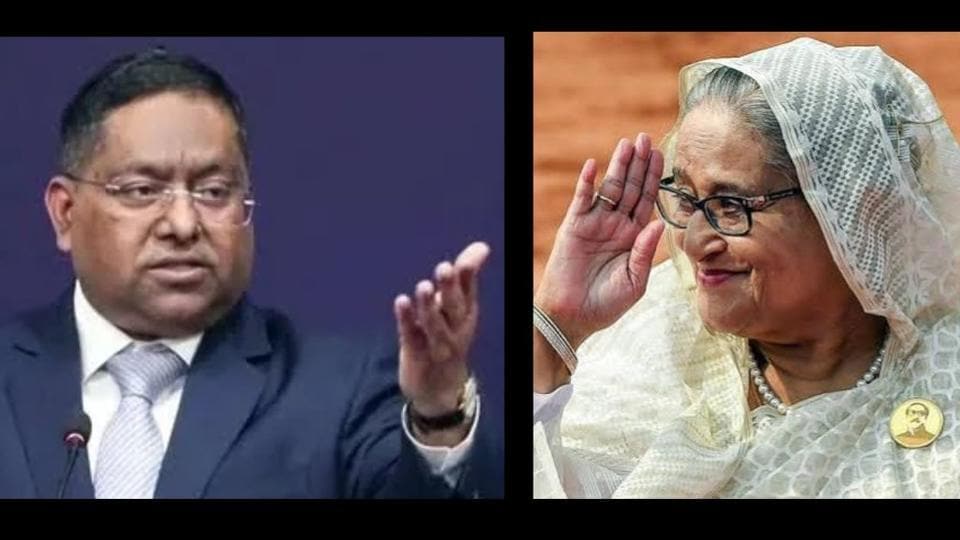
Hasina, who has been in self-exile in India since her Awami League party was ousted from power in a student-led uprising in August 2024, announced her plan to return to Bangladesh on the country’s Victory Day on Tuesday. Leaders of the ruling Bangladesh Nationalist Party (BNP) have insisted on her extradition and said she will be arrested on her return.
When external affairs ministry spokesperson Randhir Jaiswal was asked about Hasina’s planned homecoming at a regular media briefing, he responded by saying that this was a matter “between the former prime minister and the Bangladesh government”. He added: “I have nothing more to say.”
Bangladesh’s request for Hasina’s extradition, which was first made in December 2024, is “being examined in line with our established processes”, Jaiswal said. However, he drew a distinction between the extradition request and Hasina’s recent petition to the Bangladesh high commission in New Delhi to issue her a passport and a national identity card to facilitate her return.
“The case of a citizen willing to return voluntarily to her country on a travel document is a matter separate from the extradition request,” Jaiswal said.
People familiar with the matter had earlier said that Bangladesh’s refusal to issue a passport to Hasina is being seen as a delaying tactic, and that the Indian side has created no impediments to her return.
Bangladesh has been on edge over Hasina’s planned return, with supporters of her Awami League party organising protests in several parts of the country this month. There have also been violent clashes between supporters of the Awami League, which has been banned, and the BNP in recent days. Some of the violence in places such as Pabna has targeted members of the Hindu minority, which has traditionally backed the Awami League.
Jaiswal responded to a question about the deterioration in law and order in Bangladesh and attacks on Hindus by saying that India is concerned about these developments. “We understandably are concerned at the incidents of violence against minorities in Bangladesh. We urge the government of Bangladesh to thoroughly investigate these incidents and bring the perpetrators to justice,” he said.
He responded to a separate question on the Ganga Water Treaty, which is set to expire on December 12, by saying that the two countries have an established mechanism – the Joint Rivers Commission – that looks into “all cross-boundary rivers’ issues, including the Ganga”. Jaiswal did not go into details.
Jaiswal was also asked about the Indonesian Navy seizing a merchant vessel that was sailing from China to Bangladesh with 405 tonnes of sodium perchlorate, a chemical used in making rocket and missile propellants. He replied: “We have seen some reports on this particular matter. As I’ve said earlier, we continue to follow developments which have an impact on our interest and take measures as appropriate.”
The Comoros-flagged MV Star Line was seized by the Indonesian Navy on November 7 while it was headed to Bangladesh with 15 containers of sodium perchlorate, The Dhaka Tribune newspaper reported.


