
 E-Paper



India, Israel turn ‘marriage made in heaven’ into strategic partnership
PM Narendra Modi and his Israeli counterpart Benjamin Netanyahu oversaw the signing of a series of bilateral pacts as well as the creation of a $40 million innovation fund.

 Prefer HTon Google


India and Israel elevated their relationship to a “strategic partnership” on Wednesday, pledging to work more closely to protect their key interests and combat radicalisation and terrorism.
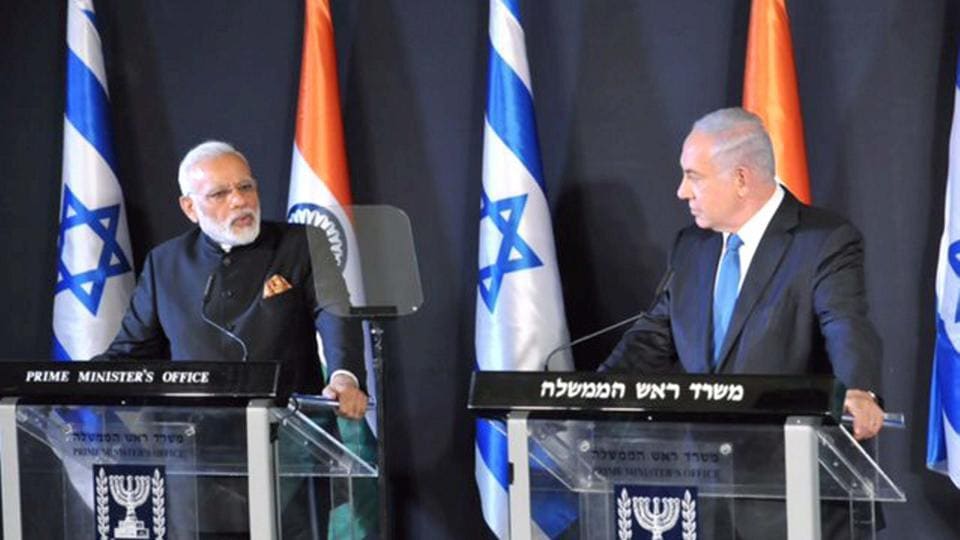
Prime Minister Narendra Modi and his Israeli counterpart Benjamin Netanyahu oversaw the signing of a series of bilateral pacts for cooperation on satellite technology, water and agriculture, as well as the creation of a $40 million innovation fund.
Netanyahu described the collaboration as a “marriage made in heaven” (he described Israeli-Chinese relations in exact same words to Xi Jinping in March), drawing a hearty laugh from Modi and the audience. The two leaders often smiled and exchanged bear hugs, continuing with a stunning display of warmth that has marked Modi’s three-day trip, the first by an Indian Prime Minister.
“I have a feeling that today India and Israel are changing our world and maybe changing parts of the world,” Netanyahu said.
To this, Modi said: “Our goal is to build a relationship that reflects our shared priorities and draws on enduring bonds between our peoples.”
Modi also said his visit was an opportunity to “compose a new chapter in our ties” and “jointly venture towards new horizons of engagement”.
Israel has portrayed Modi’s visit as a major diplomatic feat, especially in view of the Indian leader’s decision not to travel to Ramallah to meet Palestinian leaders -- as is common among many dignitaries seeking to balance ties with the Arab world.
Though defence and security ties have largely driven the relationship since the two countries established diplomatic ties in 1992, a joint statement issued after talks between Modi and Netanyahu was largely devoted to collaboration in high technology, trade and investment and a “strategic partnership in water and agriculture”.
Wednesday’s seven pacts were part of efforts to expand ties in civilian areas as Israel already sells India military gear worth about $1 billion per year.
Modi’s historic visit had “solidified the enduring friendship” between the two sides and “raised the bilateral relationship to that of a strategic partnership”, the joint statement said.
Modi noted that India and Israel “live in complex geographies” and were aware of strategic threats to regional peace and stability. “India has suffered first-hand the violence and hatred spread by terror. So has Israel,” he said.
“Prime Minister Netanyahu and I agreed to do much more together to protect our strategic interests and also cooperate to combat growing radicalisation and terrorism, including in cyberspace.”
The situation in West Asia and the wider region had figured in the discussions, Modi said, adding, “It is India’s hope that peace, dialogue, and restraint will prevail.”
Netanyahu described 26/11 as a “horrible terrorist attack” and said the two side need to cooperate closely in counter-terrorism.
“They stressed that there can be no justification for acts of terror on any grounds whatsoever. The leaders asserted that strong measures should be taken against terrorists, terror organisations, their networks and all those who encourage, support and finance terrorism, or provide sanctuary to terrorists and terror groups,” the joint statement said.
The two sides are also “committed to promote security and stability in cyberspace on both the governmental and private levels”.
In the defence sector, the two sides agreed that future developments should focus on joint development of hardware, including transfer of Israeli technology with special emphasis on the “Make in India” initiative.
The “strategic partnership in water and agriculture” will focus on water conservation, waste-water treatment and reuse for agriculture, desalination, water utility reforms and the cleaning of the Ganges and other rivers.
Modi and Netanyahu also agreed to conduct negotiations on an agreement to protect investments to encourage bilateral investments.


