

 E-Paper


‘Issue not freedom of expression’: India counters Trudeau on Khalistani elements
The poster campaign inciting violence against Indian diplomats and the call for a rally on July 8 began in Canada and was then spread by Khalistani elements in other countries
NEW DELHI: India on Thursday sought firm action from all countries where pro-Khalistan groups are conducting campaigns to incite violence against Indian diplomats and missions, and said freedom of expression shouldn’t be misused to propagate separatism and legitimise terrorism.
The call from the external affairs ministry came days after an act of arson by Khalistani activists at the Indian consulate in San Francisco and a poster campaign in Australia, Canada, the US and the UK inciting violence against senior diplomats. Pro-Khalistan groups, especially the banned Sikhs For Justice (SFJ), have announced plans for a so-called “Kill India” rally in these four countries on July 8.
Over the past few days, the Indian side has been particularly irked by Canada’s response to activities of pro-Khalistan groups, and Canadian envoy Cameron Mackay was summoned to the external affairs ministry on Monday and served a demarche or written protest over the threat to Indian diplomats.
“Our sense is that these posters inciting violence against our diplomats and our diplomatic premises abroad are unacceptable and we condemn them in the strongest terms,” external affairs ministry spokesperson Arindam Bagchi said while responding to questions on the issue at a regular media briefing.
“It is a matter of concern that freedom of expression and speech is once again being misused by anti-India elements based in Canada and elsewhere,” Bagchi said. “Let me make the larger point that the issue is not about freedom of expression but its misuse for advocating violence, propagating separatism and legitimising terrorism.”
The safety of Indian diplomats and the security of missions is an “utmost priority” for the government, and host governments are responsible for providing protection under the Vienna Conventions, he said. The Indian side has put in place its own security measures and expects host governments to take action “commensurate with the threat perception”, he added.
People familiar with the matter said the matter has been strongly taken up with authorities in Australia, Canada, the UK and the US and host governments have been asked to bolster security for Indian missions ahead of the rally on July 8. “Our message has been simple – there should be no space for misusing freedom of expression,” one of the people cited above said.
The people said authorities in the US responded with alacrity while the response in some countries was found to be wanting. The poster campaign inciting violence against senior diplomats and the call for a rally on July 8 began in Canada and was then spread by Khalistani elements in other countries. There are clear signs the SFJ is playing a leading role in these campaigns, they said.
Bagchi was also asked about remarks by Canadian Prime Minister Justin Trudeau and British foreign secretary James Cleverly denouncing the violence, and said India will judge these countries by “what happens on the ground”. India is pressing the Canadian side to “ensure that our diplomats can carry out their normal functions without fear or intimidation”, he said.
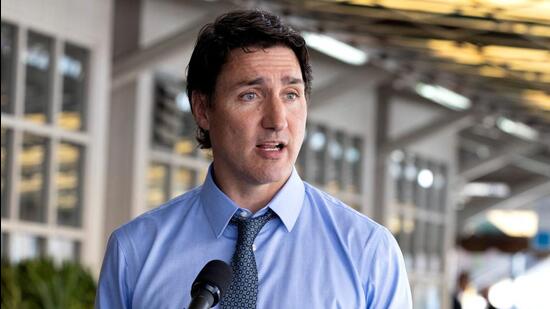
Cleverly tweeted on Thursday that any “direct attacks” on the Indian mission in London are completely unacceptable, while Trudeau told the media Canada has always taken threats of violence seriously.
Asked by a reporter about a recent parade float depicting the assassination of former premier Indira Gandhi and the Indian leadership’s contention that the Canadian government is soft on Sikh extremism because it relies on votes from the community, Trudeau replied: “They are wrong. Canada has always taken extremely seriously violence and threats of violence. We have always taken serious action against terrorism, and we always will.”
Canada has freedom of expression but will always push back against violence and extremism in all forms, Trudeau added.
Bagchi noted in the context of Trudeau’s comments that external affairs minister S Jaishankar had said that “he strongly believes countries should not pander to vote bank politics”. Bagchi added: “In the name of freedom of expression, we should not be giving space to those who advocate violence or propagate separatism or legitimise terrorism.”
The campaigns by pro-Khalistan groups have been linked to the killing of Khalistani separatist leader Hardeep Singh Nijjar, a designated terrorist, in Canada last month. These groups have portrayed a so-called “Indian hand” in Nijjar’s death and incited violence against Indian diplomats.
Asked about a video posted on social media by SFJ leader Gurpatwant Pannun, also a designated terrorist, that showed him outside the United Nations in New York, Bagchi said: “I don’t think taking a video in front of the UN building lends it any greater legitimacy.” The Indian side has consistently taken up threats by the SFJ and its so-called “Khalistan referendum” and asked partner countries to prevent such activities since the group is proscribed, he said.
Ajay Bisaria, a former envoy to Canada who has tracked the activities of Khalistani elements for long, said he sees the planned rally and the poster campaign as a “sign of extreme desperation on the part of the Khalistani groups, rather than a resurgence”.
“This is the last gasp of the SFJ, which is feeling cornered after Nijjar’s death and Pannun himself is in hiding. Their fear is that India’s heft is so much that it is getting host governments to turn the heat on these groups. It is more of a demonstration of strength to their own cadres and an expression of anguish at the killing of one of their senior leaders, though there is no certainty whether it was a gangland or a targeted killing,” he said.


