
 E-Paper



ISRO congratulates as Russia's Luna-25 mission launches to Moon: 'Anothing meeting point…'
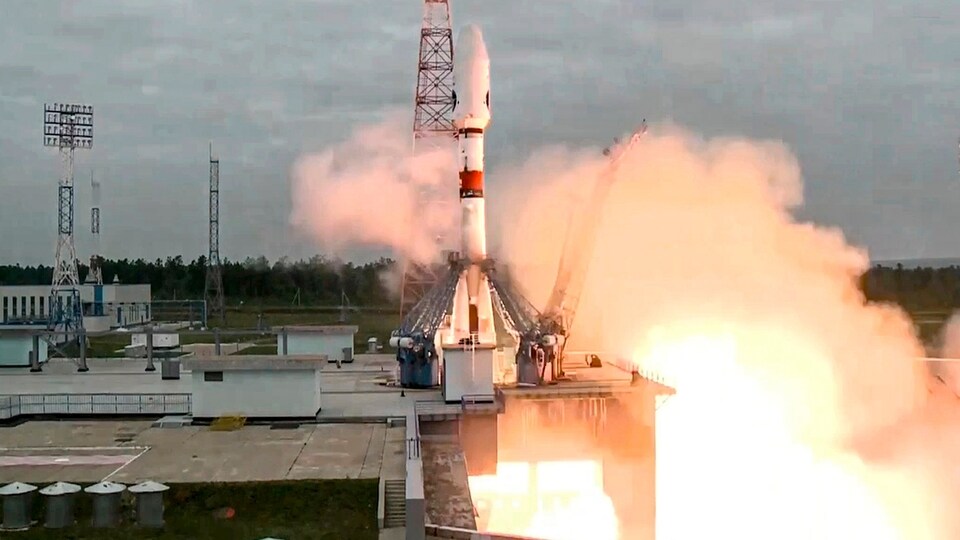
Russia Lunar mission: A rocket carrying a lunar landing craft blasted off Friday on Russia's first moon mission in nearly 50 years.

 Prefer HTon Google


The Indian Space Research Organisation (ISRO) on Friday congratulated its Russian counterpart Roscosmos, the state corporation of the Russian Federation responsible for space flights, for the successful launch of Luna-25, its Lunar mission in nearly five decades.
“Congratulations, Roscosmos on the successful launch of Luna-25 💐Wonderful to have another meeting point in our space journies. Wishes for Chandrayaan-3 & Luna-25 missions to achieve their goals,” the space agency said on X (formerly Twitter).
A rocket carrying a lunar landing craft blasted off on Friday on Russia's first moon mission in nearly 50 years, racing to land on Earth's satellite ahead of the Indian spacecraft, Chandrayaan-3.
A Soyuz 2.1v rocket carrying the Luna-25 craft blasted off from the Vostochny cosmodrome, 3,450 miles (5,550 km) east of Moscow, at 2:11 a.m. on Friday Moscow time (1111 GMT on Thursday), with its upper stage boosting the lander out of Earth's orbit toward the moon over an hour later, Russia's space agency Roscosmos confirmed.
Also Read: Meet Chandrayaan-3's Russian competitor. Launch on Friday, but could reach Moon sooner
The launch from Russia's Vostochny spaceport in the Far East of the Luna-25 craft to the moon is Russia's first since 1976 when it was part of the Soviet Union.
Only three governments have managed successful moon landings: the Soviet Union, the United States and China. India and Russia are aiming to be the first to land at the moon’s south pole.
The lander is expected to touch down on the moon on August 21, Russia's space chief Yuri Borisov told Interfax. The space agency previously pegged August 23 as the landing date. Roscosmos stated that its Luna 25 spacecraft will take about five days to travel to the Moon. It will then spend around five to seven days in lunar orbit before descending to one of three potential landing sites near the pole.
However, the two lunar missions, Luna 25 and Chandrayaan-3, won't interfere with each other, as they have separate landing areas planned.
The Luna 25 mission aims to study the composition of the lunar polar regolith (surface material) and the plasma and dust components of the lunar polar exosphere, according to the United States space agency National Aeronautics and Space Administration (NASA), while, Chandrayaan-3 aims to demonstrate a safe and soft landing on the lunar surface, rover mobility, and in-situ scientific experiments, said ISRO.


