
 E-Paper



LCA Mk-1A, stealth fighter is highest priority, says new IAF chief
As the IAF faces a shortage of fighter aircraft, Dixit said restoring its combat strength through a renewed push for indigenisation would be his “foremost task”

 Prefer HTon Google


India’s new Chief of the Air Staff, Air Chief Marshal Ashutosh Dixit, on Sunday outlined the Indian Air Force’s top priorities, placing the indigenous Tejas light combat aircraft (LCA Mk-1A), expected to enter service shortly, alongside the LCA Mk-2 and advanced medium combat aircraft (AMCA) programmes at the forefront of its modernisation drive.
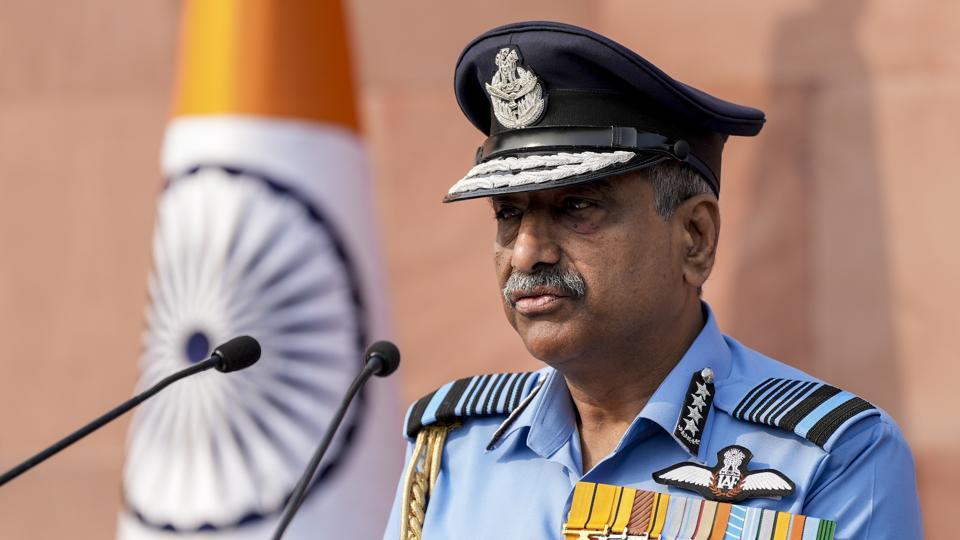
Restoring the IAF’s combat strength through a renewed push for indigenisation will be his “foremost task,” Dixit said, as the air force grapples with a critical shortage of fighter aircraft.
In his first public comments after taking over as the 29th IAF chief, Dixit said, “The Tejas Mk-1A and Mk-2, AMCA (a fifth-generation stealth fighter jet), and Indian weapons and sensors are our highest priority. We will fight with Indian solutions, and we will hold them in numbers that meet our operational demands. Our responsibility is to fight and win, but most importantly it is to deter conflict through credible air power.”
Deep Dive

Dixit, an experimental test pilot and a qualified flying instructor, took over as IAF chief from Air Chief Marshal AP Singh on Saturday. He outlined his vision for the IAF’s future using the acronym “VAYU”: V for vigilance and readiness, A for atmanirbharta (self-reliance), Y for yukti (ingenuity) and U for unity of effort.
The IAF chief underscored the importance of vigilance and combat readiness. “Every squadron, every radar, every air defence unit along with each and every air warrior must be ready to respond at a moment’s notice. Restoring our combat strength towards the sanctioned level will be my foremost task.”
The IAF is counting on the timely induction of new aircraft, including the LCA Mk-1A and 114 additional Rafales, to shore up its fighter fleet and keep the combat squadron numbers from falling below 30 against a sanctioned strength of 42.5.
Ingenuity is key, he said.
“Innovation in doctrine, procedures and technology; networked, AI-enabled command and control; layered counter-drone defence; responsive maintenance; force protection; and the use of near-space as an operational domain for the IAF are areas which will be constantly monitored,” he said.
On unity of effort, he said the IAF will plan and fight as one along with the army, navy and other national agencies. “Air power delivers most when it is integrated from the very first plan.”
Dixit’s appointment comes at a pivotal moment as the armed forces advance theaterisation, a long-awaited reform designed to integrate the military’s resources for future conflicts.
India’s security environment remains demanding, even as new technologies and systems—including drones, long-range precision weapons, space and cyber capabilities, and artificial intelligence—are reshaping the character of warfare, he said.
Operation Sindoor, the four-day military confrontation with Pakistan following the Pahalgam terror strike last year, showcased what precise and decisive air power can achieve, Dixit added.
Operationalising the LCA Mk-1A will be his immediate priority.
It is finally nearing induction into the IAF after missing several deadlines. It will be the first aircraft to enter service under his watch by year-end. The LCA Mk-1A will replace the IAF’s workhorse MiG-21s, which retired last year after more than six decades of service. The IAF has placed two orders with Hindustan Aeronautics Limited (HAL) for 180 Mk-1A fighter jets worth a combined ₹1.1 lakh crore.
He will also have to speed up LCA Mk-2 and AMCA.
The more advanced LCA Mk-2 programme is gathering momentum. HAL has built the structure and coupling has been completed -- the front, centre and rear fuselage sections have been joined, and the airframe is ready. HAL is targeting the first ground run by March 2027, with the maiden flight expected later that year. The IAF will now be moving a case for the LCA Mk-2 procurement. It will replace the Mirage 2000s, MiG-29s and Jaguars.
Speeding up the AMCA programme is critical because China has already deployed the J-20 fifth-generation fighters, and it is rolling out the J-35 stealth fighters.


