
 E-Paper



‘Marriage under personal law no exemption from criminal liability’: Delhi HC
In the present case, the woman was 16 and the man was 28 when they got married. In 2026, when the woman was around eight months pregnant

 Prefer HTon Google


The Delhi high court directed a man to face trial under the Protection of Children from Sexual Offences (POCSO) Act for establishing sexual relations with his minor wife holding that personal laws cannot be a ground to seek exemption from criminal liability under penal statutes.
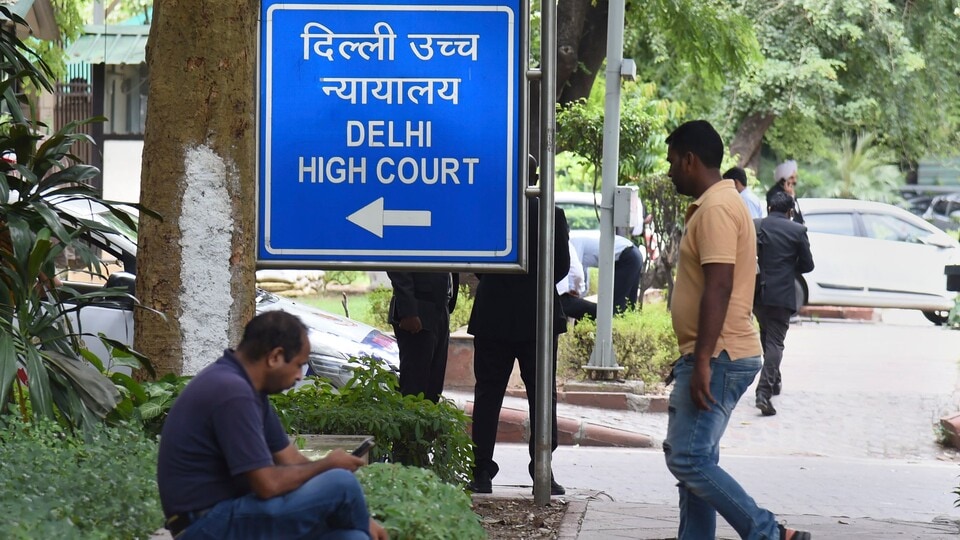
The case presented a unique situation before the court where the husband and wife sought quashing of the criminal case claiming to be validly married under Muslim personal laws. Yet, the state prosecuted the man after the wife presented at a government hospital, eight months pregnant, that led the police to register a crime as the law does not recognise a minor’s consent.
A bench of justice Sanjeev Narula in his September 23 verdict, released on Saturday held that personal law may determine whether a marriage has been contracted and the civil consequences that follow, but cannot supply an exception to criminal law when the Parliament has provided for that.
In the present case it said that the personal law cannot prevail over the statutory protections afforded to children under the POCSO Act, and the Bharatiya Nyaya Sanhita (BNS), 2023 (BNS). The man was charged for rape under section 63 of BNS and section 6 of POCSO Act.
“A marriage claimed to be valid under Muslim personal law cannot, by reason of that status alone, confer immunity from POCSO or the BNS for sexual intercourse with a wife who was below eighteen at the relevant time. A marriage may have consequences for status, maintenance, legitimacy, residence and rights between the parties. It does not necessarily immunise conduct that a secular penal statute independently prohibits. A marriage does not advance a child’s age. A person who is sixteen before the ceremony remains sixteen afterwards. For POCSO and section 63 BNS, that fact is determinative of the legal capacity to consent to sexual act,” the court said.
It added, “POCSO fixes eighteen as the threshold for sexual consent. The BNS fixes the same threshold and expressly withholds the marital exception where the wife is below eighteen. The Prohibition of Child Marriage Act, 2006 10 separately defines a female below eighteen as a child and attaches penal consequences to an adult male contracting a child marriage. The Court cannot therefore substitute “puberty” for the age of eighteen fixed by POCSO and the BNS. Nor can the statutory line be redrawn through a case-specific assessment of whether a child of sixteen appeared mature enough to understand the relationship.”
In the present case, the woman was 16 and the man was 28 when they got married. In 2026, when the woman was around eight months pregnant, her age came to light during a visit to a government hospital for treatment. The police subsequently registered a first information report (FIR) under section 64 of BNS and section 6 of POCSO Act.
The couple then approached the high court to quash the FIR. They claimed that they married voluntarily with the consent of their families. The woman also stated that she had neither been forced into the marriage nor subjected to any non-consensual sexual relationship.
In their petition before the high court, the couple argued that their marriage was valid under Muslim personal law and that their subsequent cohabitation, including their physical relationship, could therefore not attract criminal liability. They contended that the woman had attained puberty before the marriage and was consequently competent to marry under Muslim personal law.
However, the court in its 23-page order refused to quash the FIR, saying that the POCSO framework would be substantially weakened if an adult could answer a prosecution concerning a girl below eighteen simply by producing a marriage ceremony recognised by personal law.
“The statutory protection would then depend not upon the age of the child, but upon whether a marriage had been arranged before the sexual relationship was discovered. That would turn the legislation on its head,” the court held.


